How Animals Navigate: Magnetic Maps, Sun Compasses and Smell
Turtles that learn the magnetic signature of a feeding ground, butterflies with clocks in their antennae and birds that read the turning sky: what the research shows so far.
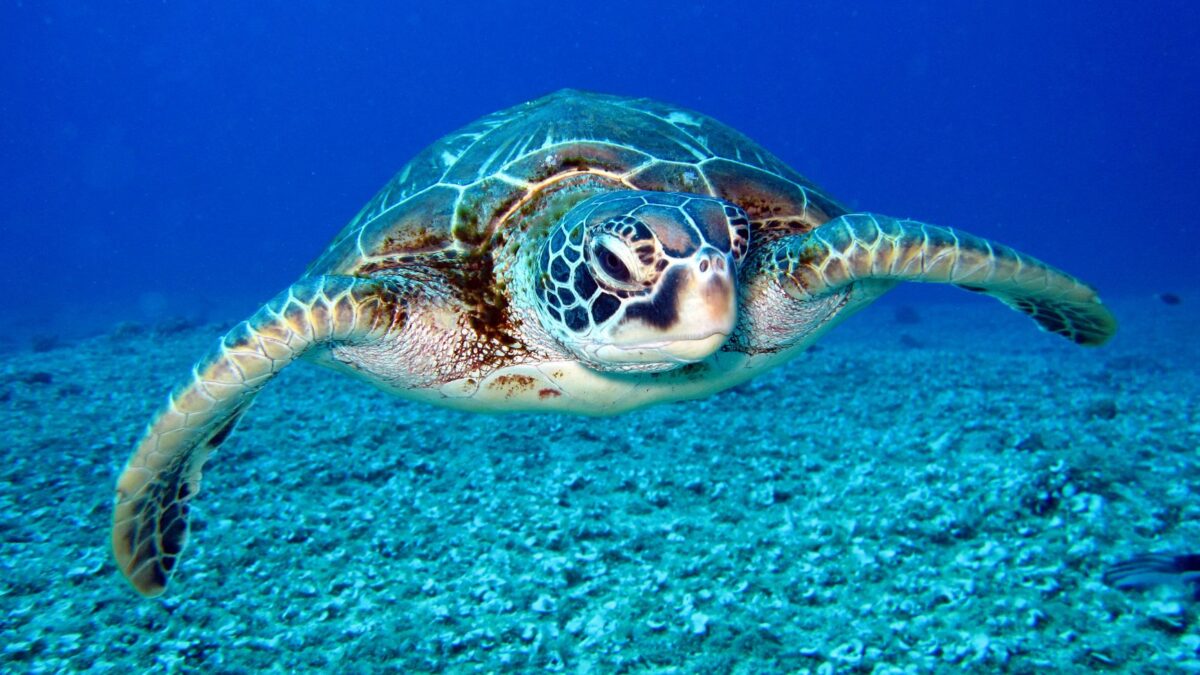
Animals navigate with a set of senses rather than one. Many use Earth’s magnetic field as a map or compass, the Sun or stars as a compass corrected by an internal clock, and smell or landmarks near the goal. Sea turtles can learn the magnetic signatures of places, monarch butterflies steer by the Sun using clocks in their antennae, and salmon use magnetism at sea and smell near home.
The behavior is well documented. How some of these senses work inside the body, especially the magnetic sense, is still an open question.
Which cues do migrating animals use?
Most long-distance travelers combine a compass, which tells them which way to head, with some kind of map, which tells them where they are. The table sums up the evidence for four well-studied groups.
| Animal | Main cues | How solid the evidence is |
|---|---|---|
| Loggerhead sea turtles | Magnetic map and magnetic compass | Strong: lab experiments with controlled magnetic fields |
| Pacific salmon | Magnetic field at sea, smell near the home river | Good for smell; magnetic imprinting supported but not settled |
| Monarch butterflies | Sun compass timed by a body clock | Strong: lab experiments on the antennae |
| Night-migrating songbirds | Star compass, magnetic compass | Star compass shown in planetarium tests; magnetic sensor still debated |
How do sea turtles find their way across an ocean?
Sea turtles read Earth’s magnetic field, which varies in strength and angle from place to place, giving each region its own signature. A study by researchers at the University of North Carolina at Chapel Hill, published in Nature in February 2025, showed that young loggerhead turtles can learn those signatures.
The team fed turtles in one magnetic field that matched a real location and gave no food in another. Later, placed in the “food” field, the turtles performed a typical begging behavior the researchers call the turtle dance. The same study found that oscillating magnetic fields disrupted the turtles’ magnetic compass but not their magnetic map, which suggests the two rely on different mechanisms. The authors and the UNC release note that the sensor itself remains unknown.
How do salmon find their home river?
Salmon appear to use the magnetic field for the ocean part of the trip and smell for the last stretch. A 2013 study in Current Biology analyzed decades of records for sockeye salmon returning to the Fraser River in British Columbia. The route the fish took around Vancouver Island shifted over the years in step with slow drift in Earth’s magnetic field. The authors argued that young salmon imprint on the magnetic signature of their river mouth when they first go to sea.
The study itself notes that salmon use chemical cues to identify their home river in the final phase of the trip, so the idea is that magnetism brings the fish near the coast and smell takes over close to home. The 2013 result is statistical, not a direct test, so magnetic imprinting is still being studied. The role of smell in finding the home stream is older and better established.
How do monarch butterflies navigate to Mexico?
Monarchs in eastern North America fly south each fall to winter in the mountains of central Mexico, a trip none of them has made before. They steer with a sun compass: they keep a set angle to the Sun and adjust that angle through the day as the Sun moves across the sky.
That adjustment needs a clock. A 2009 study in Science by Christine Merlin, Robert Gegear and Steven Reppert at the University of Massachusetts Medical School found the clock in the antennae, not the brain as had been assumed. Monarchs with antennae removed or painted black to block light lost their correct heading. Later work by the same lab showed that one working antenna is enough.
How do birds use the stars and the magnetic field?
Many songbirds migrate at night and use the stars as a compass. In the 1960s, Stephen Emlen tested indigo buntings in a planetarium. The birds lost their bearings when stars near the North Star were hidden. Young birds learn which point the sky turns around; when Emlen rotated the planetarium sky around a different star, the birds treated that star as north.
Birds also have a magnetic compass, but how they sense the field is debated. One leading idea involves light-sensitive proteins in the eye called cryptochromes. A 2021 study in Nature by teams in Oldenburg and Oxford found that cryptochrome 4 from the European robin, a night migrant, is sensitive to magnetic fields in the lab, more so than the same protein from chickens and pigeons. The experiments used isolated proteins and fields stronger than Earth’s, and the authors said it is not proof that this protein is the sensor in living birds.
What do scientists still not know?
The biggest gap is the magnetic sense itself. Turtles, salmon, birds and many other animals respond to magnetic fields in experiments, yet researchers are still working out which cells detect the field and how the signal reaches the brain. The 2025 turtle study points to two separate mechanisms, one for map and one for compass.
Scientists also want to know how animals switch between cues on cloudy nights, in murky water or after a storm blows them off course. The magnetic field animals rely on is the same one that solar storms disturb to produce auroras; our guide to the northern lights forecast explains those geomagnetic storms.
Navigation is one reason some animals manage such long lives and journeys; see which species hold the records in our guide to the longest-living animals.
Bottom line
Animals navigate by combining senses: a magnetic map and compass, a Sun or star compass corrected by an internal clock, and smell or landmarks near the goal. Experiments have shown turtles learning magnetic signatures, monarchs timing their sun compass with clocks in their antennae and buntings learning the rotation of the night sky. How animals sense magnetism is still unresolved.
FAQ
Do animals really have a magnetic sense?
Yes, many do. Experiments that change the magnetic field around turtles, birds and other animals change how they orient. What remains unclear is the sensor that detects the field.
How do young animals know where to go on their first migration?
It depends on the species. Monarchs make the trip with an inherited sun compass; young buntings learn the star pattern before they leave; a 2014 study of Chinook salmon reported an inherited magnetic map.
Can animals navigate when it is cloudy?
Many can switch to another cue. A bird that cannot see stars may still use its magnetic compass, though how well animals manage under full cloud varies by species and is still being studied.