What Killed the Dinosaurs? The Asteroid Evidence Explained
A thin clay layer rich in iridium, a buried crater off Mexico and grains of shocked quartz: how scientists tied the end of the dinosaurs to one very bad day.
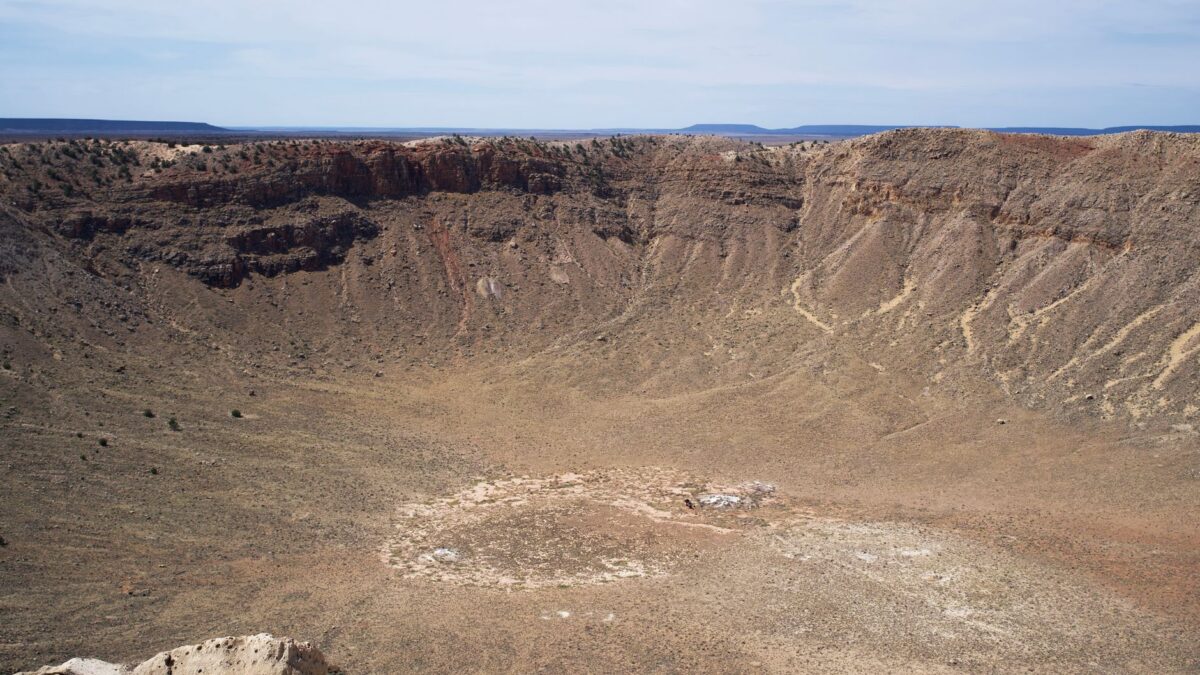
An asteroid about 10 to 15 kilometers (6 to 9 miles) wide struck near what is now Mexico’s Yucatán Peninsula 66 million years ago and caused the extinction of all non-bird dinosaurs, according to London’s Natural History Museum. The impact left the buried Chicxulub crater, and about three-quarters of animal species died out. Huge volcanic eruptions in India were under way at the time, and scientists still debate how much they added.
Birds, the one dinosaur line that survived, are still here. So are the descendants of the small mammals that lived through the aftermath.
What hit Earth 66 million years ago?
A space rock roughly the size of a city struck a shallow sea off the Yucatán coast. The Natural History Museum describes it as 10 to 15 km wide and says the crater it left, Chicxulub, is about 150 km across and largely buried under sediments on land and seafloor. Some studies give a larger diameter, depending on which ring of the structure is measured.
The museum dates the extinction to 66.0 million years ago. Precise argon-argon dating of ash beds in Montana, published in Science in 2013, matched the impact and the extinction to within about 32,000 years of each other.
What is the evidence for the asteroid?
Several independent lines of evidence point the same way:
- The iridium layer. In 1980, physicist Luis Alvarez and his son, geologist Walter Alvarez, reported a thin clay layer at the end of the Cretaceous with far more iridium than normal rocks. Iridium is rare in Earth’s crust but more common in asteroids.
- The crater. Chicxulub was later identified under the Yucatán and dated to the same age as the extinction layer, which can be traced in rocks worldwide.
- Shocked quartz. Grains of quartz with microscopic damage that forms only under extreme pressure, as in impacts, are found in the boundary layer. A USGS report on Chicxulub describes these grains.
- Impact melt. Drill cores from the crater contain melted rock with high iridium levels, matching the global layer.
- Timing. Radiometric dates put the impact and the extinction at the same moment within the limits of measurement.
Our guide to how fossils are dated explains the methods behind those dates.
What happened after the impact?
The damage came in stages. Near the crater, the NHM describes a blast wave and a heat wave. Giant waves washed over parts of the Americas, and evidence from the boundary layer points to substantial fires.
The longer-lasting effect was darkness. Debris and soot spread through the atmosphere and cut the sunlight reaching the ground, though the museum notes it did not block the Sun completely. Less light meant less plant growth, and food chains on land and in the sea collapsed from the bottom up.
Large animals were hit hardest. The NHM lists ammonites, some plankton, pterosaurs, the big marine reptiles and all land animals heavier than about 25 kg (55 pounds), including every non-bird dinosaur, among the losses.
Did volcanoes play a role?
Possibly, and this is where scientists still disagree. In what is now India, the Deccan Traps poured out enormous volumes of lava around the end of the Cretaceous. The NHM says this activity lasted about two million years and was already changing the climate before the asteroid arrived.
A 2020 study in Science led by Pincelli Hull compared climate records with models and concluded that most of the volcanic gas release began and ended before the impact, and that only the impact lined up with the extinction. Other teams that date the lava flows in fine detail, including a 2019 study in Science, have kept the question of volcanic timing open. Most researchers today see the asteroid as the main cause, with volcanism as a stress before and after.
Which animals survived?
Survivors were mostly small, could hide or shelter, and could live on whatever food was left, such as seeds, insects or dead matter.
- Birds. Some bird lineages survived, the ones that led to all modern birds. The NHM notes early survivors were small.
- Mammals. Small mammals made it through. Large, rhino-sized mammals did not appear until about 15 million years later, the NHM says.
- Reptiles and others. Lineages of crocodile relatives, turtles, lizards, snakes and amphibians crossed the boundary, though many species in those groups were lost.
- Plants. Plants fared better than animals, because seeds and spores can wait out bad years. Flowering plants went on to dominate.
Without the impact, the largest dinosaurs might have kept their place; see our guide to the biggest dinosaur ever.
Could it happen again?
Impacts of that size are very rare on human timescales, and NASA runs surveys to find and track near-Earth asteroids. Our explainer on how NASA tracks asteroid impact risk covers the surveys and the odds.
Bottom line
The dinosaurs, except birds, were wiped out 66 million years ago by an asteroid about 10 to 15 km wide that struck near the Yucatán and formed the Chicxulub crater. An iridium-rich layer, shocked quartz, the crater and precise dating all support it. Deccan volcanism in India stressed the climate around the same time, but most evidence points to the impact as the main cause.
FAQ
How big was the asteroid that killed the dinosaurs?
About 10 to 15 kilometers (6 to 9 miles) wide, according to the Natural History Museum in London. It left a crater about 150 km across, with some studies measuring a larger outer ring.
Where did the asteroid hit?
Near the modern town of Chicxulub on the Yucatán Peninsula, Mexico. The crater is buried, partly under land and partly under the Gulf of Mexico.
Did all dinosaurs die out?
No. Birds are living dinosaurs, descended from lineages that survived the impact. All other dinosaurs went extinct.
Were dinosaurs already declining before the asteroid?
That is debated. The climate was already changing during the Deccan eruptions, and researchers still disagree on whether dinosaur diversity was falling before the impact.