La Palma Megatsunami Warning: 65-Foot Waves or 3 to 7 Feet for the US?
A volcanologist says a Cumbre Vieja collapse could send 65-foot waves to the US East Coast. The USGS says newer models show far smaller waves.
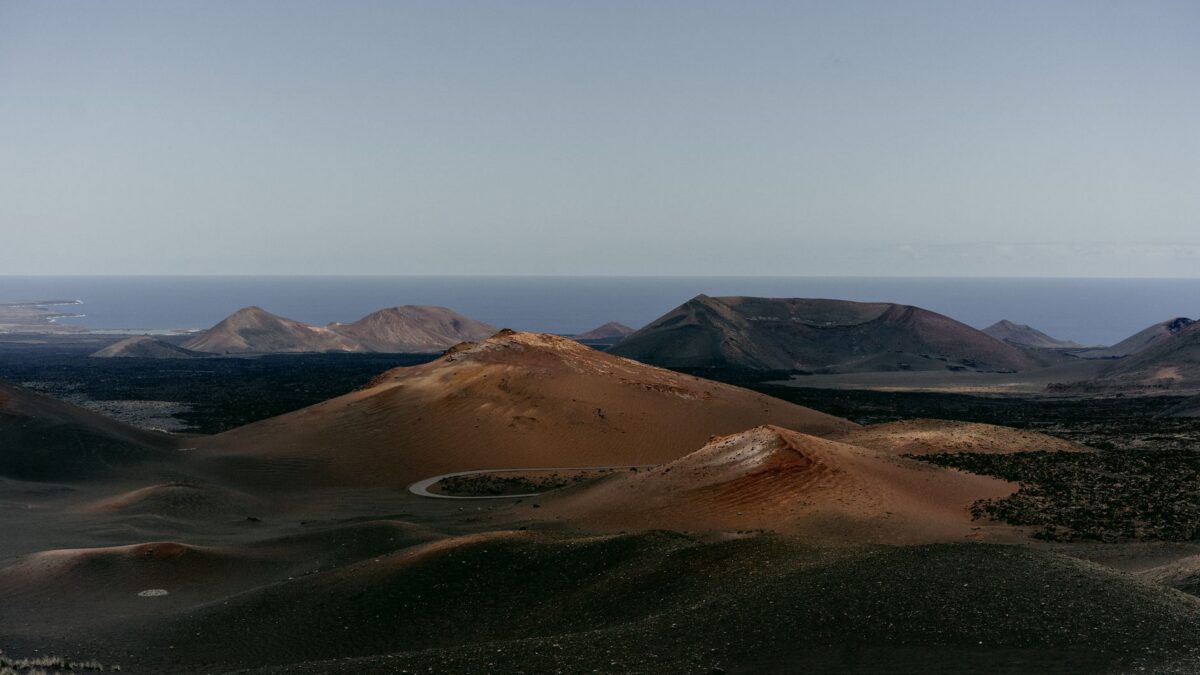
British volcanologist Bill McGuire has revived an old warning: if the western flank of the Cumbre Vieja volcano on La Palma in Spain’s Canary Islands slid into the Atlantic, the resulting tsunami could hit parts of the US East Coast with waves of roughly 65 feet, arriving within about nine hours, according to reports by MARCA and Business Today.
The US Geological Survey disagrees with the scale of that threat. In a 2021 assessment, the agency said updated simulations put even a worst-case collapse at about 1-2 metres (3-7 feet) of wave height along the eastern coasts of the Americas. Both sides agree that nothing points to a collapse happening soon.
Why Cumbre Vieja draws attention
Cumbre Vieja is an active volcanic ridge on La Palma, off the northwest coast of Africa. Its last eruption, in 2021, sent lava over homes, roads and farmland. During an earlier eruption in 1949, fractures opened along the western flank, and research in the 1990s suggested parts of that slope were creeping slowly toward the sea.
The danger in this scenario is not lava but a landslide. If a huge block of the mountainside broke off and dropped into the ocean, it would shove aside a vast volume of water and start a tsunami. Most tsunamis come from undersea earthquakes; this one would come from the collapse of a volcanic island’s flank.
The case for a large tsunami
The idea took hold after a 2001 paper by geophysicists Steven Ward and Simon Day. They modeled a hypothetical collapse in which between 150 and 500 cubic kilometres of rock entered the Atlantic. In their most extreme case, waves reaching the Americas measured between 10 and 25 metres, and Florida could see waves of about 20 meters within nine hours. Near La Palma itself, the early simulation produced waves hundreds of meters high.
McGuire, who has studied the question for decades, wrote in BBC Science Focus that he expects the flank to “eventually crash into the North Atlantic.” He points to giant boulders on the coast of the Bahamas as possible evidence of powerful prehistoric tsunamis that started in the Canary Islands. He also says the timing is unknown and the event could be centuries or even millennia away.
The case for a much smaller threat
The USGS argues that the 2001 model rested on an unrealistic assumption: that a giant section of the volcano would fail all at once as a single fast-moving block. Studies of landslide deposits on the seafloor suggest volcanic flanks usually collapse in several stages instead.
Newer tsunami models also account for how waves spread out and lose energy, how ocean depth shapes them and how landslide debris interacts with seawater. Those models give the 3 to 7 foot range. The agency adds that no deposits from giant transatlantic tsunamis have been found along the eastern coasts of North or South America.
Wave height at sea also differs from what arrives on land. The local shape of the seafloor and coastline can raise or lower how far water floods inland, and the real impact would depend on how much rock fell and how quickly.
What’s at stake
Volcanic landslides do cause deadly tsunamis. When Indonesia’s Anak Krakatau partly collapsed in December 2018, the waves killed more than 400 people. McGuire argues that this risk justifies close monitoring of steep volcanic islands. Instruments can now track ground deformation, earthquakes and changes in a volcano’s structure that might signal growing instability.
A 2025 review of tsunami hazards on the US East Coast also included hypothetical Cumbre Vieja collapse scenarios among the sources it modeled. No reliable forecast says when a collapse might happen or how large the waves would be. The nine-hour figure is a modeled travel time for a hypothetical tsunami. It is not a countdown, and the USGS says a catastrophic collapse is unlikely in the foreseeable future.
Sources: MARCA, Business Today