How Long Do Astronauts Stay on the ISS? Rotations and Records
Six months used to be the standard tour on the International Space Station. Budgets, spacecraft and the occasional emergency have changed that. Here is how it works now.
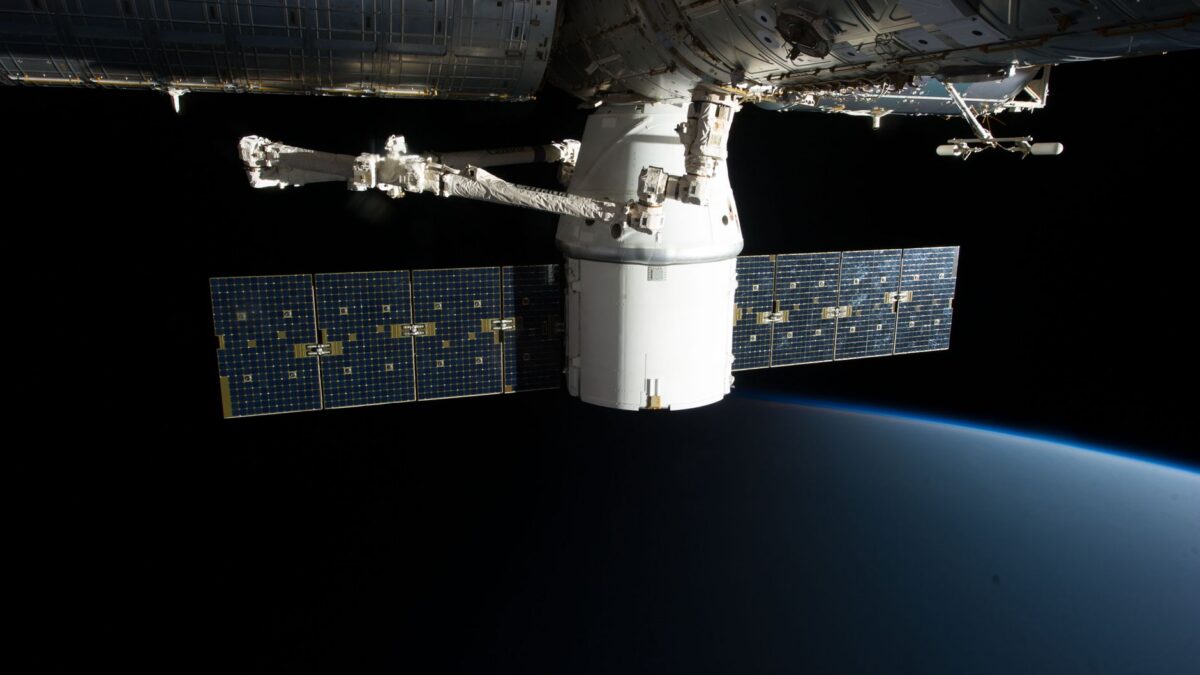
Astronauts usually stay on the International Space Station for about six months, though NASA stretched its 2026 Crew-12 rotation to about eight months. The longest single stay aboard the station is 374 days, by cosmonauts Oleg Kononenko and Nikolai Chub in 2023 and 2024; the longest by an American is Frank Rubio’s 371 days.
Crews arrive and leave in rotations on two spacecraft: SpaceX’s Crew Dragon for NASA and its partners, and Russia’s Soyuz. Each new crew overlaps with the one it replaces for a few days, so the station is never left empty.
How long is a typical ISS mission?
A typical ISS mission lasts about six months, a length NASA and its partners settled on to balance research time, crew health and spacecraft limits. Rotations shift to fit the flight schedule, and some run longer.
In 2026 NASA lengthened its commercial crew rotations to save money by flying fewer missions. NASA’s SpaceX Crew-12 launched on February 13, 2026, for a planned eight-month stay, and NASA and SpaceX re-certified Crew Dragon for the longer time in orbit, since its earlier certification covered 210 days. Crew-12 splashed down off the coast of Los Angeles on October 8, 2026, after 237 days at the station.
Soyuz crews follow their own cycle set by Roscosmos, typically six months to a year, and a NASA astronaut often flies on Soyuz while a Russian cosmonaut flies on Crew Dragon under a seat-swap arrangement.
What are the records for the longest stays in space?
The all-time record for one spaceflight belongs to Valeri Polyakov, who spent 437 days on the Russian Mir station in 1994 and 1995. The table lists other well-known long flights.
| Record | Who | Length |
|---|---|---|
| Longest single spaceflight | Valeri Polyakov (Mir, 1994 to 1995) | 437 days |
| Longest single stay on the ISS | Oleg Kononenko and Nikolai Chub (2023 to 2024) | 374 days |
| Longest single spaceflight by an American | Frank Rubio (2022 to 2023) | 371 days |
| Longest single spaceflight by a woman | Christina Koch (2019 to 2020) | 328 days |
| Most total time in space | Oleg Kononenko (five flights) | More than 1,110 days |
Rubio’s flight was planned for six months and grew to a year after the Soyuz that carried him developed a coolant leak and a replacement had to be launched. Christina Koch later flew on Artemis II around the Moon in April 2026, covered in our Artemis program explainer.
How do astronauts get to and from the station?
NASA crews ride SpaceX’s Crew Dragon, launched on a Falcon 9 from Florida, and Russian crews ride Soyuz from the Baikonur Cosmodrome in Kazakhstan. Crew Dragon carries four people; Soyuz carries three.
- Crew Dragon: docks automatically, usually within about a day of launch. Return ends in a splashdown off the US coast; in 2025 SpaceX moved Dragon splashdowns to the Pacific off California.
- Soyuz: can reach the station in a few hours on a fast-track profile and lands on the steppe of Kazakhstan under parachutes.
- Boeing Starliner: NASA’s second commercial crew vehicle. As of November 2026, its first operational crew rotation is listed as under review on NASA’s schedule.
Every docked crew vehicle also acts as a lifeboat. If there is an emergency, such as a medical problem, the crew can leave early in the capsule they arrived in. In January 2026 NASA’s Crew-11 returned about a month early in the agency’s first medical evacuation from the station.
What happens during a crew handover?
During a handover, the arriving and departing crews live together for several days while the outgoing astronauts pass on how the station’s systems, experiments and quirks are running. The station briefly holds more people than usual during this period.
- The new crew docks, opens the hatch and joins the station.
- Both crews work side by side on handover tasks, from research to maintenance.
- The departing commander hands over command in a short ceremony, which also marks the start of a new numbered Expedition.
- The departing crew loads its capsule, closes the hatch and undocks, usually followed by splashdown or landing within a day or so.
When schedules slip, the departing crew stays until its replacement arrives. That is one reason some missions run weeks or months longer than planned.
What do long stays do to the body?
Long stays in weightlessness weaken bones and muscles, shift fluids toward the head and can affect vision. Astronauts exercise about two hours a day on the station to limit these effects. NASA uses long missions, including year-long flights, to study how the body changes before sending people farther from Earth.
After landing, astronauts go through weeks of rehabilitation to rebuild strength and balance. Recovery time tends to grow with mission length.
How long will crews keep flying to the ISS?
NASA plans to operate the space station through 2030 and then guide it into the Pacific Ocean using a deorbit vehicle built by SpaceX. Rotations will continue until then, while NASA supports commercial stations meant to take over. Our article on what happens when the ISS retires covers that plan, and you can find out when the station passes over your town in how to see the ISS.
Bottom line
Expect about six months for a normal ISS rotation, with some recent NASA crews staying about eight. Year-long flights happen for research or when plans change, and the station record stands at 374 days. Crew Dragon and Soyuz handle the rotations, and each crew overlaps briefly with its replacement. NASA’s space station page lists the current crew.
FAQ
How many people live on the ISS at once?
Usually seven, sometimes fewer, depending on the rotation schedule. During handovers or visits by private astronaut missions, the number rises for a short time.
Can astronauts come home early?
Yes. A docked capsule is always available as a lifeboat. NASA’s Crew-11 came home about a month early in January 2026 because of a medical issue with a crew member.
Why did Butch Wilmore and Suni Williams stay nine months?
They flew to the station on Boeing’s Starliner test flight in June 2024. NASA returned Starliner without them after thruster problems, and they came home on a Crew Dragon in March 2025, roughly nine months after launch.