Radar and Home Sensors Trace Cape Cod Fireball to Jupiter’s Pull
A meter-wide rock that exploded over Cape Cod Bay on May 30 was an asteroid flung toward Earth by Jupiter, a preprint says. Here is how radar tracked it.
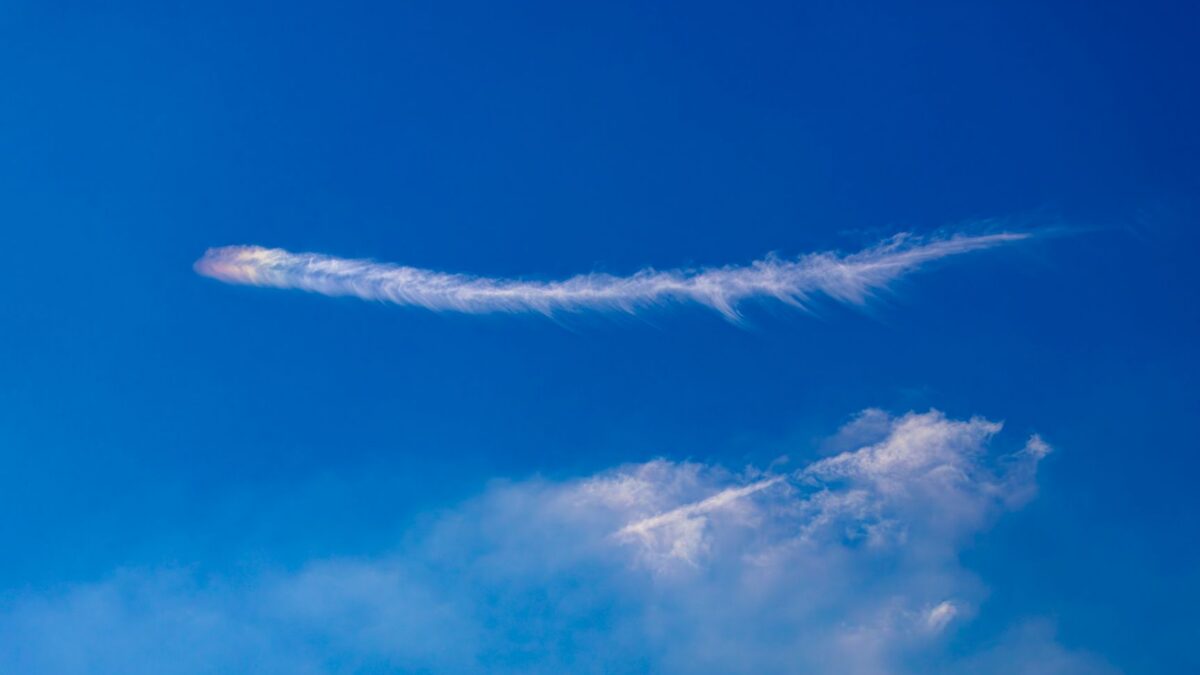
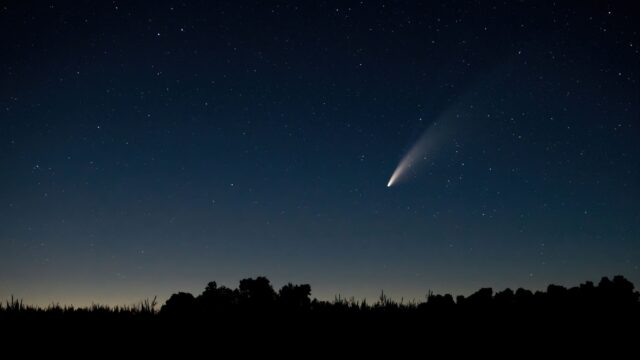
A rock about a meter (approximately three feet) across blazed over Cape Cod Bay at 1:06 p.m. local time (18:06 UTC) on May 30, 2026, and scientists have now traced it to a small asteroid that Jupiter’s gravity pushed onto a comet-like orbit. A team led by Juha Vierinen of the Arctic University of Norway in Tromsø reports the work as a preprint on the arXiv server, according to Space.com. It has not been peer-reviewed.
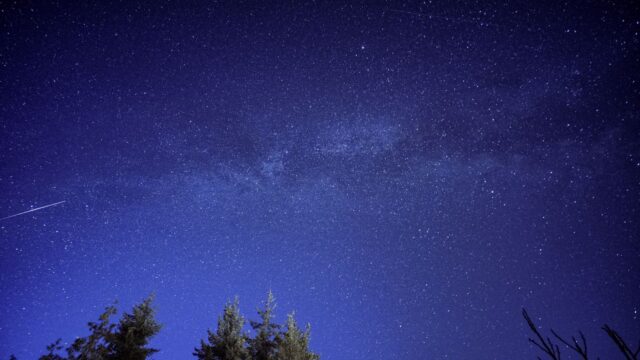
Witnesses saw the daytime fireball, known as a bolide, and some reported a sonic boom along the northeastern U.S. coast. The team found no link to any known meteor shower.
How the team pieced the fall together
The researchers combined several kinds of data: a meteor-observing radar network, ordinary weather radar, infrasound stations (which pick up low-frequency pressure waves in the air) and dash-cam and security camera footage.
The central instrument was SIMONe, a meteor radar network based at MIT’s Haystack Observatory. MIT, the Arctic University of Norway and the Leibniz Institute of Atmospheric Physics in Kühlungsborn, Germany, developed it together. Radio scientist Ryan Volz of Haystack said the event was lucky: a bolide must enter the atmosphere within about 62 miles (100 kilometers) of such a radar for its “head echoes” to be detectable, and only a handful of places in the world meet that condition.
A head echo is the radar return from the plasma cloud around a meteoroid as it superheats the air. Here it was seen from about 56 miles (90 kilometers) altitude down to about 44 miles (71 kilometers). It then became a trail echo, from the turbulent plasma left behind, which was detected unusually low, down to 20 miles (32 kilometers). At that point the rock fragmented with a force equivalent to 500 tons of TNT. The total impact energy was in the region of 1.1 kilotons of TNT. Only three recorded bolides worldwide had a greater impact energy in 2025.
Four NEXRAD weather radars, jointly operated by the National Weather Service, the Federal Aviation Administration and the U.S. Air Force, then recorded the debris as chunks fell into the bay.
Home sensors helped locate it
Infrasound readings came from the Elginfield array in Ontario, Canada, and from citizen scientists running Raspberry Shake/Boom sensors, which are build-your-own micro-barometers. Vierinen said six citizen-operated sensors jointly constrained the arrival direction, while five other single-station detections and the Ontario array supplied the signal periods used to estimate the energy release.
A rock from the asteroid belt on a comet-like path
From how deep the object penetrated before breaking up, the team concluded it was a fairly solid body, possibly rich in iron. Tracing the path back into space, they found an elongated orbit reaching almost as far out as Jupiter. Comets on such orbits are called Jupiter-family comets, but this object was not a comet. Earlier research has shown Jupiter can pull small asteroids out of the main belt between Mars and Jupiter onto such orbits.
Team member Marc Fries said the farthest point of its orbit lies close to Jupiter’s orbit, which suggests a close pass by the planet may have sent it onto its recent Earth-crossing path. Vierinen said the exact history cannot be determined.
Why it matters
Meter-sized meteoroids are hard to study. They are difficult to spot in space from Earth, and they are too rare to fall as often as the pebble-sized grains that make shooting stars. Fries said each new measurement of power, location and originating orbit adds to the statistics for these less frequently encountered bodies.
The authors say the method shows that radar echoes, weather radar and infrasound together can pin down the orbits of impacting meteoroids very accurately. Space.com notes the object was far smaller than the roughly 18-meter asteroid that exploded over Chelyabinsk, Russia, in 2013 with an energy equivalent to between 400 and 500 kilotons of TNT. Tracing such rocks to their orbits could in future reveal new populations of potentially hazardous impactors.
Coverage is a limit. Volz said meteor radar networks like SIMONe are progressing, but global coverage is still sparse.
Source: Space.com