What Was the Biggest Dinosaur Ever? Length, Weight and Debate
A thigh bone taller than a person, a cast too long for most museum halls and weight estimates that swing by tens of tonnes: how scientists size up the largest dinosaurs.
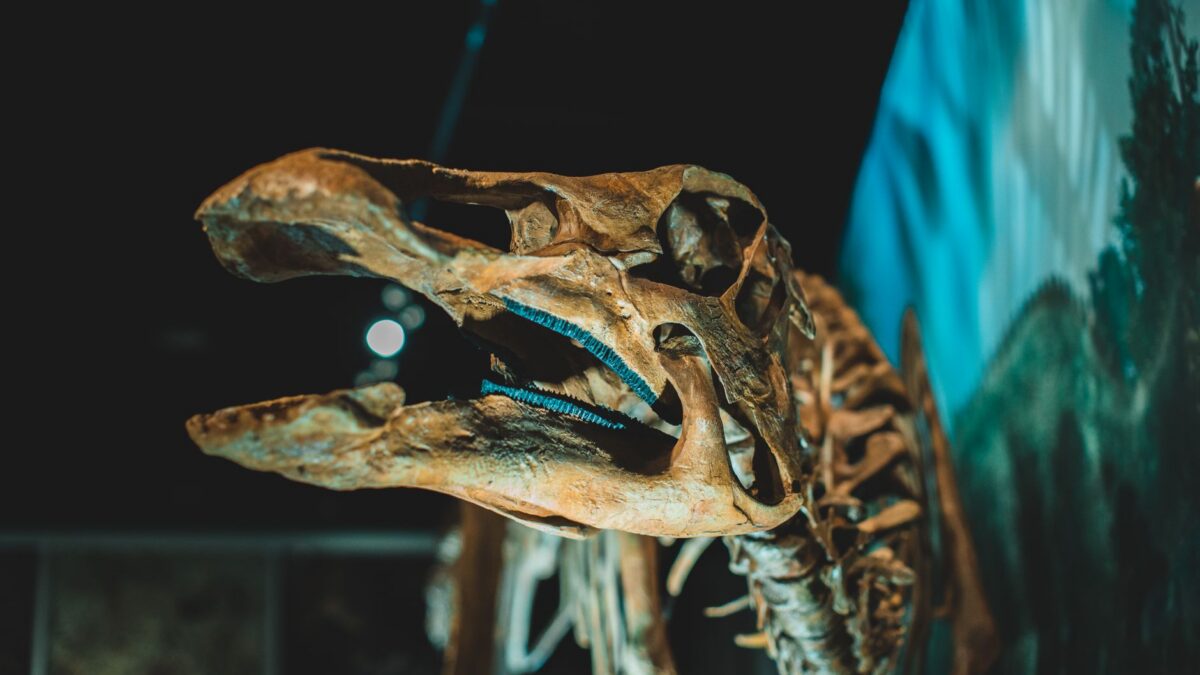
The biggest dinosaurs were titanosaurs, long-necked plant-eaters from South America. London’s Natural History Museum lists Argentinosaurus at about 70 tonnes and 35 meters (115 feet), and Patagotitan at about 57 tonnes and 37.5 meters, possibly the longest dinosaur known. The study that named Patagotitan in 2017 estimated 69 tonnes. The largest meat-eater was Spinosaurus, at about 14 meters.
All of these numbers are estimates from incomplete skeletons, and they shift as methods improve.
Which dinosaur was the heaviest?
Argentinosaurus and Patagotitan are the main contenders, with Argentinosaurus usually placed first. The trouble is that Argentinosaurus is known from only a few bones, mostly vertebrae and ribs, so its mass is inferred by comparison with better-known relatives. Patagotitan is known from several partial skeletons, which makes its estimate more reliable.
| Dinosaur | Estimated mass | Estimated length | Notes |
|---|---|---|---|
| Argentinosaurus | About 70 t | About 35 m | Known from fragmentary remains |
| Patagotitan | 57 t (NHM); 69 t ±17 (2017 paper) | About 37.5 m | Several partial skeletons from one site |
| Dreadnoughtus | 59 t in 2014; 22 to 38 t in 2015 models | About 26 m | Unusually complete skeleton |
| Turiasaurus | About 51 t | 30 to 39 m | Largest dinosaur found in Europe |
| Puertasaurus | About 50 t | About 30 m | Known from four vertebrae |
Figures are from the Natural History Museum, London, unless noted. One tonne is 1,000 kg, or about 1.1 US tons.
Which dinosaur was the longest?
Patagotitan is a strong candidate at about 37.5 meters (123 feet), according to the Natural History Museum. The Field Museum in Chicago displays a cast of Patagotitan, nicknamed Máximo, that stretches 122 feet and stands 28 feet tall at the head. The museum says the animal weighed about 70 tons in life and was found on a farm near La Flecha in Patagonia, Argentina.
Length estimates carry their own uncertainty, because necks and tails are rarely complete. Turiasaurus from Spain has a published range of 30 to 39 meters, which overlaps Patagotitan. The record for the longest neck goes to Mamenchisaurus sinocanadorum from China, estimated at about 15 meters for the neck alone.
Why do size estimates vary so much?
Because no one can weigh a dinosaur, and the two main methods give different answers. The clearest case is Dreadnoughtus. When it was described in 2014, a scaling equation based on limb bones gave about 59.3 tonnes. A 2015 study in Biology Letters built a 3D model of the skeleton and found that mass “highly implausible,” producing models of about 22 to 38 tonnes instead.
- Limb-bone scaling. In living four-legged animals, the combined circumference of the upper arm bone (humerus) and thigh bone (femur) tracks body mass. The NHM notes this has been checked only up to African elephants of about six tonnes, while the largest dinosaurs may have been ten times heavier.
- Volumetric models. Scientists wrap a digital skeleton in a minimal “skin,” add about 21 percent for flesh, assign tissue densities and subtract the lungs. The NHM says this method is well tested in living animals but needs a nearly complete skeleton.
- Missing bones. Length is often inferred from a better-known relative, assuming the same proportions.
How was Patagotitan’s weight estimated?
The team that named Patagotitan used limb-bone scaling. In the 2017 paper in Proceedings of the Royal Society B, the circumferences of the femur and humerus gave a mass of about 69 tonnes, with a standard error of 17 tonnes either way. The authors noted that this overlaps with the upper range for Dreadnoughtus, so the ranking of the very largest dinosaurs is not settled.
The NHM lists a lower 57 tonnes, a sign of how much these estimates still vary. Expect these numbers to keep moving as fossils are found and models improve.
What was the biggest meat-eating dinosaur?
Spinosaurus was the longest known meat-eating dinosaur, at about 14 meters (46 feet), according to the NHM, which puts it at about 7.4 tonnes. Giganotosaurus and Tyrannosaurus rex come close.
| Predator | Estimated length | Estimated mass |
|---|---|---|
| Spinosaurus | About 14 m | About 7.4 t |
| Giganotosaurus | About 13 m | About 7.2 t |
| Tyrannosaurus rex | About 13 m | About 7 t (NHM); about 9.5 t for SUE (2011 3D-scan study) |
Spinosaurus was long and fairly slender, with a tall sail on its back, so its length overstates its bulk. Mass estimates for the three overlap, and they depend on the method used. The Field Museum says its T. rex skeleton, SUE, is more than 40 feet long and 13 feet tall at the hip, physically the largest T. rex specimen found. A 2011 study in PLOS ONE that built 3D models from scanned skeletons put SUE at perhaps about 9.5 tonnes and typical adult T. rex at 6 to 8 tonnes.
Was any animal bigger than the largest dinosaurs?
Yes. NOAA Fisheries calls the blue whale the largest animal ever to live on Earth, at up to 110 feet long and 330,000 pounds (about 150 tonnes) for Antarctic blue whales. That is roughly twice the highest dinosaur estimates. Water supports a whale’s weight in a way land cannot support a sauropod’s.
The age of these giants comes from the rock layers around them; see how fossils are dated. Their reign ended 66 million years ago, explained in what killed the dinosaurs.
Bottom line
The heaviest dinosaurs were South American titanosaurs. Argentinosaurus is usually listed at about 70 tonnes, and Patagotitan at 57 to 69 tonnes and about 37.5 meters long. Estimates depend heavily on method and completeness, as the drop for Dreadnoughtus from 59 to between 22 and 38 tonnes shows. The longest predator was Spinosaurus at about 14 meters; T. rex was probably heavier.
FAQ
What is the biggest dinosaur ever found?
By mass, Argentinosaurus and Patagotitan, both from Argentina, are the leading candidates at roughly 57 to 70 tonnes. Patagotitan is better known because more of its skeleton has been found.
Was Spinosaurus bigger than T. rex?
Longer, yes: about 14 meters against about 13 for T. rex, per the NHM. In weight the estimates overlap; a 2011 3D-scan estimate of about 9.5 tonnes for SUE is higher than the NHM’s 7.4 tonnes for Spinosaurus, but the two figures come from different methods.
Is the blue whale bigger than any dinosaur?
Yes. NOAA Fisheries says the blue whale is the largest animal ever to have lived, reaching up to 330,000 pounds, about twice the heaviest dinosaur estimates.
Where can I see a Patagotitan?
Casts of Patagotitan are on display at the Field Museum in Chicago and the American Museum of Natural History in New York, according to the museums.