How SpaceX Reuses Falcon 9 Boosters, From Landing to Next Flight
Reusable boosters changed how often rockets fly. Here is how a Falcon 9 first stage gets back to Earth, what happens before its next launch and how Starship aims to go further.
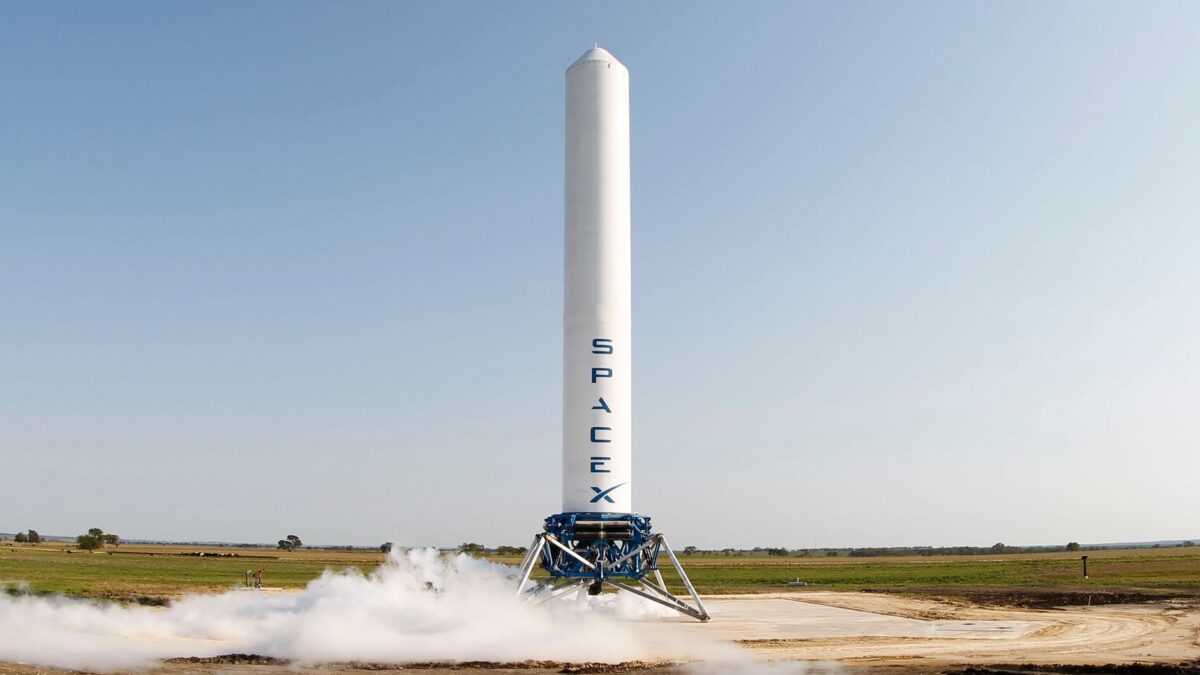
SpaceX reuses its Falcon 9 first stage by flying it back after launch and landing it upright, either on a droneship at sea or on a landing zone near the launch site. The booster is then inspected, refurbished and flown again. As of August 2026, the fleet leader, booster B1067, had flown 37 times.
Only the first stage and the nose cone halves, called fairings, are reused on Falcon 9. The second stage, which carries the payload to orbit, is discarded. SpaceX’s newer Starship is designed so that both of its stages can be reused.
How does a Falcon 9 booster land?
The booster lands with a series of engine burns and steering fins after it separates from the second stage about two and a half minutes into flight. The exact sequence depends on whether it is coming back to land or landing at sea.
- Stage separation: the first stage shuts down its engines and separates.
- Boostback burn (land landings only): the booster flips and fires engines to reverse course toward the coast.
- Grid fins deploy: four lattice fins near the top steer the booster as it falls.
- Entry burn: a few engines fire to slow the booster before it hits the thicker air, which protects it from heat.
- Landing burn: a single engine lights in the last seconds, four landing legs deploy and the booster touches down.
The terms used during this sequence, such as MECO and entry burn, are explained in our Falcon 9 flight timeline.
Where do Falcon 9 boosters land?
Boosters land either on an autonomous droneship in the ocean or on a concrete landing zone on the coast. Heavier payloads and higher orbits need more fuel to reach orbit, which leaves too little to fly all the way back, so those boosters land at sea.
| Landing site | Area | Typical use |
|---|---|---|
| A Shortfall of Gravitas (droneship) | Atlantic, for Florida launches | Most Falcon 9 missions from Florida |
| Just Read the Instructions (droneship) | Atlantic, for Florida launches | Most Falcon 9 missions from Florida |
| Of Course I Still Love You (droneship) | Pacific, for Vandenberg launches | Most Falcon 9 missions from California |
| Landing zones at Cape Canaveral | Florida coast | Lighter missions, crew and cargo flights, Falcon Heavy side boosters |
| Landing Zone 4 | Vandenberg, California | Lighter missions from Vandenberg |
A droneship landing hundreds of miles offshore cannot be seen from the beach. After landing, a tug tows the droneship back to port, where cranes lift the booster onto a stand.
Why do booster landings cause sonic booms?
A booster returning to a landing zone travels faster than sound as it descends, which creates a sonic boom heard on the ground. Residents near Cape Canaveral and Vandenberg often hear a double or triple boom a few minutes after liftoff. Droneship landings far out at sea do not produce booms over land. For which areas hear them and how loud they are, see sonic booms from rocket landings.
How many times can a Falcon 9 booster fly?
SpaceX’s most-flown booster, B1067, completed its 37th flight in August 2026, launching Starlink satellites from Cape Canaveral. That was the latest reuse record we could confirm as of November 2026. Several other boosters have flown more than 30 times.
The first Falcon 9 landing came on December 21, 2015, and the first reflight of a landed booster on March 30, 2017. In the years since, flying a used booster has become routine for nearly all Falcon 9 missions, including NASA crew launches. SpaceX has said it is working toward boosters that fly up to 40 times, and its own Falcon 9 page keeps a running count of landings and reflights.
What happens to a booster between flights?
Between flights, the booster is inspected, cleaned and repaired, then moved back to a hangar near the pad. SpaceX does not publish a full refurbishment checklist, but the main steps are public:
- Engines and the heat shield at the base are checked for wear and replaced if needed.
- Soot from the kerosene fuel is cleaned off, although many boosters keep visible scorch marks.
- Landing legs and grid fins are checked, and the legs are folded back for launch.
- The booster is rolled to the hangar and joined with a new second stage and payload.
Fairings are recovered from the ocean by ships, dried, cleaned and flown again. Turnaround between flights for one booster has dropped to a few weeks.
What does Starship change?
Starship is designed to be fully reusable: both the Super Heavy booster and the Starship upper stage are meant to return and fly again. Instead of landing legs, Super Heavy is caught by two large arms on the launch tower at Starbase, nicknamed “chopsticks,” which SpaceX first did in October 2024. SpaceX plans to catch the upper stage the same way.
If both stages can be reused quickly, the cost per launch could fall further than with Falcon 9, which still throws away its second stage. As of early November 2026, Starship had not yet launched from Florida; SpaceX’s Starship page has the latest program details. For context on how the other rocket makers compare, see who the major rocket companies are.
Bottom line
A Falcon 9 booster comes home by flipping, braking and landing on its own legs, either on a droneship at sea or at a landing zone near the coast. After inspection and refurbishment it flies again, and the most-flown booster had reached 37 flights by August 2026. Starship aims to reuse both stages and catch them at the tower.
FAQ
Does SpaceX reuse the second stage?
No, not on Falcon 9. The second stage is discarded after it delivers its payload. Starship is designed to reuse its upper stage as well.
Can you watch a booster landing?
Landings at coastal landing zones can be seen from public viewing areas on clear days, and you will hear the sonic boom. Droneship landings happen far offshore and can only be watched on the webcast.
Are reused boosters safe for astronauts?
NASA has approved flown boosters for its crew missions, and SpaceX launches crews on previously flown Falcon 9 boosters. Each booster goes through inspection and NASA review before a crew flight.