Can Turkeys Fly? Wild vs. Farm Turkeys Explained
Wild turkeys can fly in short, fast bursts and roost in trees, while farm turkeys are too heavy to get airborne. Here is how the two birds differ.
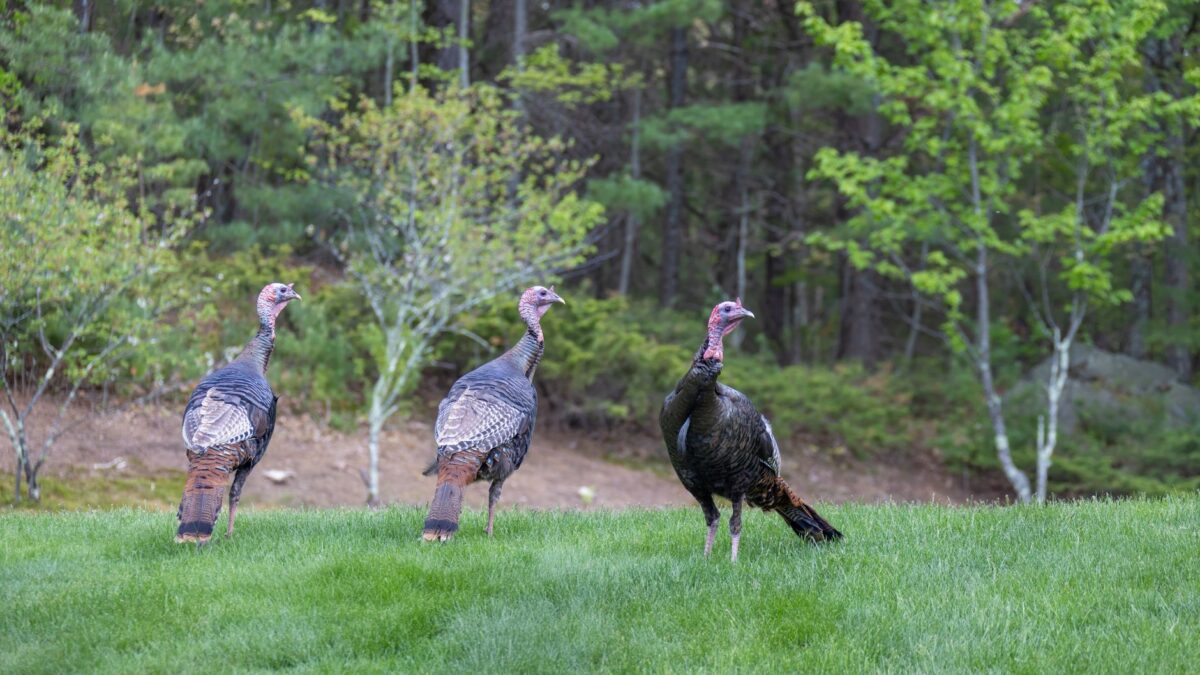
Yes, wild turkeys can fly. They take off almost straight up, flap hard for a short burst and glide down, and they sleep in trees at night. Most turkeys raised on farms for meat cannot fly at all, because selective breeding has made them far too heavy for their wings to lift.
The answer depends on which bird you mean. The wild turkey is a lean, long-legged bird adapted to forests and field edges, and the common farm turkey descends from it but has been bred for size.
Can wild turkeys really fly?
Wild turkeys fly well over short distances. A startled bird launches from the ground with powerful wingbeats, climbs quickly and levels out in a flat glide, usually covering a field’s width or a short stretch of woods before landing. They do not make long, sustained flights like ducks or geese, because their big, heavy flight muscles are built for sudden bursts rather than endurance.
On the ground, a wild turkey often chooses to run instead. It has long legs, runs fast and flies mainly when running is not enough, for example to escape a predator or to reach a roost.
Why do wild turkeys sleep in trees?
Wild turkeys roost in trees at night to stay out of reach of ground predators such as foxes, coyotes and bobcats. At dusk they fly up into branches, often several birds in the same tree, and they fly back down at dawn. Flight is what makes this possible: a bird that could not get off the ground would have to sleep where predators walk.
Young turkeys, called poults, cannot fly when they hatch. They begin short flights within a couple of weeks, and until they are strong enough, the hen keeps them on the ground at night under her wings.
Why can’t most farm turkeys fly?
The domestic turkey most people eat, the Broad Breasted White, has been bred over many generations for rapid growth and a very large breast. A mature male can weigh 30 pounds (about 14 kg) or more, while a wild male is considerably lighter. The wings stay about the size they would be on a much smaller bird, so lift is not enough for the body they carry.
That extra size also changes how the birds live. Commercial turkeys are raised indoors or in enclosed ranges, so there is little need to roost or escape predators. Their breeding has gone so far that these birds usually cannot mate naturally, and farms rely on artificial insemination to produce the next generation.
Do all domestic turkeys stay on the ground?
No. Heritage breeds, such as the Bourbon Red and the Narragansett, are older varieties that grow more slowly and keep a build closer to the wild bird’s. Many of them can fly short distances, perch on fences or roofs and roost in trees if given the chance. Keepers who raise them often clip a wing or provide a covered run so the birds do not wander off or end up on a neighbor’s roof.
Wild and commercial birds also look different. The wild turkey has dark, coppery feathers with a bronze sheen and a slimmer body. The Broad Breasted White has white plumage, which makes the carcass look cleaner after processing, and a broad, rounded chest.
How do wild and farm turkeys compare?
- Body: the wild turkey is slim and long-legged. The farm turkey is broad-chested and heavy.
- Weight: wild males often weigh around 15 to 20 pounds (7 to 9 kg). Commercial males can reach 30 pounds (14 kg) or more.
- Flight: wild birds fly in short bursts and roost in trees. Commercial birds cannot fly.
- Color: wild turkeys are brown and bronze. Commercial turkeys are white.
- Breeding: wild turkeys mate naturally. Commercial turkeys are typically bred by artificial insemination.
- Habitat: wild turkeys live in woods and open ground. Commercial turkeys live in barns and enclosed yards.
Are wild turkeys related to dinosaurs?
Like all birds, turkeys are living members of the dinosaur family tree, which is why the turkey-sized dinosaur nicknamed the hell chicken draws so many comparisons. A turkey’s feet, scaly legs and sharp spurs are reminders of that ancestry.
Quick answers
How far can a wild turkey fly?
Not far. Wild turkeys fly in short bursts, typically covering a field or a stretch of woods before landing, and they prefer to walk or run when they are not in a hurry.
Can a Thanksgiving turkey fly?
The turkey sold for a holiday dinner is nearly always a Broad Breasted bird, and those cannot fly. Another holiday question about the bird is covered in the article on whether turkey makes you sleepy.
Do turkeys really sleep in trees?
Wild turkeys do. They fly up at dusk to roost and come back down at dawn, which keeps them away from predators on the ground.
Why are farm turkeys white?
The Broad Breasted White was bred with white feathers, partly because pale pinfeathers are less visible on the finished carcass than dark ones.