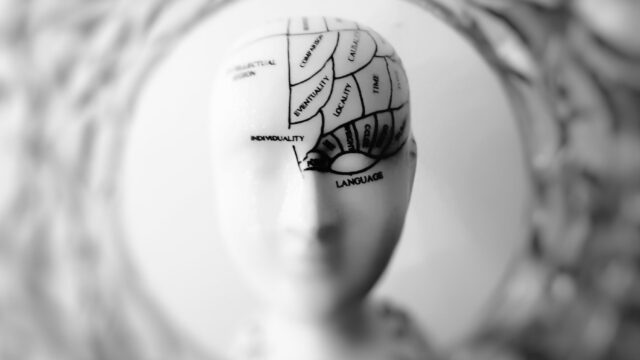
Why Do We Dream? What Sleep Science Does and Doesn’t Know
Scientists have no single agreed reason why we dream, but sleep research points to memory, emotion and brain activity. See what is known and what is not.

Scientists do not yet agree on why people dream. Dreams are the stories, images and feelings the brain produces during sleep, and they occur mostly in rapid eye movement (REM) sleep, when brain activity looks close to waking. Leading ideas link dreaming to memory processing, emotional regulation and the brain’s own spontaneous activity, but none has been proven to be the single purpose.
When during the night do dreams happen?
Dreams can occur in any sleep stage, but the most vivid, story-like ones come in REM sleep. A night of sleep is made of cycles lasting roughly 90 minutes, each moving through lighter sleep, deep sleep and REM. Early cycles contain more deep sleep, and REM periods grow longer toward morning, which is why many remembered dreams come from the last hours before waking.
During REM sleep the eyes move under closed lids, breathing and heart rate become irregular, and the brain is highly active. Most of the body’s voluntary muscles are temporarily switched off, so a sleeper does not physically act out the dream. Dreams in non-REM sleep tend to be shorter, plainer and more thought-like, though people woken from them do report experiences.
Does everyone dream?
Healthy people dream every night, even those who say they never do. The difference is recall. Dream memory fades within minutes unless the dream is rehearsed or the sleeper wakes during or just after it, so people who wake rarely or abruptly remember less. Many people who say they never dream describe a dream when they are woken during REM sleep in a sleep lab.
Mammals and birds show REM-like sleep, and animals appear to have some form of dreaming brain activity, though what they experience cannot be asked about. The sleep patterns of other species are covered in how animals sleep, from half-brain naps to torpor.
What are the main scientific theories of why we dream?
Several theories compete, and they are not mutually exclusive.
- Memory consolidation. Sleep helps the brain stabilize new learning, and dreams may be a by-product of replaying and reorganizing recent experiences. In animal experiments, patterns of brain activity from waking tasks come back during sleep.
- Emotional processing. REM sleep occurs while stress-related chemicals in the brain are low, and some researchers propose that dreams help dull the sting of difficult memories while keeping their content.
- Activation-synthesis. Originally proposed in the 1970s, this idea holds that dreams are the cortex’s attempt to make a story out of random signals from the brainstem. Newer versions accept that the content is not entirely random.
- Threat simulation. This theory suggests dreams rehearse danger and social conflict, which would explain why chases, falls and embarrassing situations are so common. Evidence for it is limited.
- Brain maintenance. Some scientists suggest that dreaming keeps the visual system and other networks active during long stretches of sleep.
Sigmund Freud’s view that dreams are disguised wishes shaped psychology for decades, but modern sleep science has not confirmed it as a general explanation.
Why are dreams so strange?
Dreams are odd because the brain regions that handle logic, planning and self-monitoring, mainly the prefrontal cortex, are less active in REM sleep, while areas for emotion, memory and vision are very active. The result is a story with vivid images and strong feelings but weak critical checking. That is why a sudden change of place or a dead relative appearing alive seems normal while dreaming and absurd on waking.
Dream content usually draws on daily life: people you know, places you have been, concerns on your mind. Falling, being chased, teeth problems and arriving unprepared for a test are reported across many cultures. Real events from the previous day often appear in altered form.
Can sleep problems or medications change dreams?
Yes. Stress, illness, alcohol, withdrawal from certain substances and some prescription drugs can make dreams more intense, more frequent or more disturbing. Antidepressants and other medications can alter REM sleep. Anyone who notices a sudden change in dreams after starting or stopping a medication should ask the prescribing doctor or a pharmacist.
Poor or short sleep affects dreaming too. After sleep deprivation the brain tends to catch up on deep sleep first and then REM, and the REM that follows can feel unusually vivid. Why sleep matters in the first place is explained in why the brain needs sleep, and a study of brain scans linking sleep disorders to a smaller thalamus is reported in 57 brain imaging studies.
Frequent nightmares, or dreams in which a person shouts, kicks or punches, can signal a sleep disorder. In REM sleep behavior disorder the usual muscle paralysis fails and the sleeper acts out dreams, which can cause injury. The National Institute of Neurological Disorders and Stroke at NINDS provides information on sleep disorders, and a doctor or sleep specialist can evaluate them.
Can you control or remember your dreams?
Some people can learn to remember more dreams, and a minority can become aware that they are dreaming. This is called lucid dreaming. Common suggestions for better recall are keeping a regular sleep schedule, getting enough hours of sleep, and writing down whatever you remember immediately on waking, before the details fade. Lucid dreaming has been verified in sleep labs, where lucid dreamers signal with deliberate eye movements, but how reliably it can be trained is still being studied.
Dream content cannot be reliably predicted or steered, and dream symbols have no fixed dictionary of meanings. A dream may reflect what is on someone’s mind, but interpretations are guesses unless they come from the dreamer’s own context.
Quick answers
Are dreams in color?
Most people report at least some color in their dreams. Reports vary, and details of color are often forgotten on waking, so the true proportion is hard to measure.
Why do I forget my dreams so fast?
The brain in REM sleep is not well set up for storing memories of its own experiences. Unless you wake during a dream and think about it, the memory usually fades within minutes.
Do dreams predict the future?
No scientific evidence shows that dreams foretell events. Dreams that seem to come true can be explained by the large number of dreams people have and by the way waking concerns shape dream content.
Is it a problem if I have vivid dreams?
Vivid dreams are common and usually harmless. A doctor is the right person to ask if they come with poor sleep, daytime exhaustion, injury or distress.