Can We See Evolution Happen? Five Cases Scientists Have Watched
Evolution is usually pictured over millions of years. These studies caught it in flasks, on a tiny Galápagos island and on an Adriatic islet within a human lifetime.
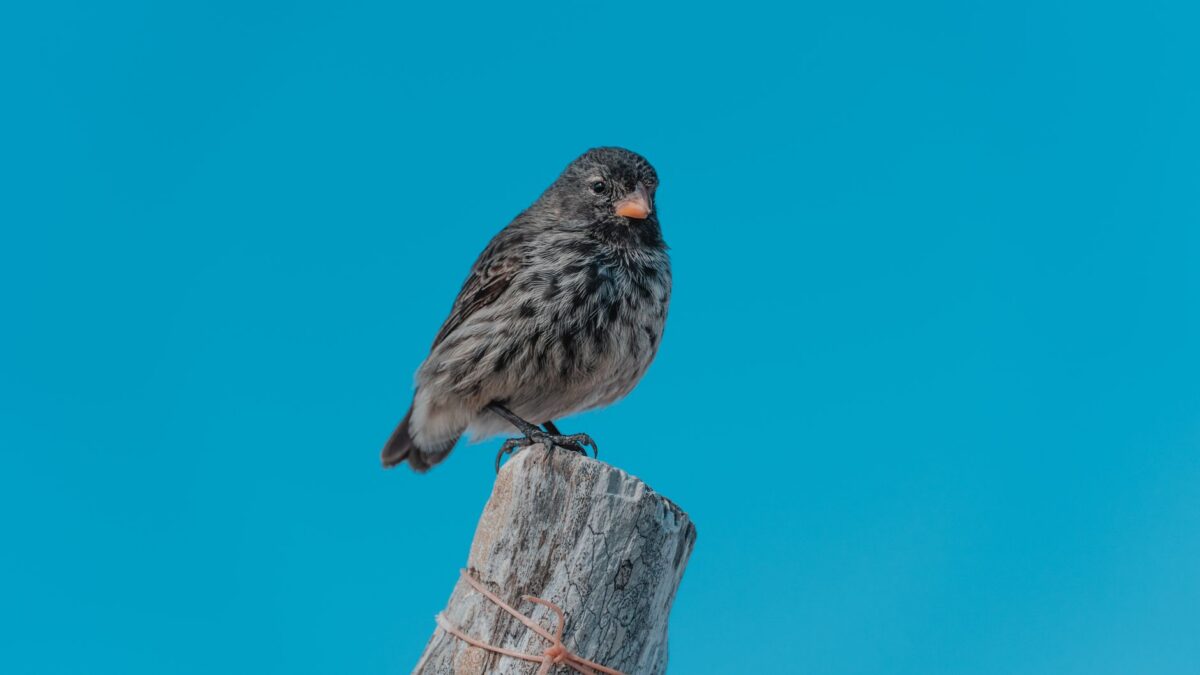
Yes, scientists can watch evolution happen. In a Michigan lab, 12 populations of E. coli bacteria have been evolving since 1988, passing 82,000 generations by 2025. On the Galápagos island of Daphne Major, finch beaks changed after a single drought. Peppered moths, island lizards and invading cane toads have also changed measurably within decades.
All of these cases show natural selection at work, the core process behind evolution.
What is natural selection in plain words?
Natural selection is what happens when individuals in a population differ in inherited traits, and some of those traits help them survive or reproduce better in their surroundings. Those individuals leave more offspring, so their traits become more common in the next generation. Over many generations, the population changes.
Three ingredients are needed: variation between individuals, inheritance of that variation, and a difference in survival or reproduction linked to it. When conditions change, which traits do best can change too. Evolution in the broad sense is any change in the inherited makeup of a population over generations, and natural selection is one of its main drivers.
What has the E. coli long-term evolution experiment shown?
The long-term evolution experiment, or LTEE, started in 1988 in the lab of biologist Richard Lenski, then at Michigan State University. He set up 12 flasks of E. coli, all from the same ancestor, in a simple sugar broth. Every day a small sample from each flask is moved to fresh broth, and the bacteria grow for several generations before the next transfer.
Samples are frozen at regular intervals, creating a living “fossil record” that researchers can revive and compare directly with later generations. According to a November 2025 Michigan State University report, the experiment moved in 2022 to the University of Texas at Austin under Jeffrey Barrick, a former member of Lenski’s lab, reached 82,000 generations there, and has now returned to MSU with Barrick.
The best-known result came in one flask. The broth contains citrate, a compound E. coli normally cannot use as food when oxygen is present. MSU reports that in 2003, after about 31,000 generations, one population evolved the ability to eat citrate. Because frozen ancestors were available, researchers could replay evolution from different points and test whether earlier mutations in that lineage set the stage for it.
How did a drought change Darwin’s finches?
Peter and Rosemary Grant spent decades measuring every finch they could catch on Daphne Major, a tiny volcanic island in the Galápagos. In a 1981 paper in Science, Peter Boag and Peter Grant reported that survival through a drought on the island was not random. Larger birds, especially males with large beaks, survived best because they could crack the large, hard seeds that dominated after the drought. The authors calculated that the selection was among the strongest ever recorded in a wild vertebrate population.
The Grants also documented the start of what looks like a new lineage. A 2018 study in Science, based on genome sequencing, traced it to a single immigrant male finch from Española, more than 100 km away, that bred with a local medium ground finch. From the second generation onward, its descendants bred only among themselves. The authors concluded that reproductive isolation, which usually takes hundreds of generations, was reached in three.
What happened to the peppered moth?
The peppered moth of Britain comes in a pale speckled form and a dark form. Dark moths became common during the Industrial Revolution, when soot darkened tree bark, and have become rare again since air pollution fell. The usual explanation was that birds more easily spot and eat moths that do not match the bark they rest on.
That explanation was challenged in the 1990s and 2000s, so the British biologist Michael Majerus ran a large field experiment. After he died, colleagues published his results in a 2012 paper in Biology Letters. Majerus released 4,864 moths over six years and found strong bird predation against the dark form on today’s cleaner bark. The authors said the size of this selection was enough to explain the recent decline of dark moths in post-industrial Britain.
Can animals change in a few decades?
Yes. Two well-studied cases involve animals moved to new places.
In 1971, researchers moved five pairs of Italian wall lizards from the Croatian islet of Pod Kopište to the nearby islet of Pod Mrčaru. When a team returned about 36 years later, they found the Pod Mrčaru lizards ate far more plants. In a 2008 paper in PNAS, they reported larger heads, stronger bites and new muscular structures in the gut called cecal valves, which slow food down and help with digesting plants. The paper measured the animals; it does not by itself show how much of the change is inherited and how much reflects how the lizards grew up.
Cane toads were introduced to Australia in the 1930s to control insect pests in sugarcane fields. In a 2006 study in Nature, researchers found that the toad invasion front was advancing about five times faster per year than when the toads first arrived. Toads at the front had longer legs than those in older populations, and longer-legged toads moved faster and arrived first in new areas.
| Case | Time span | What changed | Source |
|---|---|---|---|
| E. coli LTEE | Since 1988, 82,000+ generations | Faster growth; one population began eating citrate | Michigan State University |
| Medium ground finch, Daphne Major | One drought in the 1970s | Large-beaked birds survived best | Science, 1981 |
| Peppered moth, Britain | Since the 1800s | Dark form rose, then fell | Biology Letters, 2012 |
| Italian wall lizard, Pod Mrčaru | About 36 years | Bigger heads, stronger bites, gut valves | PNAS, 2008 |
| Cane toad, Australia | About 70 years | Longer legs at the invasion front | Nature, 2006 |
Why does fast evolution matter?
Evolution is also happening now, on timescales people can measure. Bacteria that evolve resistance to antibiotics, insects that evolve resistance to pesticides and fish populations that change under heavy fishing are all examples of the same process acting on human timescales.
The long view still matters too. Most of the diversity of life, including the estimated millions of species still unnamed, built up over far longer periods, as we explain in how many species exist. Our own lineage has a deep history as well, including relatives such as the Neanderthals.
Bottom line
Evolution can be observed directly. The E. coli long-term experiment has run since 1988 and passed 82,000 generations, with one population evolving to eat citrate. Finch beaks on Daphne Major shifted after a drought, peppered moths rose and fell with pollution, and island lizards and cane toads changed within decades. Each case is natural selection measured in real time.
FAQ
Is evolution “just a theory”?
In science, a theory is a well-tested explanation supported by many lines of evidence. Evolution is supported by fossils, genetics, comparative anatomy and direct observations like the experiments described here.
How fast can evolution happen?
In organisms with short generations, such as bacteria, measurable change can appear in weeks or months. In animals, studies have recorded changes within a few decades, like the Pod Mrčaru lizards and Australian cane toads.
Has anyone seen a new species form?
Researchers studying Darwin’s finches on Daphne Major reported in 2018 that a lineage founded by one immigrant male became reproductively isolated within three generations. Whether to call it a new species is a matter of definition, but it is one of the best-documented cases of a lineage splitting off.
Is the E. coli experiment still running?
Yes. A November 2025 Michigan State University report says the experiment reached 82,000 generations at the University of Texas at Austin and has returned to MSU, where it continues.
Site editor: Nikita Sheikin