Archaeologists Find 900-Year-Old Octagonal Foundations in Japan
Archaeologists on Kuroshima island found 900-year-old octagonal foundations, possibly a pagoda, near Chinese roof tiles shipped about 1,000 kilometres.
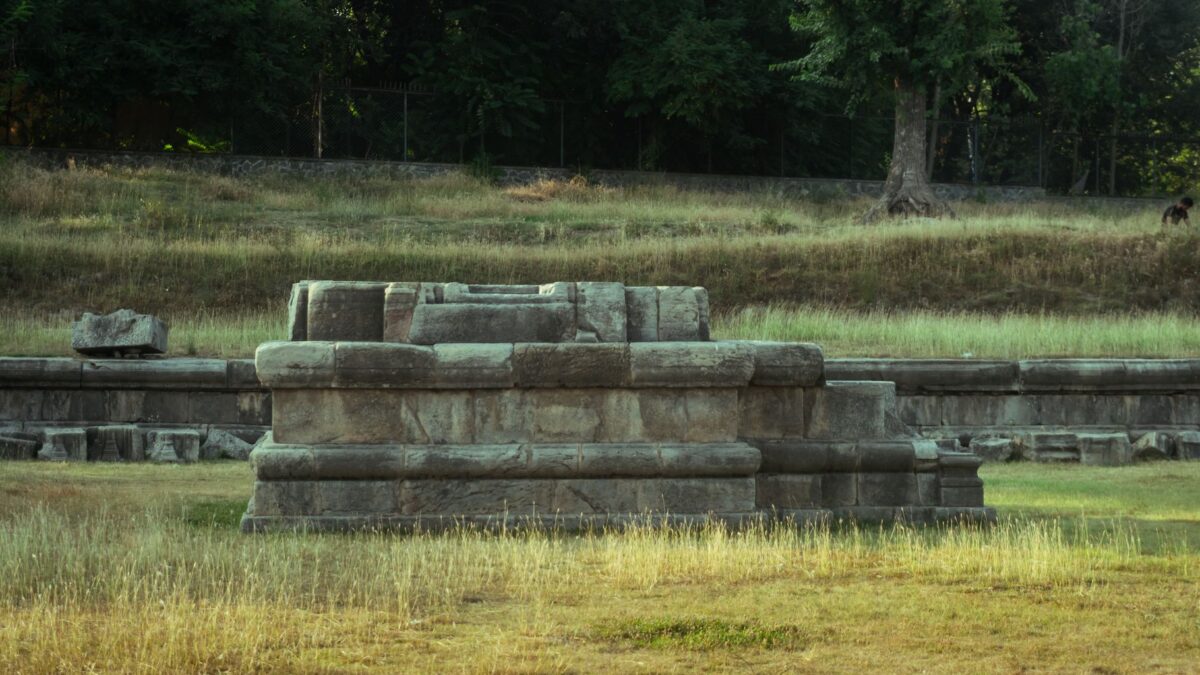
Archaeologists on the Japanese island of Kuroshima have uncovered the stone foundations of an octagonal building about 900 years old. According to HeritageDaily, the team thinks it may be the base of a Buddhist pagoda or another religious building, though the upper structure is gone and nobody can yet say what stood on it.
The find sits at the Ōsato site on Kuroshima, one of the islands of Mishima Village in Kagoshima Prefecture. If the pagoda idea holds up, it would explain why Chinese roof tiles turned up on such a small island.
What the team found
Professor Satoshi Nakazono of Kagoshima International University has led excavations at Ōsato since 2014. Over those years the team recovered ceramics, roof tiles and other objects from China and from different parts of Japan.
This time the researchers recognized an eight-sided layout within an area of levelled ground that had already been recorded at the site. The upper section measures about 8.9 metres between opposite corners, and each side is about 3.4 metres long. A wider lower section may have spread between 10 and 11 metres. Stonework surrounds the foundations, and the soil nearby shows traces of burning.
Why a pagoda is the leading idea
Octagonal plans have a long history in Buddhist architecture in Japan and China, including pagodas and religious halls. Nakazono and his colleagues point to the position of the structure inside an area believed to have had religious importance, and to Chinese-style roof tiles found close by.
They compared the foundations with octagonal buildings elsewhere in East Asia, among them the nine-storey pagoda that once stood at Hōshō-ji Temple in Kyoto and the three-storey pagoda at Anraku-ji Temple in Nagano. These are possible parallels only. The original look and purpose of the Kuroshima building remain uncertain.
Tiles that crossed the sea
The roof tiles found earlier at Ōsato are typical of China’s Southern Song period. Kuroshima is the southernmost place in Japan where tiles of this kind have been found. Similar ones are known from Hakata and other parts of Kyushu, regions closely involved in medieval sea trade between Japan and China.
In 2015, researchers identified tiles made from the same moulds at Ningbo in China. Chemical analysis then indicated that the tiles found in Japan were produced there as well. That means the building materials travelled roughly 1,000 kilometres by sea.
Why it matters for the history of trade
The new foundations raise the possibility that some of the imported tiles roofed a religious building at Ōsato. If that is confirmed, the evidence could show the movement of architectural ideas between China and Japan as well as the shipment of materials.
Kuroshima lies along sea routes in southwestern Japan. The ceramics from Ōsato point to links with wider trading networks, and the nearby island of Iōjima was known in the medieval period for sulphur, a commodity exported to China. Researchers suggest Kuroshima may have belonged to networks connecting Kyushu and Hakata with China and other places. Whether Chinese ships sailed directly to the island is not known.
The octagonal foundations give the first substantial architectural setting for some of the imported materials found there. More research is needed to establish whether the 12th-century structure was a pagoda, a religious hall or another kind of building, and what role Kuroshima played in the cultural and commercial links between medieval Japan and China.
Source: HeritageDaily