Florida Fungus Makes Both Psilocybin and Deadly Amatoxins, a First
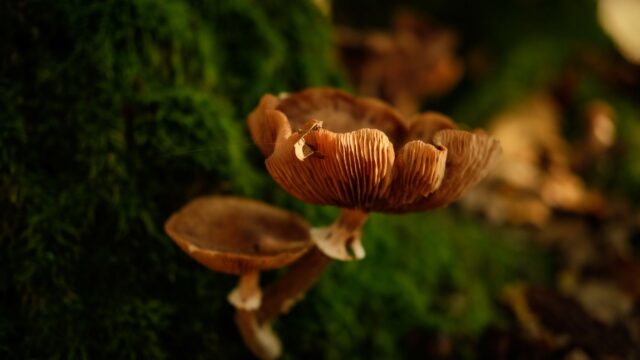
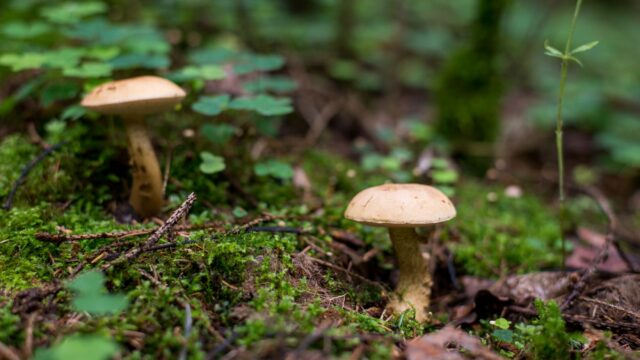
Galerina indica, a mushroom about 0.2 inches tall, is the first found to make both psilocybin and deadly amatoxins, Current Biology reports.
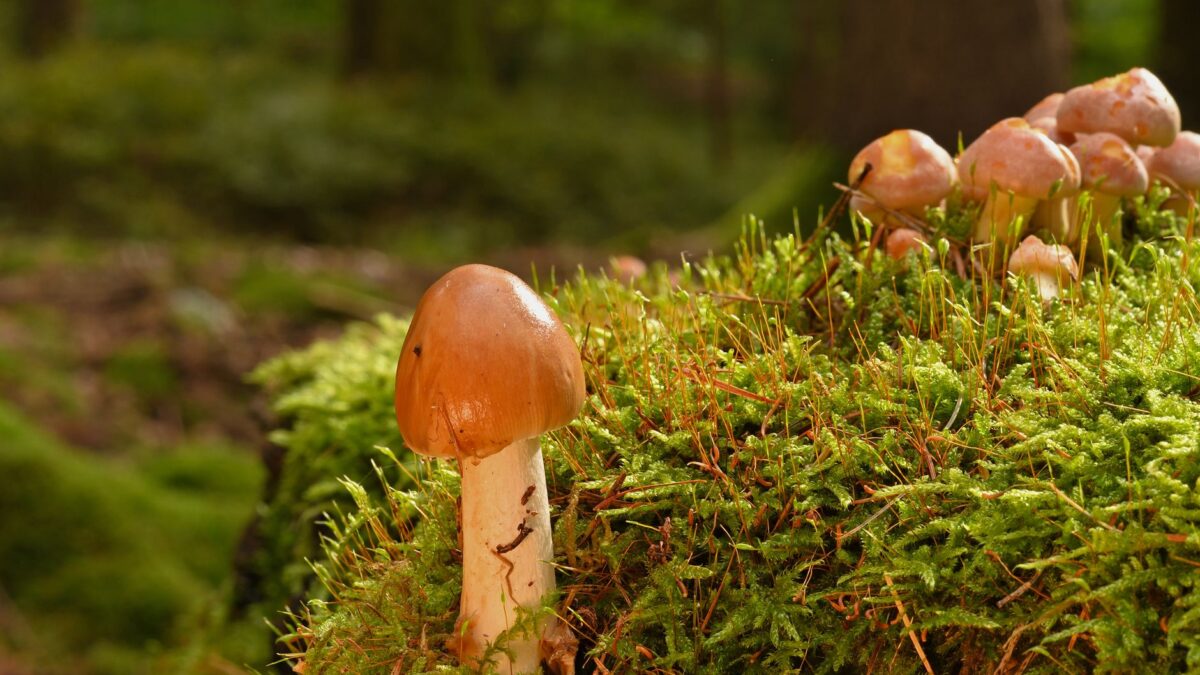
A tiny mushroom from a Florida wetland is the first known to produce both psilocybin and deadly amatoxins, according to a study published in Current Biology on Nov. 11. The species, Galerina indica, makes psilocybin and its relative psilocin along with two amatoxins, Smithsonian Magazine reported. Researchers have nicknamed it the “dark magic mushroom.”
One of the amatoxins had never been documented in any mushroom before.
A blue stain gave it away
Andrew Kunik, a fungal biologist who did the work at the University of Florida, found the fungus on a moss-covered palm trunk while studying fungi in central Florida in 2025. Galerina relatives are known to make amatoxins, so the species was not expected to be anything unusual. Then the specimen turned blue when handled, a common sign that a mushroom makes psilocybin.
The largest G. indica mushrooms stood about 0.2 inches tall, with caps up to roughly 0.1 inches wide, according to Live Science.
How the team checked
Kunik and colleagues ran chemical analyses on the specimen. They also tested two unnamed Galerina species collected in the southeastern United States between January 2024 and September 2025. G. indica contained psilocybin, psilocin and the two amatoxins. One of the other Galerina species had only the psychedelic compounds, and the second made neither type.
The team then compared the DNA of G. indica with that of other psilocybin-producing mushrooms. Their analysis suggests the fungus’s ancestors acquired the genes for psychedelic compounds through horizontal gene transfer. In that process a species receives genetic material from another organism, probably an unrelated mushroom, instead of inheriting it from a parent.
What is still unclear
The researchers suspect the G. indica lineage could already make amatoxins before it picked up the five-gene Psi cluster that produces psilocybin. Two explanations fit the data. The dark magic mushroom and the other psilocybin-producing Galerina species may each have picked up the genes separately from other fungi. Or they may have inherited them from a shared ancestor that received them earlier. The scientists consider the first scenario more likely. They also say they do not yet understand the genus’s family tree, and that identifying the donor mushrooms would be needed for a firmer answer.
Why the fungi make these compounds is also open. Many scientists speculate that psilocybin and amatoxins help fungi ward off predators, mycologist Anne Pringle of the University of Wisconsin-Madison told Science News, but there is not enough evidence to prove it. Pringle was not involved in the study.
Why it matters
Psychedelic mushrooms and deadly mushrooms have long been treated as two separate groups. This species shows that one fungus can carry the chemistry of both. Pringle said the finding shows there is more diversity in fungal chemistry, and in how the compounds are combined, than researchers had considered.
Hannah Reynolds, a fungal ecologist at Western Connecticut State University who was not involved in the work, told Live Science it was striking to see both compound types present, with the gene cluster jumping in, getting rearranged and possibly arriving twice.
Kunik said in a statement: “What’s exciting is that there are small, seemingly uninteresting fungi that can conceal extraordinary chemistry.” The findings open the door to further research on how mushrooms benefit from producing amatoxins or psilocybin.
Source: Smithsonian Magazine