Models Link Missing Billion Years of Rock to Mantle Uplift and Ice
Models in Nature suggest mantle uplift and ice erased over a billion years of rock in the Great Unconformity. How the study worked and its limits.
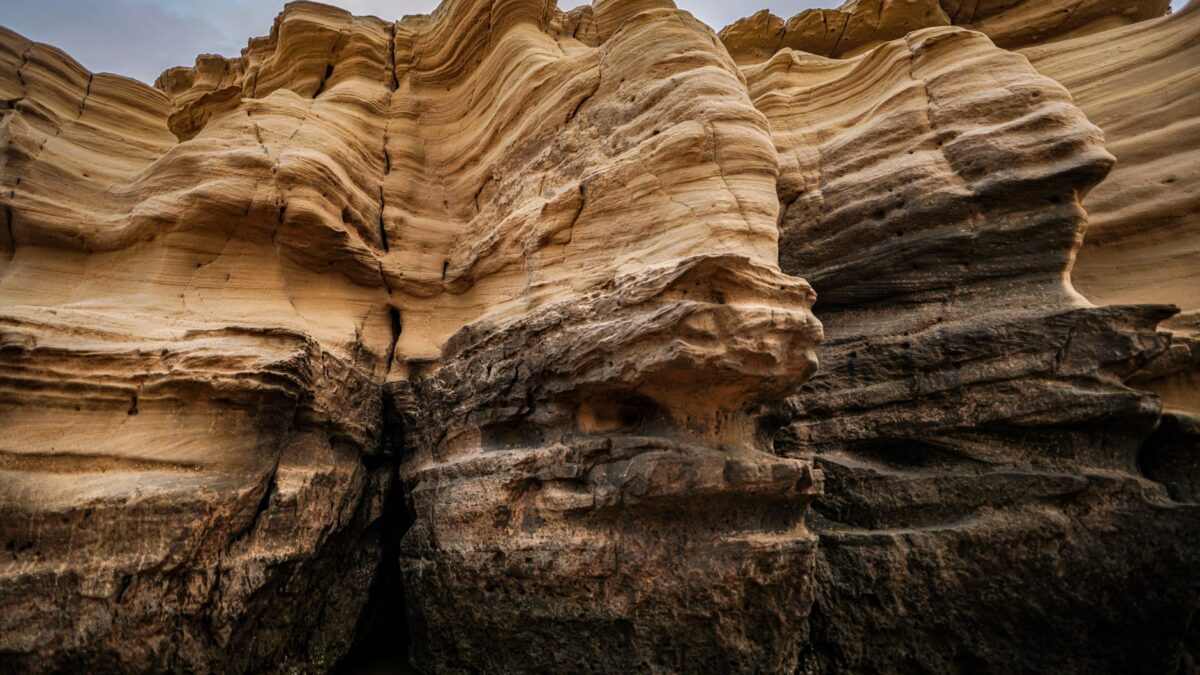
More than one billion years of rock is missing from parts of North America, northern Europe and northern China, and a new set of computer simulations points to a cause: slow movements in Earth’s mantle pushed those regions upward, and giant ice sheets then ground the raised rock away. The study, from researchers at the University of Wollongong in Australia, was published Nov. 4 in the journal Nature, Smithsonian Magazine reported.
The gap is called the Great Unconformity. Geologists first described it in the late 1800s in the layers of the Grand Canyon, and the new work may help settle a puzzle that is about 150 years old.
A hole in Earth’s rock record
Rock layers normally stack up with the oldest at the bottom and the youngest on top, so they work as a record of Earth’s history. In the Great Unconformity, layers that should be older than roughly 540 million years are simply absent in many places. Study co-author Santosh Dhungana, an Earth scientist at Wollongong, compared it to a book with a large section torn out of the middle.
One popular explanation pointed to Snowball Earth, a proposed period some 635 million to 720 million years ago when the whole planet may have been frozen. Moving ice could have scraped the rock away. Ars Technica’s Jacek Krywko noted the problem with that idea: ice covering the entire globe should have erased rock everywhere, and the gap is not found everywhere.
How the team tested the mantle idea
The mantle is the thick, slowly flowing layer beneath Earth’s crust. Hotter material in it rises and cooler material sinks, and that motion, called convection, pushes and pulls on the surface. Some researchers had proposed that this could explain the missing rock, but co-author Nicolas Flament, a geoscientist at Wollongong, told Ars Technica the idea had not been tested with numbers.
Flament and Dhungana built computer models of mantle convection over the past billion years. All six of their models showed the same pattern, the authors wrote in the Conversation: three ancient blocks of continent were lifted up from around a billion years ago until 540 million years ago. Those blocks were Laurentia (now much of North America), Baltica (parts of northern Europe) and North China. Over the past 540 million years, the same regions have sunk.
The period of uplift overlaps with Snowball Earth. Moving ice sheets erode land more efficiently than rivers do, and the scientists propose that the ice wore down the slopes of the raised land and removed millions of years of accumulated rock.
What is still uncertain
The results come from simulations, not from direct measurement of ancient uplift. The role of the ice is the researchers’ interpretation of how the timing fits together, and Smithsonian said the findings help validate some of the proposed explanations without calling the mystery closed. Readers curious about how geologists read ages from stacked rock can find more in our explainer on how fossils and rock layers are dated.
Why it matters for the story of early animal life
The gap sits just before the Cambrian explosion around 530 million years ago, when many kinds of animals appeared in a short span. Shanan Peters, a geoscientist at the University of Wisconsin-Madison who was not part of the study, told Live Science that the erosion may have helped set up that event. By exposing older crystalline rock, it could have released more potassium, iron, manganese and carbon into the oceans, which may have let marine animals build shells. Peters added that this may in turn have put more oxygen into the atmosphere.
Flament put it this way in a statement: “Sometimes what is missing can tell us more about the story of Earth.”
Source: Smithsonian Magazine