Space Station Photo Catches Lightning Atop Storms Near Singapore
An astronaut photo from Oct. 28 shows lightning lighting up storm tops over the South China Sea, beside Singapore's lights and squid boats.
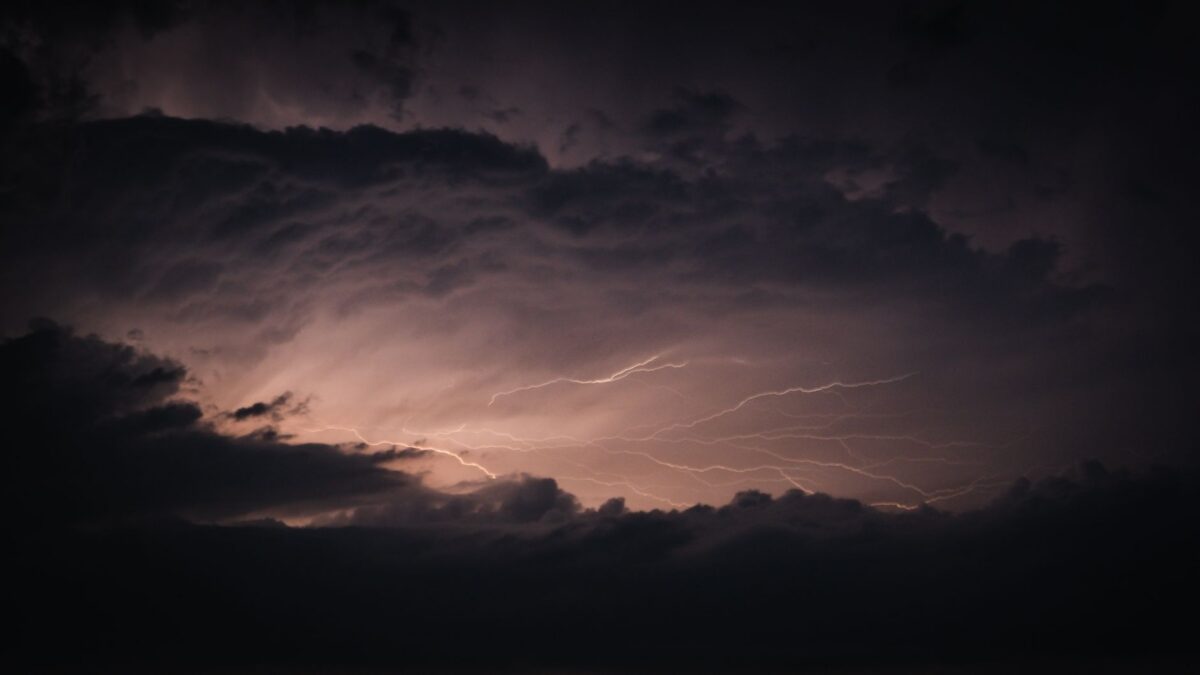
A photo taken from the International Space Station on Oct. 28, 2026, shows lightning flashing inside towering thunderstorm tops over the South China Sea near Borneo, with the lights of Singapore and a fleet of brightly lit fishing boats in the same frame, NASA reported. The station passed over the area at 14:20 UTC, which was 9:20 p.m. local time in Western Indonesia.
Two of the storm tops in the picture were lit from inside by lightning. From orbit, these flashes look like glowing balls spread through the clouds, a view people on the ground never get.
What the astronaut camera recorded
A member of the Expedition 75 crew took the image, catalogued as ISS075-E-250951, with a Nikon Z9 camera and a 14 millimeter lens, according to NASA Earth Observatory. NASA cropped the picture, boosted its contrast and removed lens artifacts before publishing it. The photo comes from the ISS Crew Earth Observations Facility and the Earth Science and Remote Sensing Unit at NASA Johnson Space Center.
Several features called overshooting tops rise out of the storms in the scene. These are dome-shaped bulges that push up above the flat anvil at the top of a thunderstorm, and sometimes into the stratosphere. NASA describes them as a sign of strong rising air and intense storms.
City lights, squid boats and gas flares
Singapore, a city-state of 6.2 million people, sits on the left of the frame. The curving Singapore Strait separates it from Batam and Bintan islands to the south.
West of the city, a tight group of blue lights looks a little like the Pleiades star cluster. NASA says these were likely fishing boats that shine bright lamps on the water to draw squid or schooling fish such as sardines and anchovies. Farther offshore to the northwest, scattered orange dots are likely gas flares. NASA uses “likely” for both identifications, so neither is confirmed from the image alone.
Why lightning looks different from above
Sally Ride, the first American woman in space, wrote about this view in an essay for Air & Space magazine. People on the ground see lightning from below the clouds, she noted, while astronauts see it from above, where the clouds spread each bolt into a burst of light. When a storm stretches across hundreds of miles, she compared it to crews “tossing fireworks from cloud to cloud.”
NASA astronaut Anil Menon has called lightning “my favorite sight from space.” In a video he posted on X, showing Earth’s dark edge with flashes flickering almost nonstop, he said lightning is hard to capture and share. Fellow astronaut and photographer Donald Pettit wrote in the same magazine that fishing fleets on dark oceans reminded him of a constellation.
If you want the physics of how storm clouds build up charge, our explainer on what causes lightning covers it.
Why it matters
Lightning happens constantly across the planet. NASA scientists estimate about 2,000 thunderstorms are active on Earth at any moment, producing nearly 60 flashes per second, or roughly 5 million flashes a day. From the ground, a person sees only the storms nearby. From orbit, astronauts can watch many storms at once and see how far they reach.
Photos like this one are part of the ISS National Lab’s work to help astronauts take pictures of Earth that are useful to scientists and the public, and to release them free online. NASA’s Gateway to Astronaut Photography of Earth holds more images taken by astronauts and cosmonauts.
Source: NASA