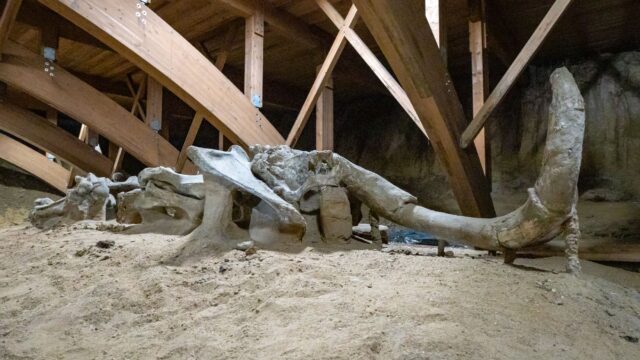
Teeth From Two Chinese Caves Show Homo Erectus Lived in Rainforest
Nine teeth from two Guangxi caves show Homo erectus survived in mainland Asia up to 216,000 years longer than thought, and lived in tropical rainforest.
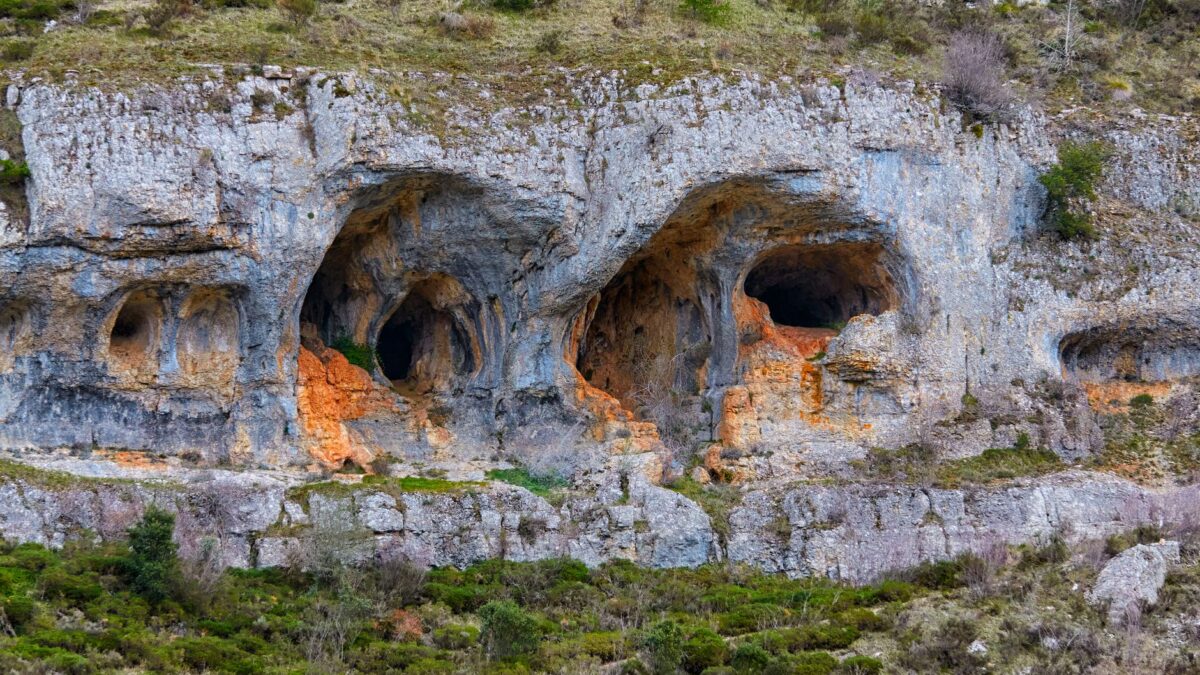
Homo erectus, an early human relative, lived in mainland Asia up to 216,000 years longer than scientists had thought, and it did so in a tropical rainforest. Two papers in the journal Nature report the finding, based on fossil teeth from two limestone caves in China’s Guangxi Zhuang Autonomous Region.
The species was long believed to have vanished from mainland Asia roughly 400,000 years ago. The new dates put some individuals in southern China as recently as 184,000 years ago, according to Smithsonian Magazine’s account of the studies.
What the team found in the caves
The two caves are about nine miles apart. Excavators recovered nine hominin teeth there. The researchers examined them with computed tomography (CT) scanning, which builds a 3D picture of the inside of an object, and with physical inspection. Eight of the teeth belong to H. erectus. The ninth could not be identified.
The team also pulled ancient protein out of five of the teeth, including the unidentified one. In four H. erectus teeth, they found a version of a protein called ameloblastin, which helps form tooth enamel. That version had only been seen before in older Asian H. erectus fossils.
The mystery tooth also held ameloblastin, but the protein did not match any known hominin. Frido Welker, a molecular anthropologist at the University of Copenhagen and co-author of one of the studies, told Scientific American that Denisovans would be the first option to consider. Denisovans lived across Asia from roughly 400,000 to about 30,000 years ago. Welker suspects the two groups overlapped in what is now southern China.
How the teeth were dated and what they say about the place
The researchers used several dating methods. They concluded that the H. erectus teeth are likely between 324,000 and 184,000 years old. At that time the region appears to have been tropical rainforest, an environment not previously linked to the species.
Further analysis of the teeth suggests these individuals traveled far. Some may have come to southern China from what is now northern Vietnam, about 155 miles away. Ben Utting, an archaeologist at the University of Connecticut who was not part of the work, told CNN that such a trip would have required a detailed understanding of the terrain, including river networks that change with the seasons.
Why researchers are rethinking the species
H. erectus is thought to have arisen in Africa about 1.89 million years ago. It was probably the first hominin to spread beyond the continent, reaching what is now Georgia by about 1.8 million years ago and later China and the Indonesian island of Java. It had long legs and short arms suited to walking long distances, made increasingly sophisticated stone tools, probably used fire, and hunted big game.
Ben Marwick, an archaeologist at the University of Washington who was not involved, told National Geographic that rainforests were thought to be a frontier only modern humans could cross. He said the idea of Homo sapiens exceptionalism may not be the true story. Karen Baab, a paleoanthropologist at Midwestern University, also not involved, told New Scientist the species looks adaptable given the range of niches it occupied.
The species is the longest-surviving known member of the Homo genus. Its extinction, between 108,000 and 117,000 years ago, is still unexplained. The leading theory held that H. erectus could not cope when rainforest spread into its final home on Java. Kira Westaway, a geochronologist at Macquarie University and lead author of one of the studies, told Reuters the new results turn that story on its head.
How sure is this?
Both studies are peer-reviewed and published in Nature. The evidence comes from nine teeth at two sites, so the sample is small, and one tooth remains unidentified. Welker cautioned that more research is needed before that tooth can be assigned to Denisovans or anyone else. Scientists also still do not know why H. erectus disappeared.
For background on the kind of landscape where fossils like these turn up, see how caves form.
Source: Smithsonian Magazine
Site editor: Nikita Sheikin