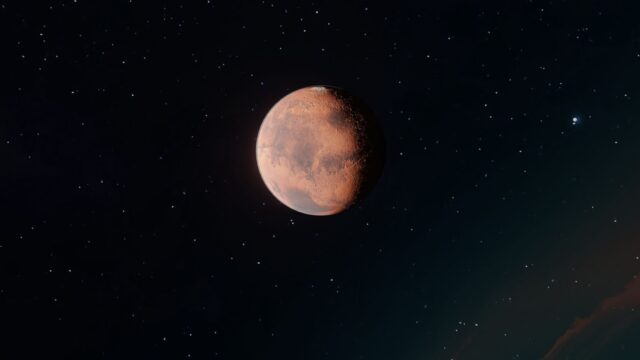
What Lies Beyond Neptune: Kuiper Belt and Scattered Disc Explained
Beyond Neptune lies the Kuiper belt, from 30 to about 50 AU, then the scattered disc. Here is how trans-Neptunian objects are sorted and what we know.
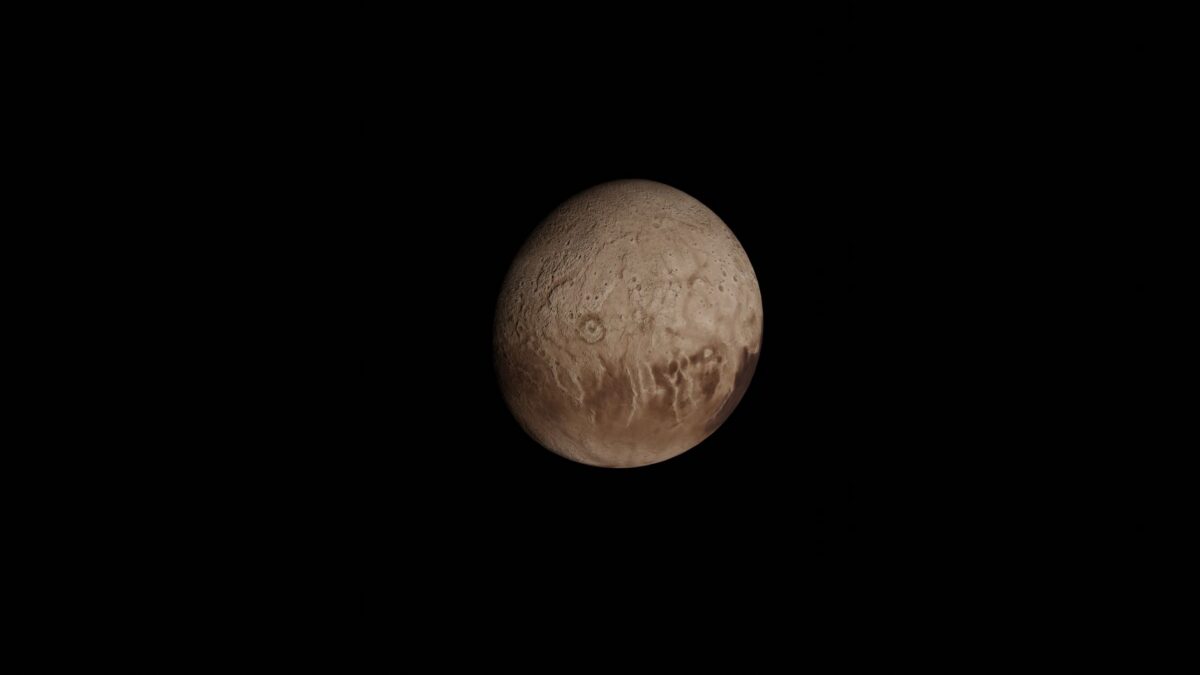
Beyond Neptune lies a wide ring of icy leftovers called the Kuiper belt, which starts at about 30 astronomical units (AU, the average Earth-Sun distance) and reaches roughly 50 AU from the Sun, according to the Wikipedia entry on the Kuiper belt. Past it, the scattered disc holds objects on far more stretched orbits. Every minor planet that orbits the Sun at a greater average distance than Neptune is called a trans-Neptunian object, or TNO.
What is the Kuiper belt?
The Kuiper belt is a disc of small bodies left over from the formation of the Solar System. NASA describes it as a large, doughnut-shaped region of icy bodies, and its pages note that there may be millions of other icy worlds there. It resembles the asteroid belt but is far larger: 20 times as wide and 20 to 200 times as massive, per Wikipedia.
The makeup differs too. Many asteroids are mostly rock and metal, while most Kuiper belt objects are largely frozen volatiles, called ices, such as methane, ammonia and water. Most of the objects astronomers generally accept as dwarf planets live here: Orcus, Pluto, Haumea, Quaoar and Makemake. Some moons, such as Neptune’s Triton and Saturn’s Phoebe, may have started out in the region.
What is the scattered disc, and how does it differ?
The scattered disc is a dynamically active zone created by Neptune’s outward motion 4.5 billion years ago. Its objects, such as Eris, have extremely eccentric orbits that take them as far as 100 AU from the Sun. Wikipedia also states that comets’ true place of origin is this scattered disc rather than the Kuiper belt itself, a view that took hold from the mid-1990s onward. The belt, by contrast, is dynamically stable.
The Kuiper belt is a separate region from the hypothesized Oort cloud, which is believed to be a thousand times more distant and mostly spherical. Together, Kuiper belt objects, scattered disc members and any potential Hills cloud or Oort cloud objects are called trans-Neptunian objects.
How are trans-Neptunian objects sorted?
By distance and orbit, TNOs fall into two large groups: Kuiper belt objects (KBOs) and scattered disc objects. The Kuiper belt group then splits further.
- Resonant objects are locked in an orbital resonance with Neptune. The largest subgroups are twotinos (1:2 resonance) and plutinos (2:3 resonance), the latter named after Pluto.
- Classical objects, nicknamed “cubewanos”, have no such resonance and move on nearly circular orbits that Neptune does not disturb. Albion, Quaoar and Makemake belong here.
- Scattering objects come close enough to Neptune that their orbits change from time to time.
The catalog adds detached objects and the most distant group, the sednoids. More than a dozen minor planets have a semi-major axis greater than 150 AU and a perihelion (closest approach to the Sun) greater than 30 AU. They are called extreme trans-Neptunian objects, and many have orbits that extend over 1000 AU from the Sun.
How was this region discovered?
Pluto came first, found in 1930. A second TNO, 15760 Albion, was not found until 1992, after which systematic searches began. Hundreds of TNOs were found with diameters of 50 to 2,500 kilometers. The idea of such a belt is older. Kenneth Edgeworth wrote about it in 1943, and Gerard Kuiper described a similar disc in 1951. Julio Ángel Fernández published the most direct prediction, a comet belt beyond Neptune, in 1980.
Eris, the most massive known TNO, was discovered in 2005, which reopened the argument over whether Pluto counts as a planet. In 2006 the International Astronomical Union classified Pluto and Eris as dwarf planets. Wikipedia lists the most massive TNOs as Eris, Pluto, Haumea, Makemake and Gonggong.
How many are there, and what are they made of?
As of February 2025, the minor planet catalog held 1006 numbered and more than 4000 unnumbered TNOs. More than 100000 Kuiper belt objects over 100 km (62 mi) across are thought to exist. More than 80 satellites have been discovered orbiting TNOs. Colors vary from grey-blue to very red, and the bodies are thought to be mixtures of rock, amorphous carbon and volatile ices, coated with tholins and other organic compounds.
Which spacecraft has visited?
Only one: NASA’s New Horizons, according to NASA’s Kuiper Belt page. It flew past Pluto in July 2015 and returned the first clear close-up images of that small world. On Jan. 1, 2019, it passed a Kuiper belt object later named Arrokoth. Most of the rest of what is known comes from ground-based telescopes and the Hubble Space Telescope.
New survey telescopes keep adding to the list. One recent example is a backward-orbiting object spotted past Neptune. For background on the planet that shapes the region, see the coverage of simulations of Uranus and Neptune’s magnetic fields.
Where to check
NASA’s Kuiper Belt page and the Minor Planet Center catalog, which Wikipedia cites for the counts above, keep these figures current, since the number of known objects keeps changing.
Based on the sources linked above, November 2026.
Site editor: Nikita Sheikin