What Is a Sundog? Why Bright Spots Appear Beside the Winter Sun
A sundog is a bright patch of light about 22 degrees from the sun, made by ice crystals. See why they form in winter, how to spot them and what they mean.

A sundog is a bright, often rainbow-tinted spot of light that appears about 22 degrees to the left or right of the sun, at the same height above the horizon. Sundogs form when sunlight passes through flat, six-sided ice crystals drifting in the air, usually in thin, high cirrus clouds or in freezing ground-level ice called diamond dust. The scientific name is a parhelion (plural parhelia), from Greek words meaning “beside the sun.”
Sundogs can be seen in any season and in any part of the world, but they are easiest to catch on cold, clear winter days when the sun sits low in the sky.
How do ice crystals make a sundog?
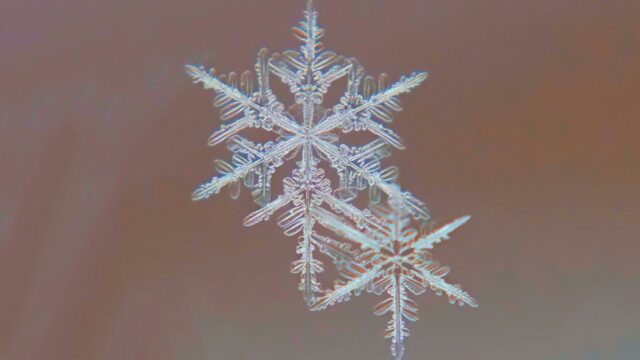
Ice crystals bend sunlight like tiny prisms, and the shape of the crystal decides where the light ends up. Sundogs come from hexagonal plate crystals, which look like thin, flat hexagons. As these plates fall through the air, air resistance tends to keep their flat faces nearly horizontal, the way a leaf or a sheet of paper settles.
Sunlight enters one side face of a plate and leaves through another side face set at 60 degrees to the first. That path bends the light by a minimum of about 22 degrees. Because millions of plates are lined up in roughly the same horizontal position, the bent light piles up in two concentrated spots, one on each side of the sun.
The bending also separates colors slightly, since red light bends a little less than blue. That is why a sundog usually has a reddish inner edge facing the sun, then fades through yellow toward a whitish or bluish tail pointing away from it. The colors are softer than a rainbow’s because the crystals are not all tilted exactly the same way.
Why are sundogs more common in winter?
Sundogs need ice crystals, and winter puts ice much closer to the ground and keeps the sun lower in the sky. Both conditions help.
- Cirrus and cirrostratus clouds, which are made of ice, form high in the atmosphere in every season, but in winter cold air can also fill the lower air with ice.
- Diamond dust, a haze of ice crystals that forms near the ground in very cold, calm air, can produce sundogs that seem close enough to touch.
- Sundogs are brightest and sit closest to 22 degrees from the sun when the sun is near the horizon. As the sun climbs, the spots shift farther out and grow fainter.
- Once the sun is more than about 60 degrees above the horizon, plate crystals can no longer send light to the viewer this way, and sundogs disappear.
The short, low winter sun is also the reason winter daylight feels so different, a topic covered in our explainer on how winter light affects mood and sleep.
How can you spot a sundog safely?
Look to either side of the sun at roughly the width of an outstretched hand held at arm’s length, which covers about 20 degrees of sky. Never stare at the sun itself, and never look at it through binoculars or a camera viewfinder.
- Pick a time when the sun is low: the first hours after sunrise or the last hours before sunset.
- Stand where a building, tree or utility pole blocks the sun’s disk from your eyes.
- Check both sides of the sun at the same height. Often only one sundog is bright, because the cloud on the other side is thinner or missing.
- Look for a faint ring around the sun. If you see one, the sundogs will sit on or just outside it.
- Use sunglasses to cut the glare, which makes faint colors easier to see.
Phones can photograph sundogs well. Frame the shot so the sun is hidden behind something, which also keeps the camera from washing out the image.
What other halos show up with sundogs?
Sundogs often appear with other ice halos, because the same cloud usually holds crystals of several shapes and tilts.
- The 22-degree halo is a full ring around the sun, made by crystals tumbling at random angles. Sundogs line up with it when the sun is low.
- The parhelic circle is a faint white line running horizontally through the sun and the sundogs, made by light reflecting off the vertical faces of crystals.
- A sun pillar is a vertical shaft of light above or below a low sun, made by light reflecting off the flat faces of plate crystals. It forms by reflection, while sundogs form by refraction.
- A circumzenithal arc is a bright, rainbow-colored arc high overhead, curving like an upside-down smile. It also comes from plate crystals and is easy to miss because few people look straight up.
Do sundogs mean bad weather is coming?
Sundogs can be an early hint of an approaching storm, but they are not a reliable forecast. The old link comes from cirrus and cirrostratus clouds, which often spread across the sky ahead of a warm front, sometimes many hours before rain or snow arrives. Sundogs and halos are a sign that those high ice clouds are present.
Plenty of cirrus passes over without any storm following, and diamond dust sundogs form in clear, settled, bitterly cold air. For an actual forecast, check your local office of the National Weather Service. Large-scale patterns, such as the earliest stratospheric warming on record, say much more about the winter ahead than a single halo does.
Is a sundog the same as a rainbow?
A sundog and a rainbow both split sunlight into colors, but they form in different ways and in different parts of the sky. A rainbow comes from liquid raindrops and always appears on the side of the sky opposite the sun, with the sun behind you. A sundog comes from ice crystals and appears beside the sun, so you face toward it.
Rainbows show clearer, more separated bands of color. Sundogs are usually a small, bright smudge with a red edge and a pale tail.
Quick answers
Can you see sundogs at night?
The same effect can happen with a bright moon, and the spots are called moondogs or paraselenae. They are fainter and usually look white, because moonlight is too dim for the eye to pick up much color. They are easiest to see near a full moon.
Why is it called a sundog?
Nobody knows for certain where the name came from. One common explanation is that the bright spots seem to follow the sun across the sky the way dogs follow their owner.
Are sundogs rare?
Sundogs are fairly common in places with frequent cirrus clouds or cold winters. Many go unnoticed because people avoid looking near the sun, and one faint sundog can be easy to mistake for a bright patch of cloud.
Do sundogs happen in warm places?
Yes. Cirrus clouds sit high enough to be made of ice even over warm regions in summer, so sundogs can appear anywhere those clouds pass in front of a low sun.
Site editor: Nikita Sheikin