Euclid Telescope Finds Its First Comet, 807 Million Miles Away
Euclid spotted comet C/2026 S1 in Sept. 16-24 images, 807 million miles away. The finding shows the telescope can also catch fast-moving solar system objects.
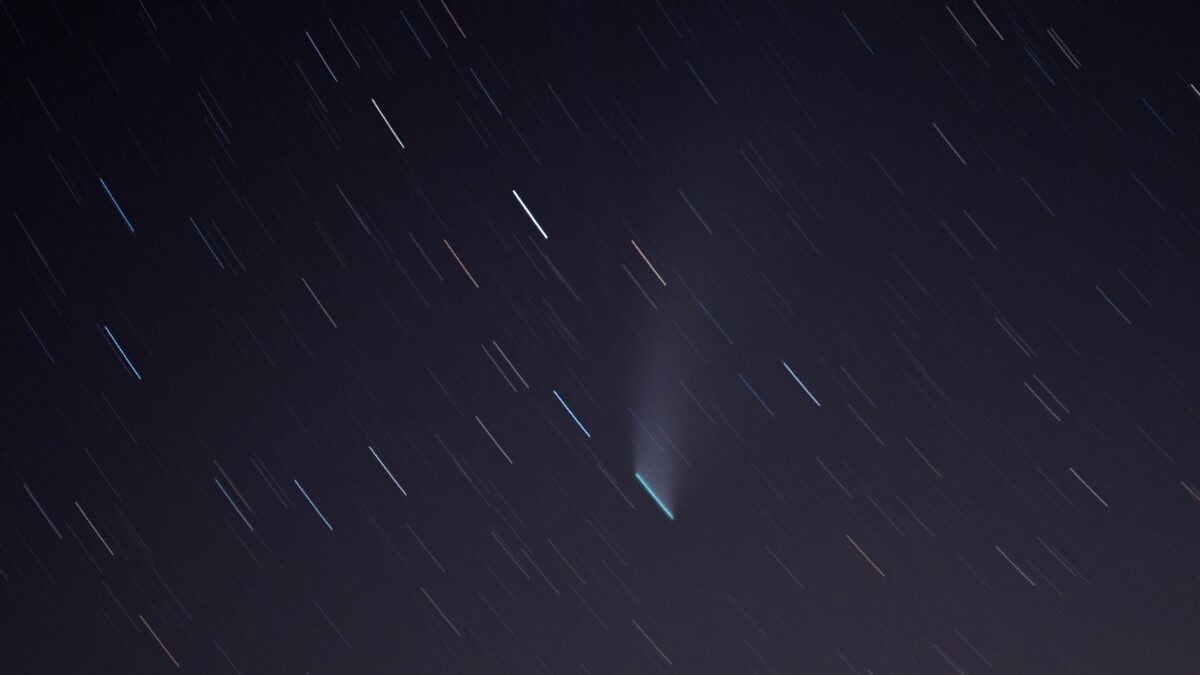
The Euclid space telescope has found its first comet, designated C/2026 S1 and nicknamed comet Euclid, Space.com reported on Nov. 16. The comet was about 807 million miles (1.3 billion kilometers) away when Euclid recorded it in observations taken between Sept. 16 and 24, and it appears to move between the orbits of Jupiter and Saturn.
Euclid is a European Space Agency mission that launched in 2023 with contributions from NASA. Space.com describes the comet as previously undetected, and the team compared it with current comet records to be sure it was new.
How scientists found it
Mikko Pöntinen, a scientist at the University of Helsinki, made the initial discovery together with a Solar System Objects Science Working Group within the Euclid Consortium. In a statement, he said his software flagged a streak smeared across several images, the signature of a fast-moving object. By predicting where the object would be, he found it in other images, five image sets in all.
The clue was movement. Stars and galaxies hold their place from one image to the next, so an object that shifts position shows up as a streak. Closer inspection showed a fuzzy cloud around the object. Pöntinen said that points to an active object such as a comet, which sheds dust and gas. The team then checked current comet records to confirm the object was new.
Why a deep-space telescope caught a comet
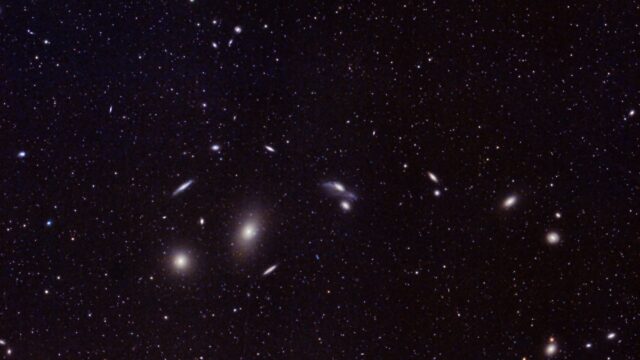
Euclid was built for long, slow observations of deep space and distant galaxies, and its data is meant to help scientists study dark energy and dark matter. Space.com notes that the telescope was not designed to image a fast-moving comet crossing the solar system.
Why it matters
The find shows that Euclid can be used for more than its original purpose. According to the report, scientists could use it in future to target other comets in the far reaches of the solar neighborhood on purpose. Observations like these can also help researchers identify “noise” such as comet trails in Euclid’s field of view.
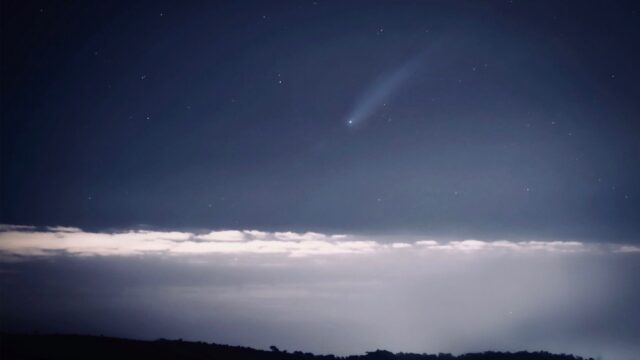
For readers curious about what comets look like from Earth, this site has a guide to spotting a comet in the sky.
Source: Space.com