Firefly Not Seen Since 1983 Turns Up Again in Virginia and Delaware
The similar firefly was found three times in 2026 after going unrecorded since 1983. A new paper lists 28 U.S. and Canadian fireflies as lost to science.
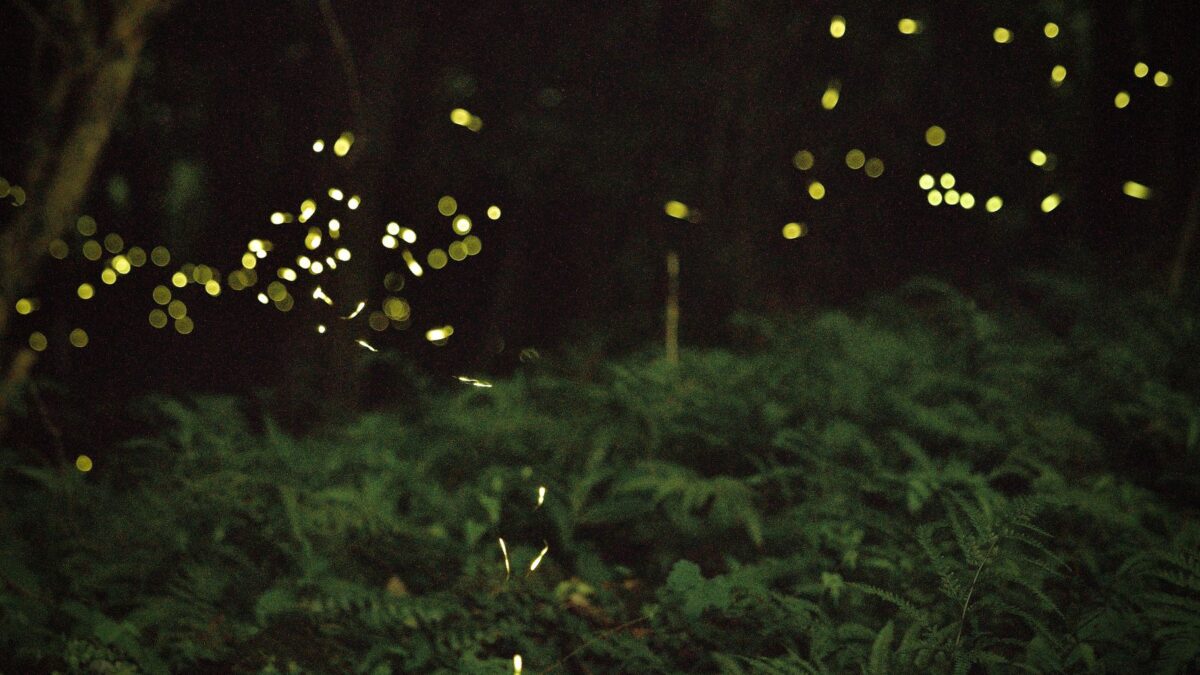
A firefly that no one had documented since 1983 has been found again. The similar firefly (Pyractomena similis) showed up three times in the eastern United States in spring and summer 2026, twice in Virginia and once in Delaware, according to a new paper in the Journal of Lost Species.
The same paper lists 28 firefly species in the U.S. and Canada as lost to science, meaning researchers have no confirmed records of them for at least a decade. That is 16% of the region’s known native fireflies. Mongabay reported the findings.
How the similar firefly was found again
The first sighting came on May 15, when an observer saw males flashing over a meadow in Virginia and posted it to iNaturalist, a citizen science platform. A second population turned up nearby two weeks later.
The Delaware record came in June. Entomologist Christopher Heckscher of Delaware State University was standing in a meadow in Brandywine Creek State Park with his camera when he noticed a quick run of amber flashes. The color and the long, rhythmic pattern matched no firefly he knew from the region, and he identified the species from the flash pattern alone. It is the first record of the firefly in Delaware.
Scientists never studied the species closely, and it was once found in Washington, D.C., Maryland, Virginia, South Carolina, Alabama and Mississippi. “There’s hardly any information out there about it,” Heckscher said. The same is true of many fireflies, he added, including common ones.
Why a lost firefly is not always an extinct one
The paper’s lead author, Candace Fallon, is a senior conservation biologist at the Xerces Society, which coordinates the Firefly Atlas. She says many people do not know how many firefly species live in the U.S. or that a number of them have gone unrecorded for a decade or more. Fallon said that “a lot of these species likely aren’t gone forever”, and that they may simply be overlooked.
The team has some evidence for that view. Nine species on a list it compiled in 2024 for the NGO Re:wild have since been found again. Some turned up in targeted surveys by researchers. Others were recorded by people documenting nature as a hobby, and experts reviewing iNaturalist posts identified several. Anna Walker, a co-author and invertebrate species survival specialist at the New Mexico BioPark Society, said a few resources devoted to surveys would likely let researchers rediscover the vast majority.
What is still unknown about fireflies
Knowledge gaps are large. According to the study, 69 firefly species are listed as data deficient on the IUCN Red List, which means there is too little information to judge their extinction risk. Another 48 have never been evaluated. In 2021, researchers published the first extinction-risk assessments for fireflies in the U.S. and Canada in PLOS ONE. They evaluated 132 species and found at least 18 threatened with extinction.
Habitat is part of the puzzle. Heckscher said the open, shrubby meadow where he found the species is uncommon, because fields are usually managed for livestock or mowed. The similar firefly is known to live in open fields near water.
Why it matters: what fireflies need to survive
Fireflies are beetles in the family Lampyridae, not flies, and they live on every continent except Antarctica. Their light comes from a chemical reaction between oxygen, a molecule called luciferin and an enzyme called luciferase. Scientists believe the glow warns predators that fireflies are toxic, since they contain compounds called lucibufagins.
The threats listed in the report are habitat loss, pesticides, light pollution, water pollution, invasive species and climate change. Larvae are the most vulnerable stage. Adults usually live less than a month, but larvae can live up to two years, and in the southeastern U.S. invasive red imported fire ants kill them.
Larvae need snails and slugs to eat, leaf litter, underground burrows, clean water, native plants and dark nights. About three-quarters of firefly species are nocturnal and use their flashes to find mates, and some can only mate in complete darkness. Protecting that habitat also helps other insects, whose global abundance is thought to fall by around 1-2% per year.
Mongabay’s list of steps for readers includes leaving leaf litter in place, mowing less, cutting back on pesticides and fertilizers, dimming unnecessary outdoor lights and joining community science projects such as Firefly Watch. The paper is Fallon et al. (2026), “Extinguished or overlooked? An examination of lost firefly species of the US and Canada,” Journal of Lost Species, doi:10.66264/r4siwh4a.
Source: Mongabay