Dig Under Wendover Cricket Ground Finds 54 Roman Coins and Six Burials
A dig at a Wendover cricket ground site found 54 Roman coins, pottery and six burials spanning the 1st to the late 4th century AD.
Archaeologists digging on the site of a new cricket ground in Wendover, Buckinghamshire, have recovered 54 Roman coins, pottery, tools and six burials from a rural settlement that was occupied for almost four centuries. The finds date from the 1st to the late 4th century AD, according to Cotswold Archaeology, the firm that carried out the work.
The excavation took place in 2024, ahead of construction of a new ground for Wendover Cricket Club. Only part of the site was investigated, so the settlement probably extended beyond the dug area.
What the team dug up
Beyond the coins, the team found building materials from demolished Roman structures, quern stones (hand mills used to grind grain into flour) and a worked antler handle. The handle is decorated with ring-and-dot patterns and has two holes, which suggests its owner hung it from a belt. Archaeologists interpret it as the handle of a clasp-knife.
Much of the pottery appears to have been made locally. Vessels from Oxford, St Albans, Buckinghamshire and Bedfordshire were also identified. Some ceramics came from much farther away: amphorae (large storage jars) from Spain and fine red samian ware from Gaul. The mix includes storage and cooking jars, drinking beakers, bowls, dishes and mortaria, heavy vessels used to prepare food.
How the coins date the settlement
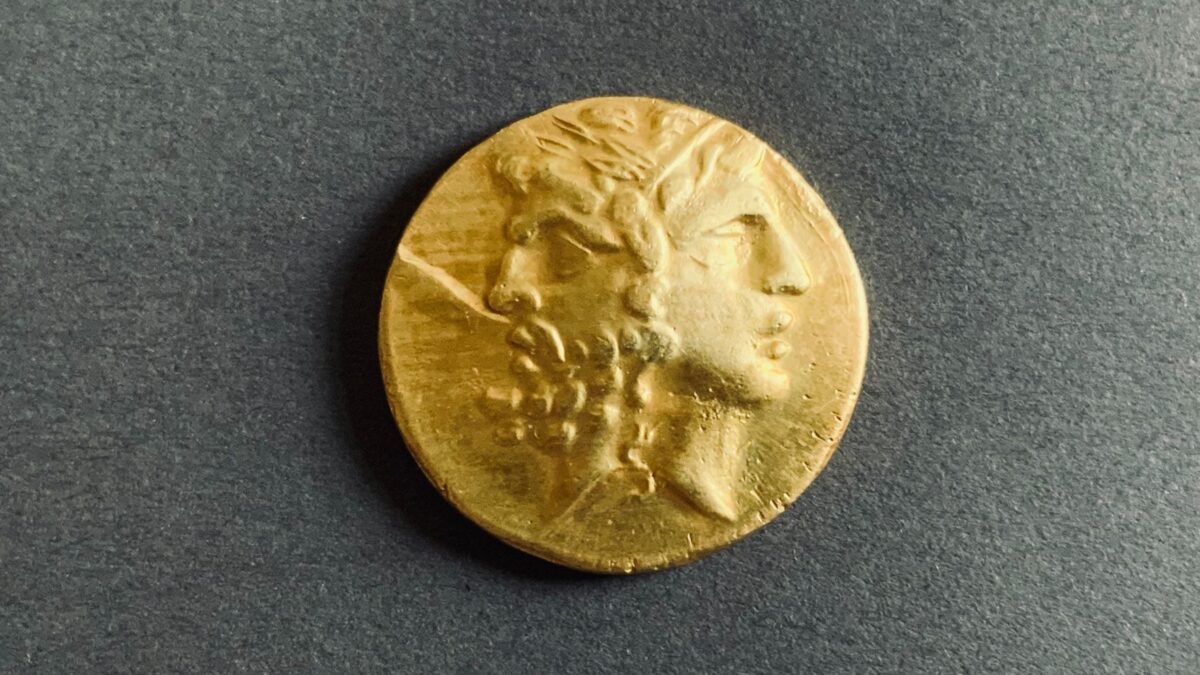
Coins are dated by the ruler and mint stamped on them, which lets archaeologists estimate when each was lost. The 54 coins range from the middle of the 2nd century to the end of the 4th century AD and are mostly low-value copper-alloy pieces. Cotswold Archaeology says that is a relatively large group for a rural farmstead, particularly because only part of the site was examined.
Coin loss rose substantially in the late 3rd century and peaked in the 4th century, especially between about AD 330 and 364. The same pattern appears elsewhere in Roman Britain and reflects both wider use of coinage and the large quantities struck by mints across the northwestern Roman Empire. The Wendover coins came from mints including Trier in modern Germany, and Lyon and Arles in France. One shows Constantine II.
Fewer coins date from around AD 364 to 378. The latest was struck between about AD 383 and 388. The team suggests the decline could mean the settlement was abandoned toward the end of the 4th century, though activity may instead have moved to another part of the surrounding landscape.
Six burials, two ways
The site held two inhumations (bodies buried whole) and four cremations. In one cremation, the remains were placed in a pink, grog-tempered pottery jar, probably made in north-west Buckinghamshire. The jar had misfired during production and had large blisters inside, yet it was still chosen as an urn, a practice known from other Roman British sites.
Another grave held a child estimated to be about three to four years old. A small, almost complete white cup had been placed beside the child, and the team interprets it as a grave offering.
How sure is this?
The findings come from an excavation report by Cotswold Archaeology, summarized by HeritageDaily, and not from a peer-reviewed study. The interpretations, such as the settlement’s trade links and its possible abandonment, are the archaeologists’ own readings of the objects. The team says the end of coin use may point to abandonment but could also mean activity moved elsewhere nearby. Because only part of the site was investigated, the full size and layout of the settlement are not known.
Taken together, the pottery, coins, domestic objects and burials indicate continuous activity at Wendover from the early Roman period until the closing decades of Roman rule in Britain.
Source: HeritageDaily
Site editor: Nikita Sheikin