Botanists Find New Violet Species in Jiangxi Rock Crevices
A newly described violet grows 3 to 10 centimeters tall in one valley in a Jiangxi reserve. The study named six new Viola species in total.
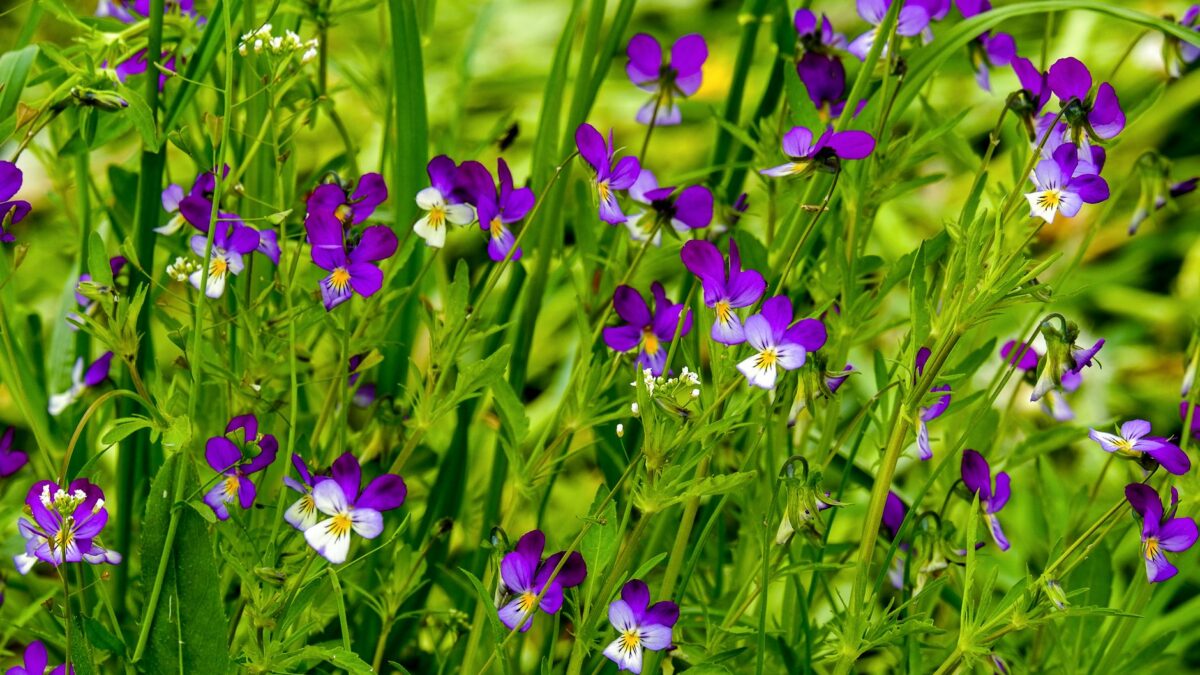
A previously undescribed violet has been identified in a nature reserve in Jiangxi province, China. The plant is a perennial herb that grows 3 to 10 centimeters tall and bears pale purple flowers, China Daily reported.
It is one of six new Viola species named in a broader study of the genus in China, which also restored two previously recognized species to full standing.
What the plant looks like and where it grows
The violet has a short, thick rhizome, which is the underground stem that anchors the plant and stores energy. Its leaves are oval with heart-shaped bases and finely toothed edges. The flowers open from March to April.
So far the species is known only from rock crevices in one valley inside the reserve, at an altitude of about 685 meters. A single known site is a narrow range, and the reporting gives no population count.
How the team identified it
According to Xiong, a researcher quoted by China Daily, the team collected living specimens and plant material for molecular analysis. They then compared the plants with historical specimens before concluding that it was a species no one had formally described.
The wider project combined field surveys, comparisons of physical form (morphology) and genetic analysis. It drew on plant specimens from several parts of China, including Jiangxi, Guangxi, Hubei and Chongqing.
The work also found that the new species has hybrid descendants spread across eastern China. They occur particularly around Huangshan in Anhui province and in the Tianmu Mountains in Zhejiang province. The species’ scientific name refers to eastern China.
How sure is this?
The identification rests on three kinds of evidence: field observation, physical comparison with older specimens and genetic data. Xiong described the result as an important step in sorting out the taxonomy of the complicated Viola groups in China and in tracing the evolutionary history of East Asian plants. That is the researcher’s own assessment of the study.
Violets are a group where closely related species can look alike and hybridize, which is why the genetic comparison matters for confirming a new name. The hybrid plants found around Huangshan and the Tianmu Mountains show that the new species has interbred with others in the region.
The reporting does not give the species’ scientific name, the journal or the number of plants sampled. Because the plant has been found in only one valley so far, how widespread it is remains an open question.
Source: China Daily
Site editor: Nikita Sheikin