Texas Bison Jump Was Used for 3,000 Years, Archaeologists Report
A cliff in Caprock Canyons State Park served as a bison jump for 3,000 years, a new study says. It is only the second such site found on the southern Plains.
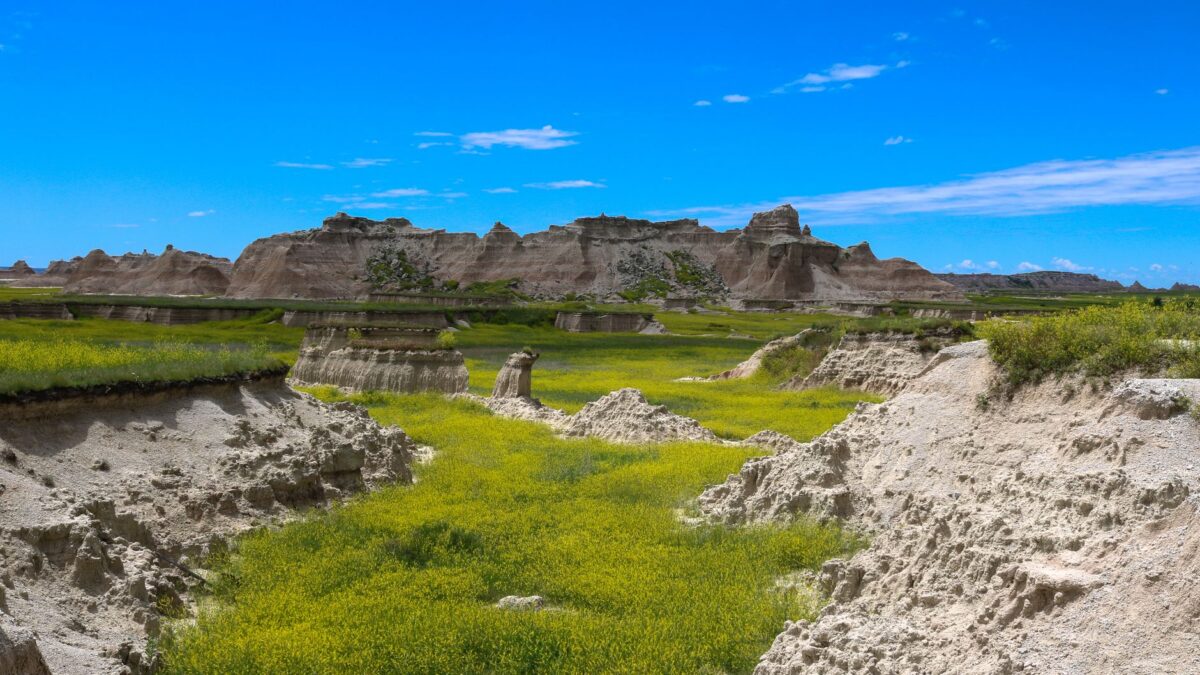
Archaeologists have identified a second “bison jump” on the southern Plains, in Caprock Canyons State Park in the Texas Panhandle. The site, called Nighthawk, was used by Indigenous hunters for 3,000 years, according to a study published online Nov. 9 in the journal American Antiquity and reported by Live Science.
A bison jump is a hunting method in which people drive a herd off a cliff. Until now, only one such site had been found in the southern Plains, and the technique was thought to belong mainly to the northern Plains.
How the team found the cliff’s history
Bison remains began eroding out of a bone bed (a place where bones naturally collect) beneath a cliff spur about 65 feet (20 meters) tall. Archaeologists who investigated found chipped stone tools near the bones and a few arrowheads. Several bones carried cut marks from stone tools, a pattern consistent with butchery.
The researchers wrote that the only way bison could reach the site is by falling from above, because the ground there sits between two cliffs. They suggest the hunters used the natural shape of the spur to push animals over the edge. At Nighthawk the process may have worked less like a stampede toward a surprise drop and more like “walking the plank,” the team wrote.
Radiocarbon dates showed at least seven mass bison kills at the site, spread between roughly 1550 B.C. and A.D. 1550. One event, which the researchers named Kill 3, produced most of the bones. It probably took place around A.D. 300 to 400, and the team says it would have taken a large workforce and precise coordination.
Returning to the same cliff for millennia
Every kill at Nighthawk was at least a century apart from the next, and the average gap was 500 years. Study first author Gus Costa, an archaeologist at Rice University in Houston, said that returning to the same place over 3,000 years shows people had a significant connection to the hunting site.
The long gaps point to occasional use, yet the site was clearly remembered. The authors wrote that the simplest explanation for jump sites that last this long is that the techniques were passed down over long stretches of time, not revived again and again.
Costa also described bison jumping as a complicated community effort that needs a large group working together to succeed.
What the meat was for
It is not entirely clear what the hunters did with the animals. Archaeologists have long assumed that northern Plains jumps took place in the fall and stocked the community for winter. Northern groups turned bison into pemmican, a shelf-stable mix of dried meat and rendered fat.
The Texas climate is warmer, and the researchers wrote that bison fat there probably would not have lasted more than a few weeks. That could mean the southern Plains hunts were more useful for displaying power and building alliances than for storing food.
How sure is this?
The work appeared in a peer-reviewed journal, American Antiquity, and rests on several lines of evidence: the bone bed, stone tools and arrowheads, butchery marks, and a series of radiocarbon dates. The geography also limits how the bones could have arrived at the site.
Some questions remain open. The researchers do not know for certain how the hunters used the animals, and the “walking the plank” description is their interpretation of how the cliff was used.
Source: Live Science
Site editor: Nikita Sheikin