How Were Egyptian Mummies Made? The Steps From Body to Wrapping
Egyptian embalmers dried bodies with natron salt for about 40 days, then wrapped them in linen. Here is how mummies were made, step by step.
Egyptian mummies were made by removing the organs that rot fastest, drying the body for about 40 days under a natural salt called natron, and then wrapping it in linen. The full process took roughly 70 days in the best-documented practice. The dry body resisted decay because bacteria and fungi need moisture to grow.
The method changed over more than 3,000 years, and workmanship varied a great deal with the money spent on it. The steps below describe the standard procedure used for people who could afford full embalming.
Why did the Egyptians mummify their dead?
They believed the body had to survive for the dead person to live on in the afterlife. Early Egyptians buried people in hot desert sand, which dried bodies naturally and preserved some of them. When burials moved into tombs and coffins, bodies no longer dried that way, and embalmers developed artificial methods to copy the effect.
What is natron and why did it matter?
Natron is a naturally occurring mix of sodium carbonate and sodium bicarbonate, with some table salt and sodium sulfate. Egyptians collected it from dry lake beds. It absorbs water strongly, so it dried flesh quickly while leaving skin and bone intact. Most mummification steps either prepared the body for natron or finished the job after it.
How did embalmers prepare the body?
The work began with washing the body. Embalmers then removed the brain and the internal organs, because these decay first.
- The brain was pulled out in pieces through the nose with a hooked tool. It was usually thrown away.
- A cut in the left side of the abdomen let embalmers take out the liver, lungs, stomach and intestines.
- These organs were dried and stored, often in four containers called canopic jars. Each jar held one of the organs.
- The heart was usually left inside the body, since Egyptians treated it as the seat of thought and identity.
The empty body cavity was rinsed and sometimes packed with linen or other material so the body kept its shape.
How was the body dried?
Embalmers covered the body in dry natron, inside and out, and left it for about 40 days. The salt pulled water from the tissues, and the flesh shrank and hardened. Afterward the natron was brushed off and the body was washed again. The dried skin was then rubbed with oils and resins, which softened it and helped seal it against moisture. Resin also made the wrappings stick together.
How was the mummy wrapped?
Wrapping took many days and was carried out with ritual. Embalmers wound long strips of linen around the head, then the limbs and fingers one by one, and finally the whole body. They set amulets, small charms believed to protect the dead, between the layers. Excavators have reported a Late Period cemetery with gold tongue amulets, one example of such charms.
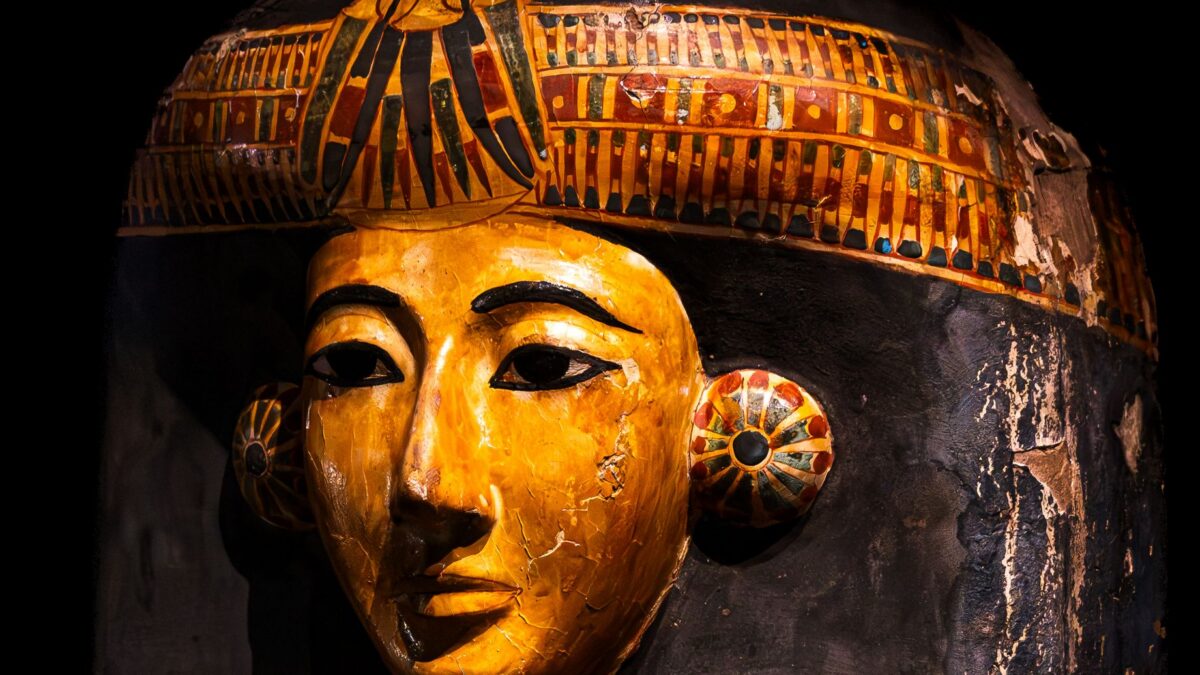
A mask, often painted or gilded, was placed over the head of wealthy mummies. The wrapped body was then laid in a coffin, or in a nest of coffins, and placed in a tomb.
Did everyone get the same treatment?
No. Cost shaped how thorough the work was. Wealthy people received the full procedure, while poorer families paid for simpler methods that did less to remove the organs or treat the skin. Mummies from different periods also look different, because techniques changed.
Were animals mummified too?
Yes. Egyptians mummified cats, crocodiles, birds and other animals, often as offerings to gods. Excavations have found 10 crocodile mummies in a tomb about 2,500 years old. Research on 131 mummified cat skulls shows that scientists can study the health of animals from these remains.
How do scientists study mummies today?
Researchers use X-rays and CT scans to look inside wrappings without unwrapping them. Scans show bones, organs left in the body, amulets and how the brain was removed. Chemical analysis of the resins and oils identifies materials embalmers used. These methods leave the mummy intact.
Common questions
How long did mummification take?
The process is usually described as about 70 days. Roughly 40 of them were for drying the body in natron, and the rest for washing, anointing and wrapping.
Why did embalmers leave the heart but remove the brain?
Egyptians regarded the heart as the center of a person’s mind and character, so they kept it in place. They did not give the brain the same importance, and it was discarded.
Are mummies only found in Egypt?
No. Natural and artificial mummies have been found in several parts of the world, including South America and Europe. Egyptian mummification is the best known because it was a long-lasting, organized practice with detailed ritual.
Site editor: Nikita Sheikin