Why Are Flamingos Pink? The Diet Pigments Behind the Color
Flamingos are pink because their food contains carotenoid pigments that the body turns into feather color. Here is how it works and why chicks start gray.
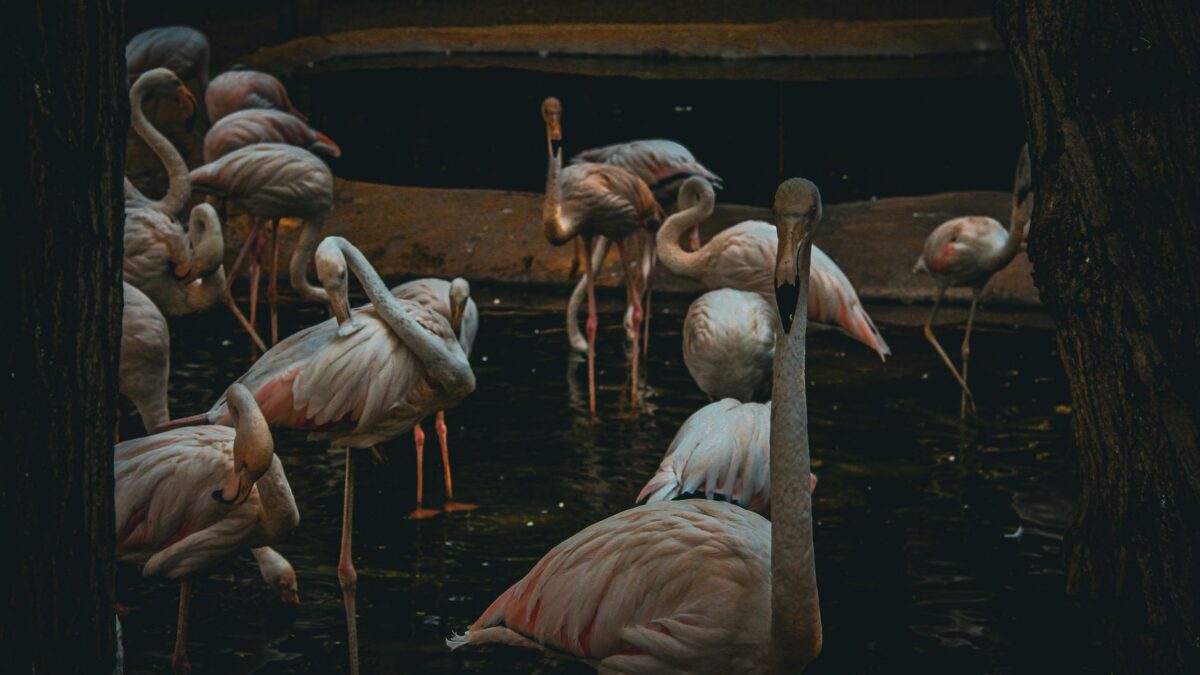
Flamingos are pink because of what they eat. Their food, mainly algae and small crustaceans such as brine shrimp, contains orange and red pigments called carotenoids. The birds’ bodies break these pigments down, then deposit them in new feathers, skin and legs. A flamingo that stopped eating carotenoid-rich food would grow paler feathers.
The color is not a genetic trait in the way a cardinal’s red is fixed. It is a diet effect, which is why flamingo chicks hatch gray or whitish and turn pink over their first years.
What are carotenoids?
Carotenoids are natural pigments made by plants, algae and some bacteria. Animals cannot make them from scratch, so any animal that shows these colors has to get the pigments from food. Carrots owe their orange to beta-carotene, a carotenoid, and the same family of chemicals colors tomatoes, salmon flesh and many bird feathers.
Flamingos eat tiny organisms that are rich in these pigments. Some of those organisms feed on algae and carry the pigments up the food chain, so the flamingo gets them either directly or secondhand.
How does the pigment get into the feathers?
The process has three broad steps:
- The bird filters food from shallow, often salty water with its curved bill.
- Digestion releases the carotenoids, and enzymes in the liver chemically alter them into the pink and orange pigments that show in the bird.
- The blood carries these pigments to growing feathers and to the skin, where they are stored.
Feathers are dead tissue once fully grown, so a feather keeps the color it had when it formed. A flamingo’s color shifts as it molts and replaces old feathers with new ones grown on a different diet.
Why are flamingo chicks gray?
Chicks have not yet had a lifetime of carotenoid-rich food. Adults feed them a milk-like secretion produced in the upper digestive tract, and it contains pigments, but the chicks’ first feathers still grow in gray or white. Their pink develops over time as they begin feeding themselves and molt into adult plumage. Reaching full adult color takes a few years.
Do all flamingos look the same shade?
No. There are six species, and they range from pale pink to deep reddish pink. The shade depends on how much carotenoid food the bird eats and on the pigments available in its home waters. The Caribbean flamingo is known for a vivid orange-red, while the lesser flamingo and the Andean flamingo tend to look different from it. Individual birds in one flock can also differ.
Brighter color often signals that a bird is feeding well. Within a flock, birds that are in good condition tend to look more colorful, and the color plays a part in how they choose partners and interact socially.
Where do flamingos find this food?
Flamingos feed in shallow lagoons, salt lakes and coastal mudflats, where algae and tiny animals are abundant. They hold the bill upside down in the water and pump it with the tongue, and comb-like plates inside the bill trap the food while water flows out. Many of these waters are too salty for most fish, which leaves the small brine-loving organisms plenty of room to grow.
Because the birds depend on such waters, a change in a lake can change the food supply. If algae and crustaceans become scarce, the birds eat less pigment, and their color can dull over later molts.
What happens to flamingos in zoos?
Zoo flamingos would lose their color on a diet without carotenoids. Keepers add carotenoid sources to the feed, such as supplements made from natural or synthetic pigments, so the birds keep the pink their wild relatives have. This is standard practice at zoos that keep flamingos, and the pigments are the same kind of compounds found in natural food.
Why do parents sometimes turn pale?
Both parents produce the crop milk fed to chicks. Making it uses up pigment from the adults’ own stores, so a parent working hard to raise a chick can look paler for a while. Color returns once the bird eats enough carotenoid-rich food and grows new feathers.
Common questions
Do flamingos turn white if they stop eating shrimp?
Existing feathers stay as they are, but new feathers grown without carotenoids come in much paler. Over a molt cycle, the bird fades. Eating carotenoid-rich food again brings the color back in later feathers.
Is it only flamingos that get color from food?
No. Many animals depend on dietary carotenoids, including salmon, some songbirds such as house finches and several crustaceans. Flamingos are among the most visible examples because the effect covers the whole bird.
Do flamingos really stand on one leg because of their color?
No. The color comes from diet. Standing on one leg is a separate behavior, and researchers have linked it to conserving body heat and resting, not to pigment.
Site editor: Nikita Sheikin