How Long Does It Take to Grow a Christmas Tree? Years by Species
A typical 6 to 7 foot Christmas tree takes about 7 to 10 years to grow. See how long firs, spruces, pines and cypress take and what slows them down.
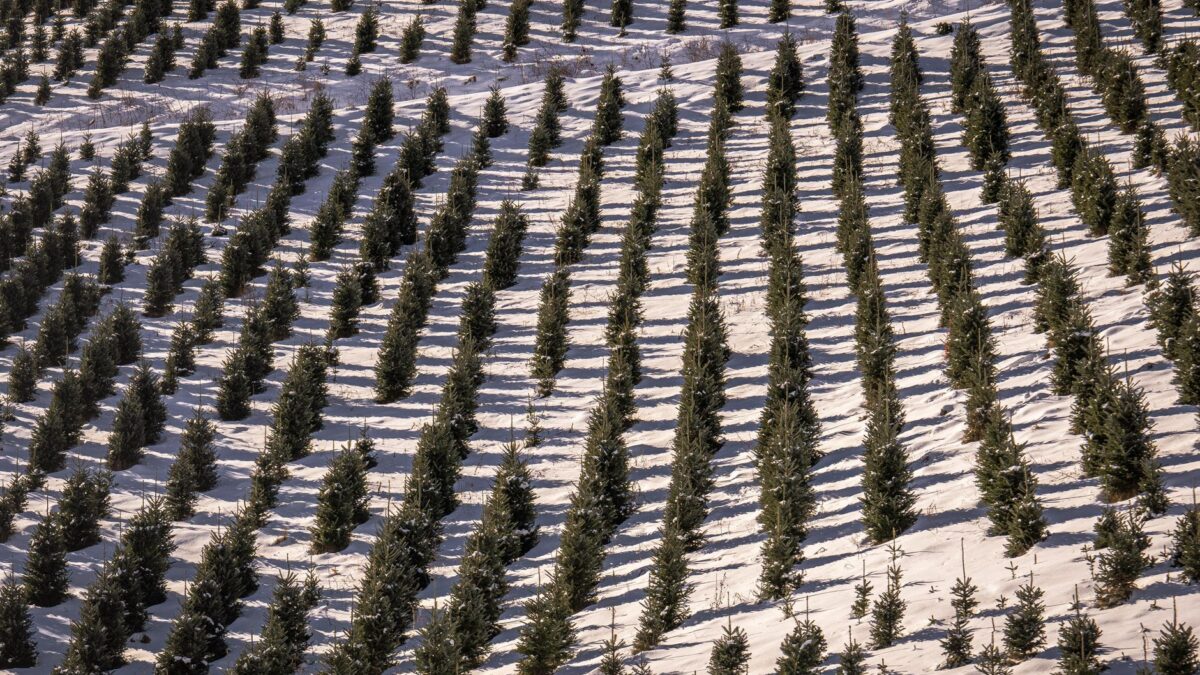
A Christmas tree of the usual 6 to 7 feet (about 1.8 to 2.1 meters) takes roughly 7 to 10 years to grow from seed, and the full range runs from about 4 years for fast species in warm climates to 12 years or more for slow firs and spruces in cold ones. Much of that time passes before the tree reaches the farm field: seedlings typically spend their first 2 to 4 years in a nursery bed. Growers then shape each tree every summer until it is ready to cut.
What happens during those years on a tree farm?
A Christmas tree spends its life in two stages: a nursery stage and a field stage.
- Seed collection and sowing. Seeds come from cones of selected parent trees and are sown in nursery beds or containers.
- Nursery years. Seedlings grow slowly, often only a few inches a year, while their roots develop. Some are moved to a second bed (a “transplant”) to build a stronger root system before field planting.
- Field planting. Young trees, usually under 1 to 2 feet tall, go into rows in spring.
- Establishment. The first year or two in the field is mostly root growth, so height gains are small.
- Shaping. Once growth speeds up, growers shear or prune the trees each summer to get the dense cone shape buyers expect.
- Harvest. Trees are cut in late fall when they reach market height.
Shearing slows height gain on purpose. Cutting back the new shoots makes the tree put energy into side buds, which fills in the branches but adds time before harvest.
Which Christmas tree species grow fastest and slowest?
Growth rate depends mostly on the species. The ranges below are general field estimates for a tree of about 6 to 7 feet and vary with site and care.
- Leyland cypress and Arizona cypress: among the fastest, often 3 to 5 years in the field in the warm Southeast.
- Eastern white pine and Scotch pine: relatively fast, often around 6 to 8 years in total.
- Douglas fir: moderate, commonly 7 to 10 years.
- Noble fir, Nordmann fir, Fraser fir and balsam fir: slower, often 8 to 12 years.
- Colorado blue spruce: one of the slowest common choices, often 10 years or more.
Firs are popular because they hold their needles well indoors, which is part of why farms accept their longer growing time.
What slows a Christmas tree’s growth?
Climate, soil and pests set the pace on any farm. The main factors are:
- Growing season length. Trees in places with long, mild summers add more height each year than trees in short northern seasons.
- Soil and drainage. Most conifers grown for Christmas need well-drained, slightly acidic soil; waterlogged roots stunt growth and invite root rot.
- Rainfall and drought. Dry summers, especially in the first years after planting, can kill young trees or stall them for a season.
- Weeds and grass. Competition for water and light around young trees slows them noticeably, so farms mow or control weeds between rows.
- Insects and disease. Pests such as aphids, mites and needle diseases can thin a tree and add years before it is sellable.
- Winter damage. Late spring frosts can kill new shoots, and heavy, wet snow can bend or break leaders. Our guide to how much snow weighs shows why wet snow is the harder load on branches.
How much does a Christmas tree grow in one year?
A healthy field-grown Christmas tree typically adds about 1 foot (30 centimeters) of height a year once it is established, less in its first seasons and less where growers shear hard. Each year’s growth comes as a burst of new shoots in spring, after which the tree sets buds for the next season. Conifers in cold climates stop growing over winter and resume once soils warm, which is one reason northern farms need more years per tree. The weather that brings snow, discussed in how cold it has to be to snow, also marks the dormant part of a conifer’s year.
Can you grow your own Christmas tree at home?
You can, but it takes the same years a farm needs, so expect to wait most of a decade from a small seedling. Start with a nursery seedling or transplant instead of seed to save several years. Pick a species suited to your climate zone, plant it in full sun in well-drained soil, keep grass and weeds away from the base and water it during dry spells in its first two summers. Light shaping each summer gives a fuller tree. Your state’s cooperative extension service can tell you which species do well locally; Penn State Extension is one university program that publishes material for Christmas tree growers.
A living tree bought with its root ball can also be planted outdoors after the holidays, though it should spend only a short time indoors, roughly a week to 10 days, so it does not break dormancy in the warm house.
Why are Christmas trees planted for years they will never see?
Because a crop takes most of a decade, tree farms plant new seedlings every year to replace the trees they cut, keeping fields at every age from new plantings to harvest-ready trees. A farmed tree is a crop grown for the purpose, similar to an orchard, and is not taken from a natural forest. On public lands, some national forests sell permits to cut a tree; the USDA Forest Service lists those programs by forest.
Quick answers
How long does it take to grow a 6-foot Christmas tree?
Usually about 7 to 10 years from seed, depending on the species and climate. Fast cypress can take less; slow firs and spruces take longer.
What is the fastest-growing Christmas tree?
Leyland cypress is among the fastest, especially in the warm Southeast, often reaching sale size in a few years in the field.
Why do Christmas trees cost more each year they grow?
Every extra season in the field means another year of mowing, shearing, pest control and land use before the tree can be sold, so taller, older trees cost the farm more to produce.
Do Christmas trees grow back after being cut?
Most firs, spruces and pines do not regrow from the stump. Farms replant a seedling in the spot instead.
Site editor: Nikita Sheikin