Event Horizon Telescope Sees Blazar 3C 279 Jet Bend Toward Earth
Event Horizon Telescope images of blazar 3C 279 from 2021 suggest its jet bends toward Earth near the black hole. Here is how the team found it.
The Event Horizon Telescope (EHT) has resolved the innermost part of the jet from the blazar 3C 279 and found signs that the jet bends toward Earth on sub-parsec scales (distances smaller than a parsec, a unit of about 3.26 light-years). The observations were made in 2021 and are described in a paper in the journal Astronomy & Astrophysics, according to Universe Today.
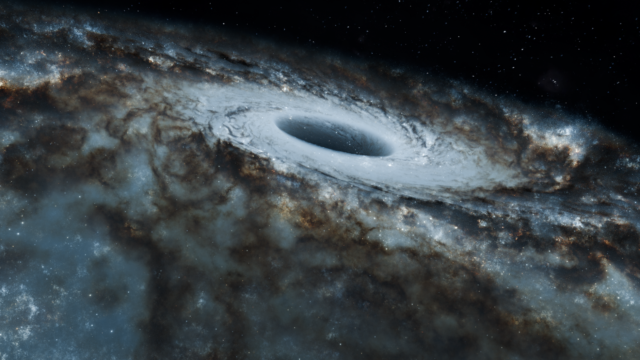
A blazar is a bright galaxy with a supermassive black hole at its center and a jet of ionized matter pointed almost straight at Earth. 3C 279 lies about 538 million light-years away, and its black hole has an estimated mass of about 800 million Suns. For comparison, Sagittarius A* at the center of the Milky Way is about 4.3 million solar masses.
How the array saw into the jet
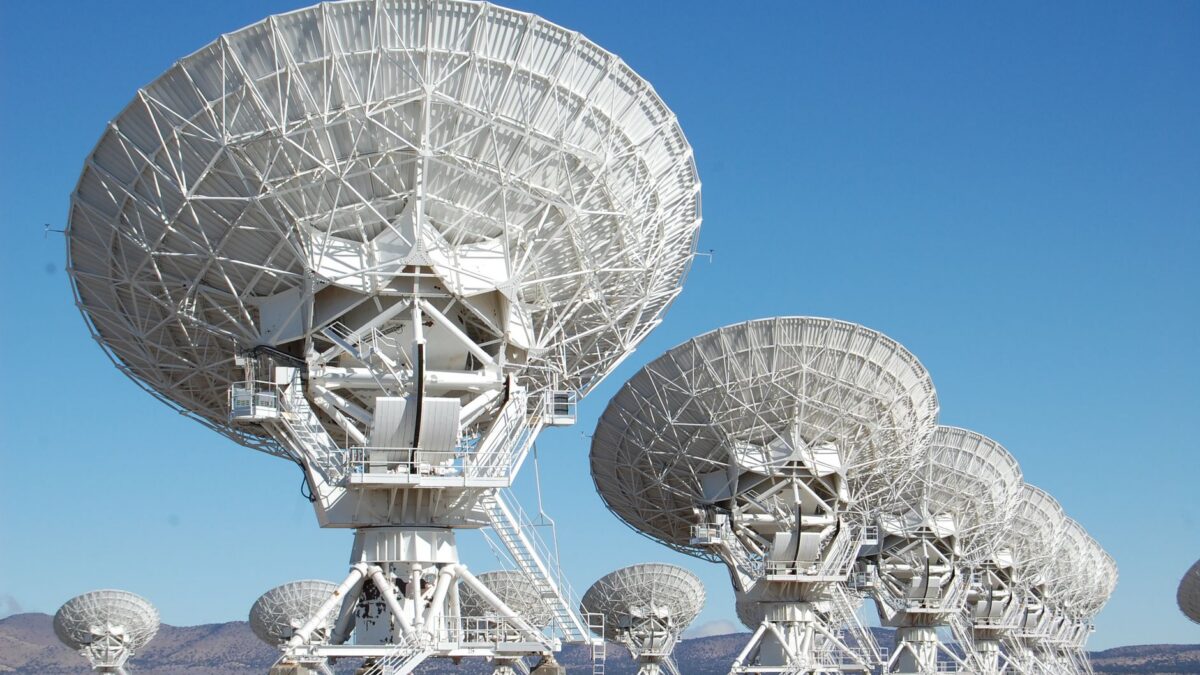
The EHT links radio telescopes around the world into one instrument using a technique called Very Long Baseline Interferometry. The distance between two antennas sets the size of detail that pair can resolve. The 2021 campaign was the largest EHT configuration published so far, with two added sites: the 12-meter telescope at Kitt Peak in Arizona and the NOEMA interferometer in the French Alps.
Hendrik Müller, lead author and a staff scientist at the National Radio Astronomy Observatory, told Universe Today that these two sites sit relatively close to other array telescopes, such as NOEMA to Pico Veleta in Spain. That gave the team intermediate baselines, information that earlier years lacked.
To build the images, the team used four software packages: Comrade, DoG-HiT, kine and Difmap. Müller said each makes different assumptions about the image, so agreement among them builds confidence in the result. A similar strategy was used for the 2019 image of the M87 black hole.
What the images show
The images suggest the jet curves so that one section points more directly at Earth. Müller explained that plasma moving close to the speed of light beams its radiation forward, so a section aimed closer to us looks brighter. Features moving more nearly toward us also appear to cross the sky more slowly, like a car approaching almost head-on.
Farther along the inner jet, the team saw brighter emission and slower apparent motion. A change in direction can explain both even if the plasma keeps moving just as fast. It also means the brightest spot may sit downstream of the black hole, where the jet points most directly at us. The images also show the inner jet’s direction changing over time.
Müller noted a hint about where the jet speeds up. Some features near the apparent base already move across the sky at apparent speeds comparable to those much farther out. If those features travel with the plasma, the jet gains much of its speed over a short distance near its base. As the fast flow narrows again, it may form a shock that adds to the brightness near the bend.
How sure is this?
The paper appeared in a peer-reviewed journal, but the bend is described as a suggestion, and the conclusion about speed depends on an if: that the features travel with the plasma. The mechanisms driving the jet are still unknown. Astronomers have decades of observations of 3C 279 at larger scales but only a few images at the sub-parsec level. The sources do not give the number of observing nights or telescopes in the 2021 array.
What comes next
Müller said EHT data from several years, along with observations at other frequencies scheduled around the same times, are being analyzed. Different frequencies reveal different parts of the jet, and close timing helps separate effects of frequency from real changes in the jet. He expects a series of results over the next few years.
For background on the objects involved, see how black holes form and what the first images show.
Source: Universe Today
Site editor: Nikita Sheikin