Met Office Finds UK Winter Frosts Down a Quarter Since 1961-1990
UK winter air frost days fell about a quarter and summer 25C days more than doubled in some regions, the Met Office found. See the central numbers.
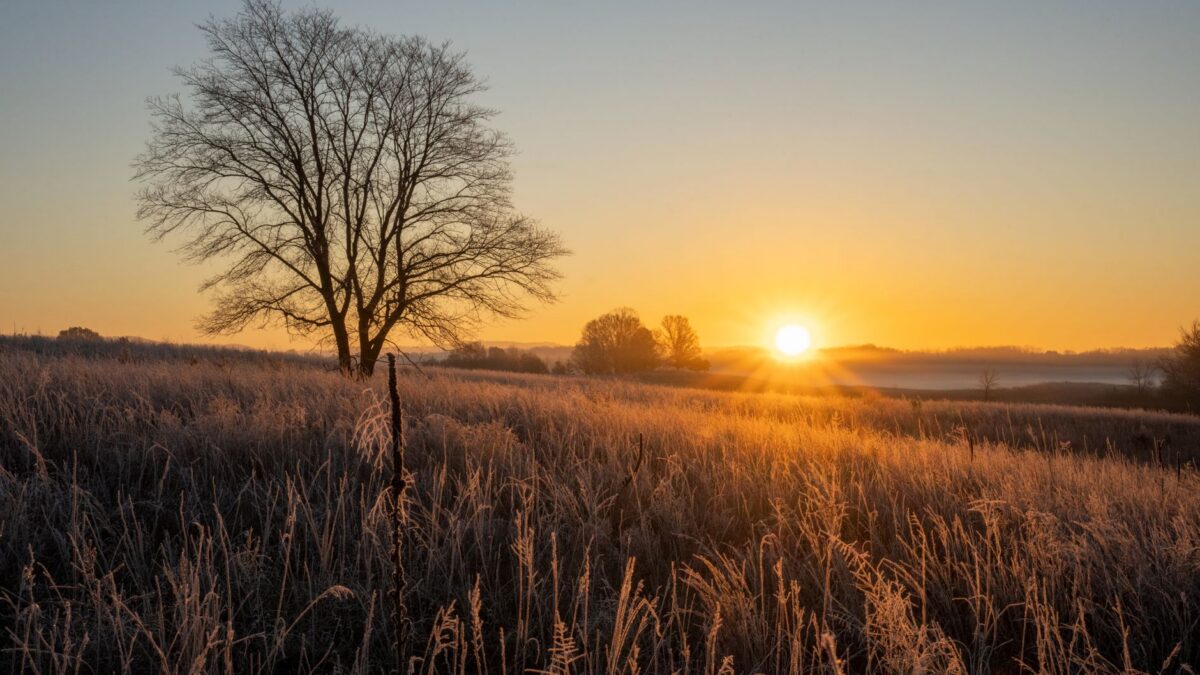
The number of winter days with an air frost in the UK was around a quarter lower in the decade to 2025 than in the period from 1961 to 1990, according to new Met Office analysis reported by the BBC. An air frost means the air temperature falls to 0C or below. Over the same span, summer days reaching 25C have become much more common.
The Met Office says climate change has driven the shift. “Our summer is getting wider and our winter is getting smaller,” said Dr James Pope, a climate scientist at the Met Office.
The central numbers
- A quarter fewer frosts across the UK. The reduction in winter air frost days compares the decade to 2025 with 1961 to 1990. In southern England the drop was around a third.
- Cornwall: about 18 to 10 days. The average number of winter air frost days almost halved. On the Isle of Wight it fell from around 21 to 11. Scotland, still the frostiest nation, went from around 45 to 38.
- Southern England 25C days: just over eight to more than 16. The average number of summer days reaching 25C more than doubled. Essex and Suffolk each gained almost 13 days.
- 30C days: 0.3 to 1.2 per summer. The Met Office defines a hot day as 30C or above, and the UK average rose fourfold. In Greater London the figure went from 1.3 to 6.1.
- Summer 2026: 40 days above 30C. Provisional Met Office data show it was the hottest summer on record, with five widespread heatwaves. The previous record was 34 days.
- 2C of global warming: about 24 frost days. At that level the UK could average about 24 winter air frost days, against 38 in 1961 to 1990. Days reaching 25C could rise to around 15 per summer, from just over four.
How the Met Office compared the decades
The analysis compares average counts of frost days and warm days in the decade to 2025 with the 1961 to 1990 baseline, for the UK as a whole and for individual nations and counties. The future figures describe what the UK could see if global warming reaches 2C above pre-industrial levels. Climate scientists estimate the current level at 1.4C.
Effects on crops and wildlife
Thomas Crocker, science manager with the Met Office’s climate security team, said wet winters have caused problems with planting, pests and diseases, while dry summers left too little water for crops. John Walgate, chief executive of British Growers, said yields of brassicas such as cauliflower, cabbage and broccoli were down by about 50% this year. Strawberries and other soft fruit had a good year, he said.
Tim Young, who farms in Norfolk, said fewer cold winter days mean fewer bugs are killed off. He planted a vineyard three years ago and harvested double the expected amount of grapes last year.
The Wildlife Trusts’ Zoe Quiroz Cullen said warmer winters can wake bats when there are too few insects to eat, and early-spawning amphibians can be caught by cold snaps. Oak trees are coming into leaf earlier, and caterpillars are hatching earlier. At Avalon Marshes in Somerset, great white egrets first bred in 2012 with two nests. About 73 chicks were born last year, and the population is thought to be around 200.
For readers curious about the mechanics behind the seasons themselves, see our explainer on Earth’s tilt and the seasons.
How sure is this?
The figures come from Met Office analysis of UK observations, reported by the BBC. The 2026 summer record is provisional. The sources do not name a journal or say whether the analysis has been peer-reviewed. The 2C numbers are projections for a warming level, not measurements. Crocker said year-to-year weather will still vary, with some cooler summers and drier winters, but that the baseline has shifted. Met Office research also points to summer extending into autumn and possibly less autumn rainfall. Pope said the UK will always have four distinct seasons.
The analysis was released as the Met Office begins a partnership with the BBC to supply weather data for forecasts.
Source: BBC News
Site editor: Nikita Sheikin