Possible New Sauropod Found in Patagonia, 110-115 Million Years Old
Fossils of a probable new sauropod, 110-115 million years old, were dug up in Patagonia in March. Here is how they were found and what is still unknown.
Fossils believed to belong to a new species of sauropod, the long-necked plant-eating dinosaurs, were excavated in Patagonia in March, according to Australian Associated Press. The bones are thought to be between 110 and 115 million years old. They may come from one of the earliest relatives of the titanosaurs, a group that included some of the biggest animals ever to walk the Earth.
Australian Museum palaeontologist Matthew McCurry took part in the dig with a group of Argentinian researchers. The fossils were due to arrive in Sydney on Thursday afternoon after runway repairs delayed their flight from Argentina. They are meant to feature in an exhibition opening Saturday at the Australian Museum.
How the team found and dug out the skeleton
The discovery began when scientists spotted a single vertebra (a backbone segment) lying on the rocky surface of a remote desert site. The team came back with jackhammers, hammers, chisels and brushes and removed several metres of rock from the side of a hill.
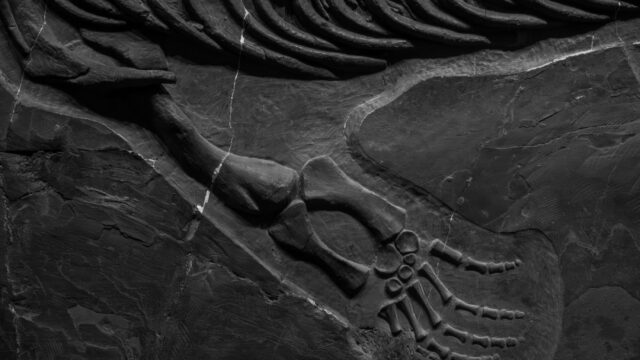
Beneath it they found more vertebrae, two limbs and a tail. McCurry told AAP that this is unusual. Most dinosaurs are known from only one or two pieces of skeleton, he said, and complete articulated skeletons, where the bones still lie in their natural positions, almost never turn up.
Patagonia produces many dinosaur finds because strong winds wear away rock and expose fossils at the surface, according to the report. Spotting them still takes a trained eye.
How sure is this?
The identification is preliminary. The report says the fossils are “believed” to represent a new species, and the skeleton differs from anything previously found in the area, which makes a new species more than likely. No formal scientific description or journal paper was mentioned, so the species has no name yet. The age range of 110 to 115 million years and the link to early titanosaur relatives are described as what the researchers think, not as confirmed results.
Only part of the animal has been recovered so far. The team has paused work and reburied the site because the Patagonian winter is too cold for digging and frost can damage fossils. The scientists also still need to find funding for the rest of the expedition.
What comes next
McCurry hopes to return to the site in 2027 to uncover more of the skeleton.
The exhibition around the find
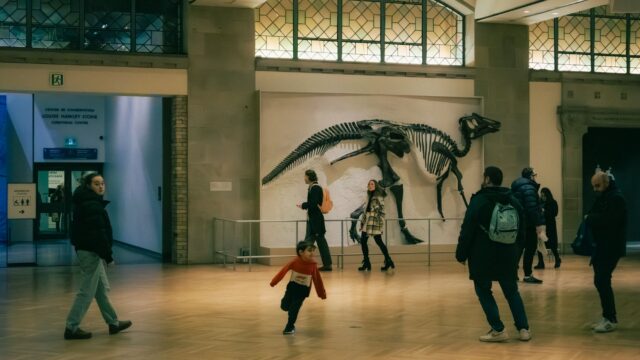
The fossils will appear alongside The World’s Biggest Dinosaur: Dinosaurs of Patagonia, developed by the Museum of Paleontology Egidio Feruglio in Argentina. It includes 16 full-size dinosaur casts representing 13 species. One is a 38-metre-long skeletal replica of Patagotitan mayorum, a giant titanosaur that the report describes as the biggest animal to walk the Earth, probably weighing about 70 tonnes.
Source: Bendigo Advertiser
Site editor: Nikita Sheikin