Simulations Show a 120-Meter Crater Wall Could Shield Moon Base
Simulations by Los Alamos and partners show a lunar crater wall could cut reactor radiation at a Moon base to near zero. Here is how the team tested it.
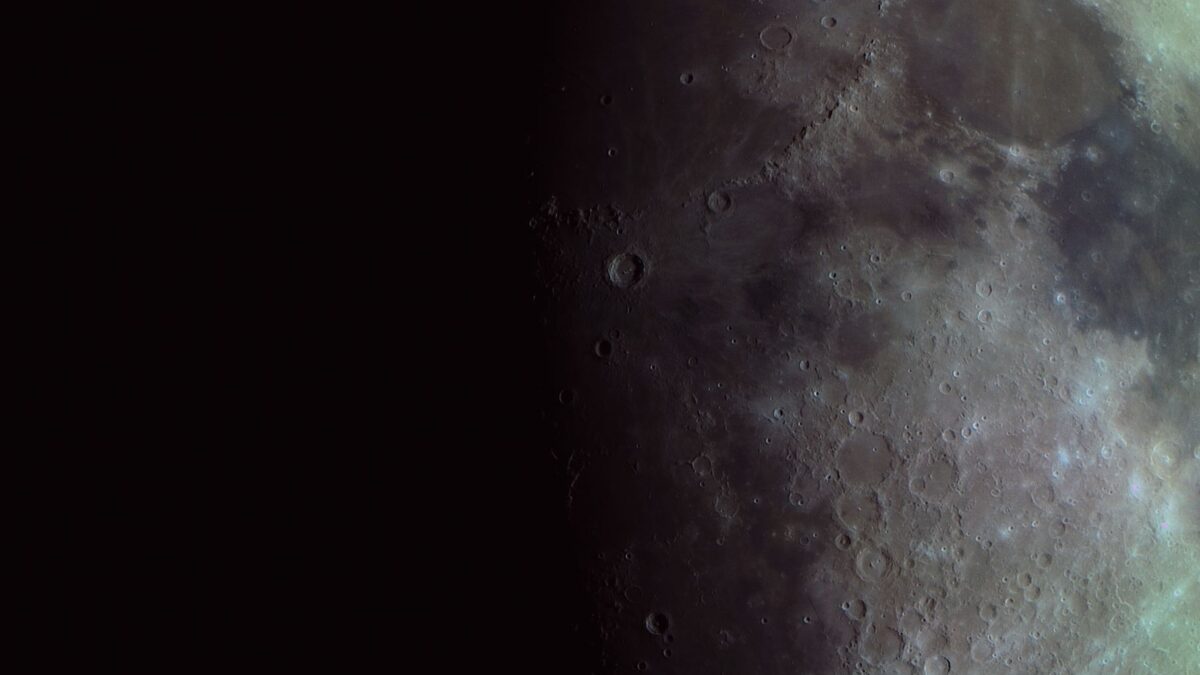
A 120-meter-high crater wall between a nuclear reactor and a Moon base would cut the radiation reaching the habitat to about four-hundredths of a rem per year, according to computer simulations by researchers at Los Alamos, NASA Glenn, Oak Ridge, Idaho National Lab and Lockheed Martin. A rem is a unit that measures radiation dose to the body. The limit for reactor radiation above the Moon’s natural background is five rem per year, as reported by Universe Today.
The team, led by Los Alamos researcher Alex Levinsky, presented the work at the American Nuclear Society’s Nuclear and Emerging Technologies for Space (NETS) conference in April. Their idea is to use lunar terrain, such as a crater or a hill, as a free radiation shield instead of launching heavy shielding from Earth.
How the team modeled the reactor
Building a mock reactor and hauling in hundreds of tons of lunar soil was not practical, so the researchers ran simulations with a software package called Monte Carlo N-Particle. It follows millions of subatomic particles as they leave a reactor core and travel through surrounding material. They placed the core 1.5 m off the ground to represent a reactor riding on a wheeled rover.
The first runs used generic landscapes: a crater three meters deep and a gently sloping dirt hill three meters high. Either one blocked almost all the radiation, bringing it down to roughly one-tenth of a rem per year. That is about fifty times below the five-rem limit.
The team then tested a real location, Connecting Ridge, near Shackleton Crater at the lunar south pole. Parts of the ridge are lit 80 to 90 percent of the time, and it sits next to permanently shadowed regions that hold water ice. The researchers kept to the rover’s limit of no slopes steeper than 18 degrees. They found a natural depression that a 120-m-high crater wall separates from a simulated base camp. With that wall in place, the dose at the habitat fell to the four-hundredths of a rem figure.
Why the reactor needs shielding at all
NASA’s Space Power and Reactor Capabilities (SPARC) program is working toward a 40-kilowatt reactor on the Moon. The whole system must weigh under 6,000 kg so it can ride on a mobile rover. Shielding is among the heaviest parts of a reactor, so designers have usually used directional “shadow shields,” which combine lightweight hydrogen-rich material such as lithium hydride with dense metal. These protect sensitive parts such as control electronics but leave the surrounding area exposed. Universe Today reports that unprotected radiation would be deadly even 1 km from the reactor.
With a crater wall protecting the habitat, the onboard shield could focus only on the electronics. The Moon also has no atmosphere, so there is no “skyshine,” the effect on Earth where radiation bounces off air back to the ground.
For readers new to the topic, how fission reactors produce heat and power is covered in a separate explainer.
The catch: a no-go zone
The area inside the crater around the operating reactor would be lethal. Astronauts who entered would quickly develop radiation poisoning. Lunar soil also reflects neutrons well, and many would bounce into space, so spacecraft and landers could not fly directly over the site while the reactor runs.
How sure is this?
The results come entirely from simulations, not from a built reactor or measurements on the Moon. The paper, titled “Impact of Terrain on Doses for Fission Surface Power,” was presented at a conference, and the sources do not say whether it has been peer-reviewed in a journal. The real-site test used one location, Connecting Ridge, and a simulated base camp. The sources do not describe plans for physical tests or a specific site for a reactor.
Source: Universe Today
Site editor: Nikita Sheikin