Winter Solstice 2026: Why December 21 Is the Shortest Day of the Year
The 2026 winter solstice falls on Dec. 21 at 20:50 UTC (3:50 p.m. EST). Why Earth's tilt makes it the shortest day, and why sunsets get later before it.
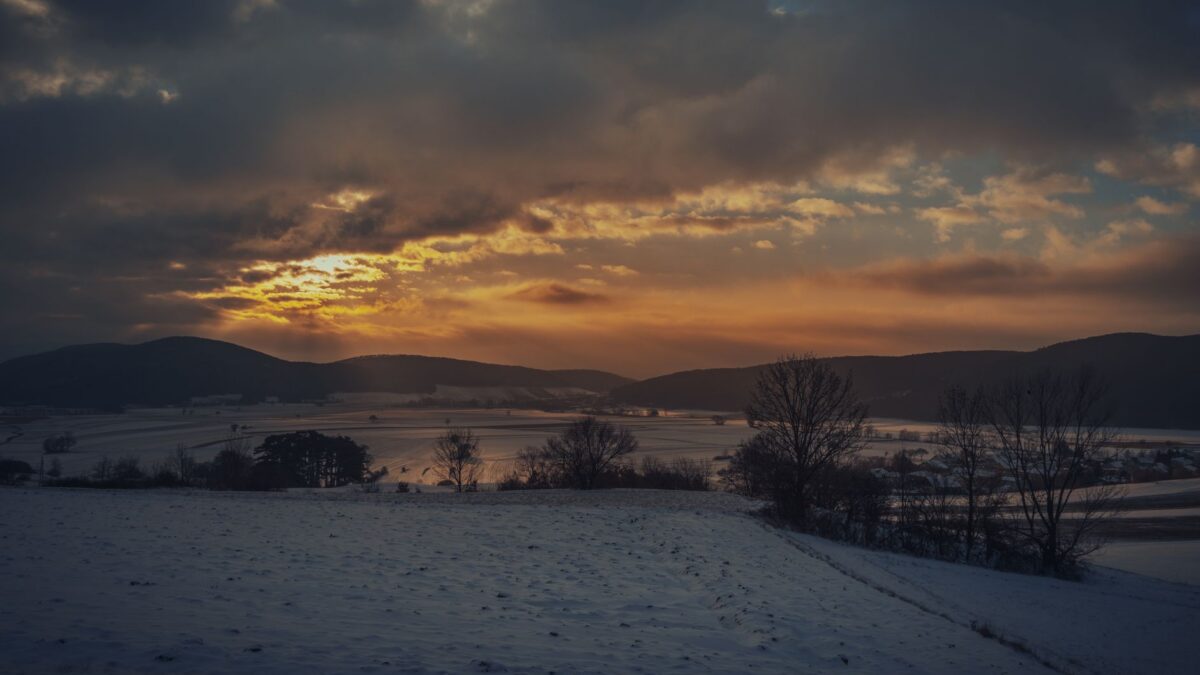
The winter solstice in 2026 falls on Monday, December 21, at 20:50 UTC, which is 3:50 p.m. Eastern Standard Time. At that moment the Northern Hemisphere is tilted farthest away from the Sun, so December 21 has the fewest hours of daylight of the year everywhere north of the equator. South of the equator the same moment is the summer solstice and the longest day.
The solstice is a single instant, not a whole day. Its calendar date can shift between December 20, 21 and 22 depending on the year and your time zone, but for every US time zone in 2026 it lands on December 21.
Why is the winter solstice the shortest day?
Earth’s axis is tilted about 23.4 degrees compared with the plane of its orbit, and that tilt stays pointed in nearly the same direction in space all year. As Earth moves around the Sun, the Northern Hemisphere spends half the year leaning toward the Sun and half leaning away. In late December it leans away as far as it ever does.
That lean has two effects you can see from the ground:
- The Sun follows its lowest, shortest arc across the southern sky, so it spends the fewest hours above the horizon.
- At noon the Sun sits at its lowest height of the year, so its light strikes the ground at a shallow angle and spreads over a larger area. Each square foot of ground gets less energy.
On the solstice the Sun shines straight down at noon over the Tropic of Capricorn, at about 23.4 degrees south latitude. That is as far south as the overhead Sun ever gets. After the solstice, its noon position starts creeping north again, and days in the Northern Hemisphere slowly lengthen.
Is the solstice caused by Earth being farther from the Sun?
No. Distance has almost nothing to do with the seasons. Earth is actually closest to the Sun (a point called perihelion) in early January, just two weeks after the December solstice. The orbit is so close to a circle that the change in distance is small compared with the effect of the tilt. The clearest proof is that Australia, Argentina and South Africa have their summer at the same time North America has winter.
How short is the day on December 21?
Day length on the solstice depends on latitude. The farther north you are, the shorter it gets:
- Near the equator, days stay close to 12 hours all year, so the solstice barely changes anything.
- In the southern US, such as Miami or Houston, the solstice day is roughly 10 and a half hours long.
- Around Washington, D.C., and Denver, daylight lasts about 9 and a half hours.
- In Seattle and much of southern Canada, it drops to around 8 and a half hours.
- North of the Arctic Circle, the Sun does not rise at all on the solstice. Parts of northern Alaska, such as Utqiagvik, go weeks without a sunrise around this date.
For exact sunrise, sunset and day length at your location, the US Naval Observatory publishes free astronomical data tables.
Why does the earliest sunset come before the solstice?
In most of the US, the earliest sunset of the year happens in early to mid-December, and the latest sunrise comes in early January. The solstice sits between them. This surprises many people, but it follows from how clocks keep time.
Clocks assume every day is exactly 24 hours long from one solar noon to the next. In December, the true solar day is slightly longer than 24 hours, partly because Earth moves faster in its orbit near perihelion and partly because of the tilt. Solar noon therefore drifts a little later on the clock each day. Sunset gets later, and sunrise keeps getting later too. The day stays shortest on December 21, but the window of daylight slides toward the evening. By the time of the solstice, afternoons are already gaining a few seconds of light while mornings are still losing it.
Why is it usually colder in January than on the solstice?
The coldest stretch of winter usually arrives in January or early February, weeks after the shortest day. This delay is called seasonal lag. Land and especially oceans keep giving off heat stored during summer and fall. For a while after the solstice, the Northern Hemisphere still loses more heat each day than it receives from the low winter Sun, so temperatures keep falling even as days lengthen. The National Weather Service tracks this pattern in its seasonal climate records for each US city.
The cold and dry air of midwinter also affects living things. Many species time their survival strategies to shortening days, and you can read more about how animals get through winter with hibernation and torpor. People feel the season too, as explained in our piece on why colds and flu spread more in winter.
How can you see the solstice yourself?
You do not need a telescope to notice the solstice. A few simple observations show the Sun’s low winter path:
- Note where the Sun sets on the horizon in early November and again around December 21. On the solstice it sets at its farthest point toward the southwest.
- Measure your shadow at local noon. On the solstice it is the longest noon shadow of the year.
- Watch the sunrise and sunset points over the following weeks. They change very slowly at first, which is where the word solstice comes from: Latin for “sun standing still.”
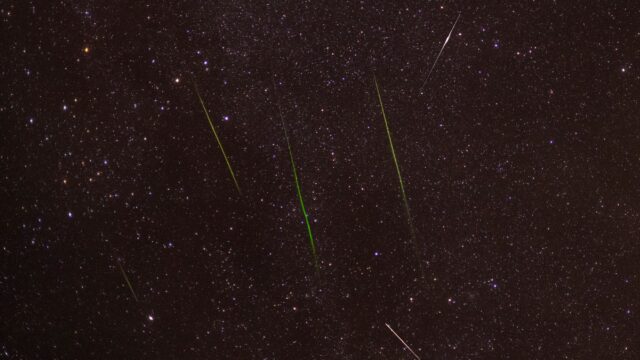
Weather and your local horizon decide what you can actually see, so clear skies and an open view to the south help. Long, dark December nights are also good for stargazing. The Geminid meteor shower peak comes about a week before the solstice.
Quick answers
When is the next winter solstice after 2026?
The December solstice returns every year on December 21 or 22 in US time zones, occasionally December 20 in some parts of the world. The exact time shifts by roughly six hours from one year to the next, with leap years pulling it back.
When do days start getting longer?
Days start lengthening right after the solstice, but only by a few seconds a day at first. The gain speeds up through January and February, reaching its fastest near the March equinox.
Is the winter solstice the first day of winter?
In astronomy, yes: the solstice starts astronomical winter in the Northern Hemisphere, which lasts until the March equinox. Meteorologists use a simpler calendar in which winter runs from December 1 through the end of February.
Does the solstice happen at the same moment everywhere?
Yes. The solstice is one instant for the whole planet. In 2026 that instant is 20:50 UTC on December 21, which is 3:50 p.m. in New York, 12:50 p.m. in Los Angeles and 8:50 p.m. in London.