Star of Bethlehem: Four Astronomical Explanations Compared
No sky event is confirmed as the Star of Bethlehem. Astronomers have proposed planet conjunctions, a comet or a nova, and each fits only part of the story.
The Star of Bethlehem has no confirmed astronomical identity. Astronomers have put forward four main candidates: a close meeting of planets such as Jupiter and Saturn, a pairing of Jupiter with Venus or the star Regulus, a comet, and a nova (a star that suddenly flares up). Each matches some details of the biblical story and fails on others, and the event may also be a symbol rather than a sky sighting.
What does the Bible actually say about the star?
Only the Gospel of Matthew mentions it. Matthew says wise men (magi) from the east saw the star and came to Jerusalem to ask where the newborn king of the Jews was. King Herod asked them when the star had appeared, and Matthew then says the star went ahead of the visitors and stopped over the place where the child was.
The text never calls the object a comet, a planet or a new star. That vagueness is why so many explanations exist. The Gospel of Luke tells the birth story without any star.
When would the star have appeared?
Most searches focus on the years 7 to 2 BC. Matthew places the birth during the reign of Herod the Great, and a common scholarly view puts Herod’s death in 4 BC, though some historians argue for a later year. Our year numbering was set in the sixth century by the monk Dionysius Exiguus, and historians generally think he placed the birth a few years too late. That error is why a birth “before Christ” is not contradictory.
Could it have been a planetary conjunction?
A conjunction is a moment when two bodies look close together in the sky. The astronomer Johannes Kepler suggested in the early 1600s that a Jupiter and Saturn meeting was the star. Modern calculations show the two planets met three times in the constellation Pisces in 7 BC. At their closest they were about one degree apart, roughly two full Moon widths, so they never merged into a single point.
Another proposal is a run of events in 3 and 2 BC. Jupiter passed close to the bright star Regulus several times, and in June of 2 BC Jupiter and Venus came so close that they looked almost like one very bright object. Jupiter also appears to pause in the sky when it reverses direction against the background stars, which some writers connect to the star “stopping.”
The weakness of all conjunction ideas is that planets are routine sights. A magus who studied the sky would have known them well, and a conjunction does not appear suddenly the way Matthew describes the star.
Was it a comet?
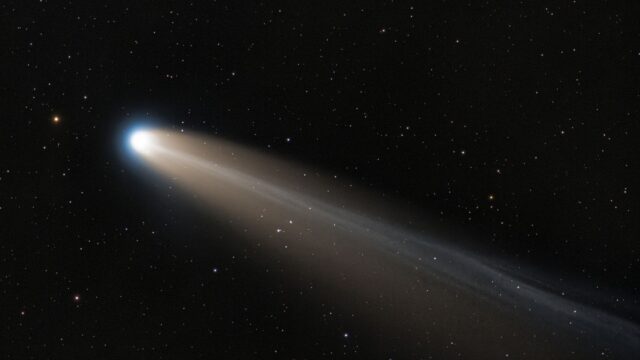
A comet is a ball of ice and dust that grows a glowing tail near the Sun. Comets are visible for weeks and can be dramatic. Halley’s Comet passed in 12 or 11 BC, which most scholars consider too early. Chinese court astronomers recorded a long-lasting object in 5 BC and another in 4 BC, and some researchers read these as a comet or a nova.
Many ancient cultures treated comets as bad omens, which makes them an awkward match for a sign of a royal birth. A comet also moves slowly across the sky and does not point to a single house.
Could a nova or supernova explain it?
A nova happens when a white dwarf, the dense remnant of a Sun-like star, pulls gas from a companion and the gas ignites, making a faint star suddenly look bright for weeks or months. Binary stars can also brighten in repeating cycles, as in NASA’s Chandra observations of a star with 113-day outbursts and a hidden partner. The 5 BC Chinese record is the usual evidence offered for a nova in this period. A supernova, a star’s final explosion, would be far brighter, but no supernova remnant is widely accepted as matching these years.
The limit here is the data. Two short records cannot show that an ancient nova happened at the right place and time for the story.
Is the star a historical sky event at all?
Astronomy can only test which events were available. It cannot show that Matthew described one. Some historians and biblical scholars read the star as a literary or theological element of the Gospel, and others treat it as a remembered event. Researchers who reconstruct the ancient sky with computer software agree on the positions of the planets in those years, and the disagreement is about which event, if any, the text describes.
Quick answers
What is the “Christmas Star” people talk about in December?
The name was used for the Jupiter and Saturn conjunction of Dec. 21, 2020, which was the closest meeting of the two planets in about 400 years. It is a modern nickname and not evidence of what Matthew described. NASA publishes sky information and planet positions on its official website.
Why do astronomers disagree on one answer?
Matthew gives few measurable details: no date, no position, no brightness. Without those, several events fit equally well and none can be ruled in with certainty.
Can we see these ancient events today?
Planetarium software can recreate the sky for any date in history, including the planet meetings of 7 BC and 2 BC. Comets and novae from that time cannot be recreated, because they depend on one-time events that only survive in records.