Why Turkey Has White Meat and Dark Meat: Muscles, Myoglobin and Cooking
Turkey has white and dark meat because breast muscle works in short bursts while leg muscle works all day. See what causes the color and how to cook each.
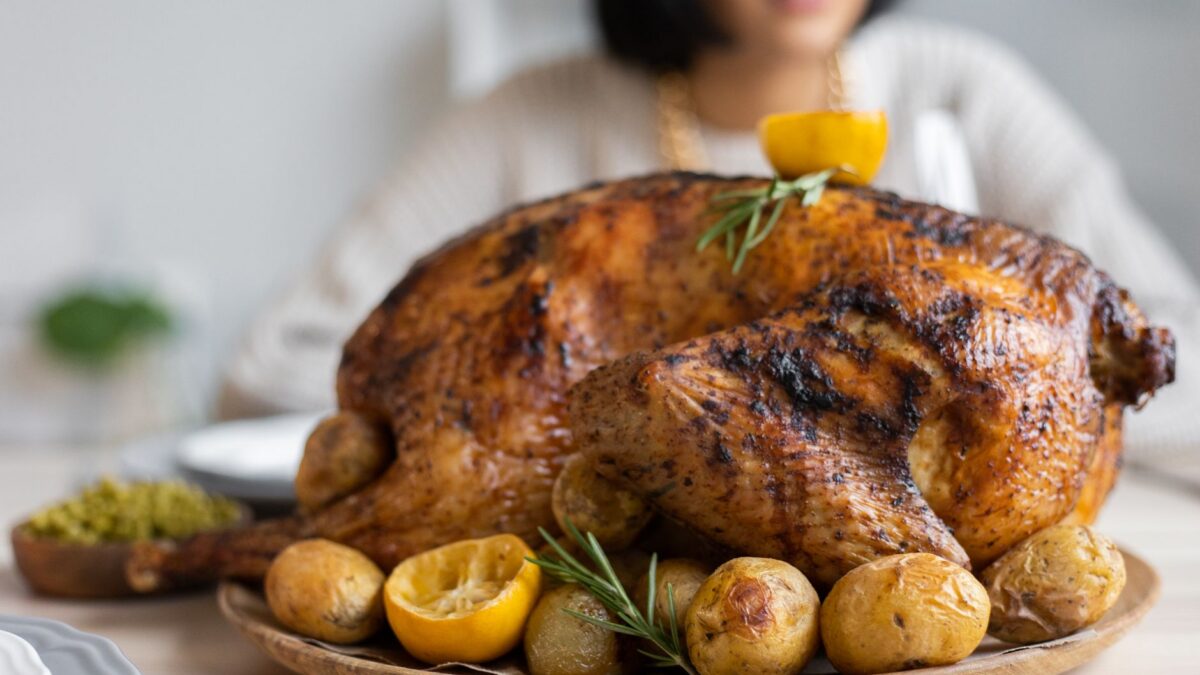
Turkey has white meat and dark meat because the two cuts come from muscles that do different jobs. The breast is built for brief bursts of work and holds little myoglobin, the pigment that stores oxygen, so it stays pale. The legs and thighs carry the bird’s weight all day, contain far more myoglobin and fat, and turn dark.
The color difference also predicts texture and cooking behavior, which is why a breast dries out in the oven while a thigh is still tough at the same moment.
What makes dark meat dark?
Dark meat is dark mainly because of myoglobin, a protein that holds iron and stores oxygen inside muscle cells. Myoglobin is red-brown, so muscles packed with it look darker both raw and cooked.
Muscles that work for long stretches need a steady oxygen supply, so they build up more myoglobin, more blood vessels and more of the cell structures that burn fuel with oxygen. A turkey spends most of its life standing and walking, which keeps the leg muscles busy hour after hour. Those muscles also contain more fat and more connective tissue, which adds to their richer flavor.
Why is turkey breast white?
Turkey breast is white because it is made mostly of fast-twitch muscle fibers, which fire hard and tire quickly and get their energy without much oxygen. These fibers need little myoglobin, so the meat has little pigment.
The breast muscles power the wings. Wild turkeys use them for short flights, such as getting up into a tree to roost. Their breast meat is somewhat darker than the pale meat of a farm-raised bird, because muscles that are used more build more myoglobin. Commercial turkeys have been bred for large, broad breasts and are too heavy to fly, so their breast muscle is the paler, leaner kind most shoppers know.
Is dark meat different in nutrition and flavor?
Yes. Dark meat has more fat, so it has more calories per serving, and it also has more iron and zinc because of its myoglobin. White meat is leaner and milder. Both cuts are good sources of protein, and the exact numbers vary by bird and by whether the skin is eaten, so check a nutrition database such as the USDA’s FoodData Central if you need figures.
The extra fat and connective tissue in dark meat give it a stronger, juicier taste and make it more forgiving when cooked a little too long.
Many people wonder whether the white meat is what makes people drowsy after a holiday meal. Tryptophan is present in both kinds of turkey, and a separate article explains what tryptophan does in the body.
Why do the two cuts cook differently?
Breast meat is lean, so it turns dry and stringy soon after it is done. Thigh and drumstick meat contains collagen, a connective protein that is tough when raw but melts into gelatin with time and heat. That is why legs and thighs taste better when cooked past the minimum safe temperature.
The USDA Food Safety and Inspection Service sets 165°F (74°C) as the safe internal temperature for turkey, measured with a food thermometer. The breast is ready at that point. Many cooks take thighs and drumsticks a little higher, often into the 170s to 180s °F (roughly 77 to 82°C), because the extra heat softens the collagen. Because the breast is done sooner, a whole bird often ends up with the thighs just reaching their best while the breast is already overcooked.
How can you get both cuts right?
The simplest fix is to treat them as separate pieces, and several approaches follow from that.
- Cook the legs and thighs separately from the breast, or take the legs off the roasting pan to finish while the breast rests.
- Use a thermometer in the thickest part of the breast and in the thigh, away from bone, rather than relying on timing charts or the pop-up timer.
- Shield the breast with a loose foil tent during part of the roast so it heats more slowly than the legs.
- Spatchcock the turkey (remove the backbone and flatten the bird) so the legs sit toward the hotter outer edges of the pan and the breast sits in the middle.
- Let the cooked turkey rest before carving so the juices settle back into the meat.
The USDA’s Food Safety and Inspection Service publishes guidance on safe thawing, stuffing and cooking times for turkey.
Quick answers
Is pink turkey meat undercooked?
Not always. Myoglobin can leave a pink tinge in fully cooked poultry, especially near the bone in young birds. Judge doneness by the internal temperature on a food thermometer, not by color.
Are chicken and duck divided the same way?
Chicken follows the same pattern, with a pale breast and darker legs. Ducks fly and swim, so their breast muscle works harder and is dark red.
Which is healthier, white or dark meat?
White meat is leaner and has fewer calories, while dark meat has more iron and zinc. Both supply protein, and the better choice depends on what a person needs from the meal.