CT Scans of Jeremy Bentham’s Head Reveal Painful Jaw Arthritis
CT scans of philosopher Jeremy Bentham's head, kept at UCL, show missing teeth and advanced jaw arthritis. What the scans found and how the head was made.
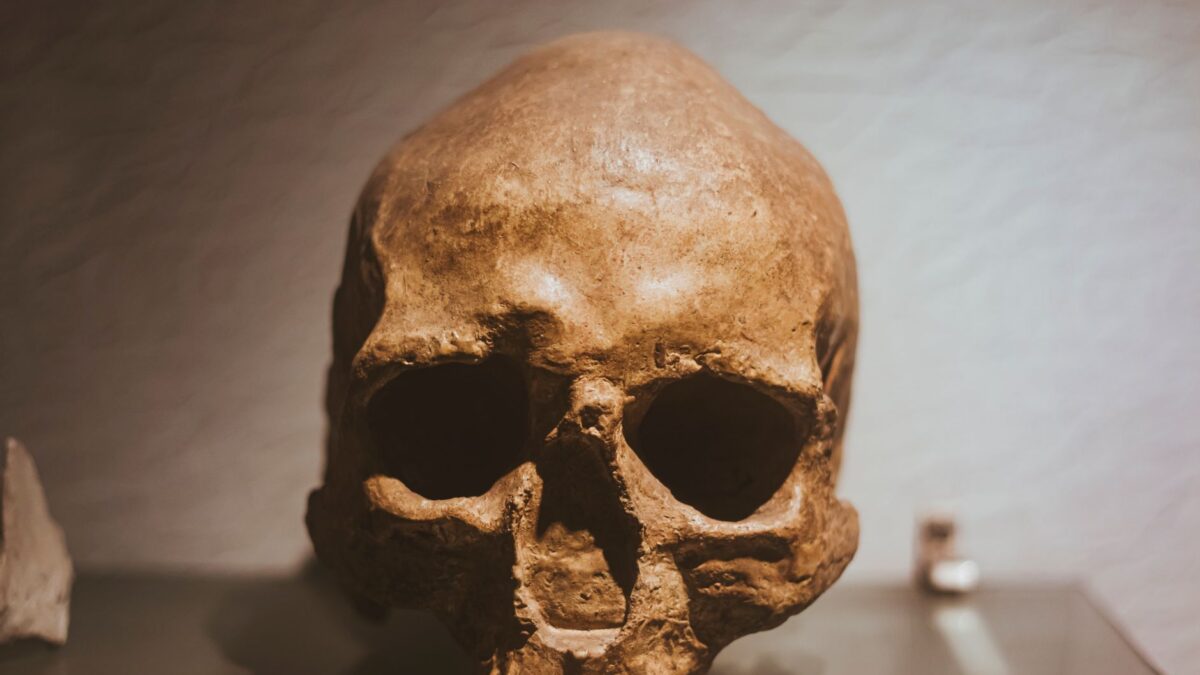
CT scans of the preserved head of English philosopher Jeremy Bentham show he was missing many teeth and had advanced arthritis in his lower jaw when he died of natural causes at age 84, Live Science reported. Bentham, who founded modern utilitarianism, has been on display at University College London (UCL) for over 150 years.
The jawbone had worn very thin. Project leader Tannis Davidson, curator of UCL’s Grant Museum of Zoology, told Live Science that Bentham “must have been in excruciating pain.”
How the scans were done
The team used computed tomography (CT), an X-ray method that builds up cross-sections of an object, to create a digital 3D model of the head. The project marks UCL’s 200th anniversary. The university was founded as London University in 1826 and opened to students in 1828, and Bentham’s ideas inspired its founders.
The work is a UCL museum project on a single historical specimen, and the scanning process appears in a short film called “Bentham Revealed.”
What the scans found inside the skull
Beyond the missing teeth and the arthritic jaw, the images confirmed that Bentham’s brain had been taken out before the head was preserved. Some of his dura mater, the tough layer of connective tissue that wraps the brain and spinal cord, was left in place. Davidson said the brain was removed to follow Bentham’s instructions that his head be mummified the way Māori heads were, which also had their brains removed.
The glass eyes placed in the real head are also visible in the scans.
Bentham wrote about his dental troubles several times, Davidson said. It is not clear whether he knew that he also had severe arthritis in his lower jaw, which would have made the tooth problems far more painful. Modern ideas about cleaning teeth had not yet taken hold in his lifetime.
A body given to science
As a young man, Bentham said he would donate his body to science. In the U.K. at the time, dissection after death was frowned upon even for research and was reserved for the worst criminals. After he died in 1832, his body was dissected and studied, and his remains were turned into what he called an “auto-icon,” a word he coined to mean “self-representation.”
The auto-icon is not a mummy. His skeleton was dressed in his own clothes, padded with straw. An attempt to preserve the head with sulfuric acid badly disfigured it, so a wax head based on paintings and death masks was fitted to the body instead. The real head, with detailed glass eyes, was displayed at the figure’s feet.
According to UCL lore, rivals from King’s College London stole the real head in 1975 and held it for ransom for a few days. It has been locked away since. The auto-icon itself has stood in a display case at UCL since the 1850s, apart from short trips around Europe and to the Met Breuer in New York City.
Why it matters
The scans give a physical record of a famous thinker’s health that his own writings could not provide. They show the toll of jaw disease and tooth loss at a time before modern ideas about cleaning teeth, in a man who lived to 84. “Dentistry 200 years ago was a very different kettle of fish,” Davidson said.
The findings also add detail to the story of how Bentham’s body was handled after death. Bentham, a polymath who wrote on law, economics, education and animal rights, called himself an “unbeliever,” and critics called him “godless.” Davidson suggested the auto-icon may have been his way of avoiding a traditional Anglican burial. That idea is her interpretation; the scans themselves do not show what Bentham intended.
Source: Live Science