Zebra Finch Errors Track Call Meaning, Berkeley Scientist Says
A UC Berkeley researcher says zebra finches' rare errors in a call test followed meaning rather than sound, and explains how she decoded their calls.
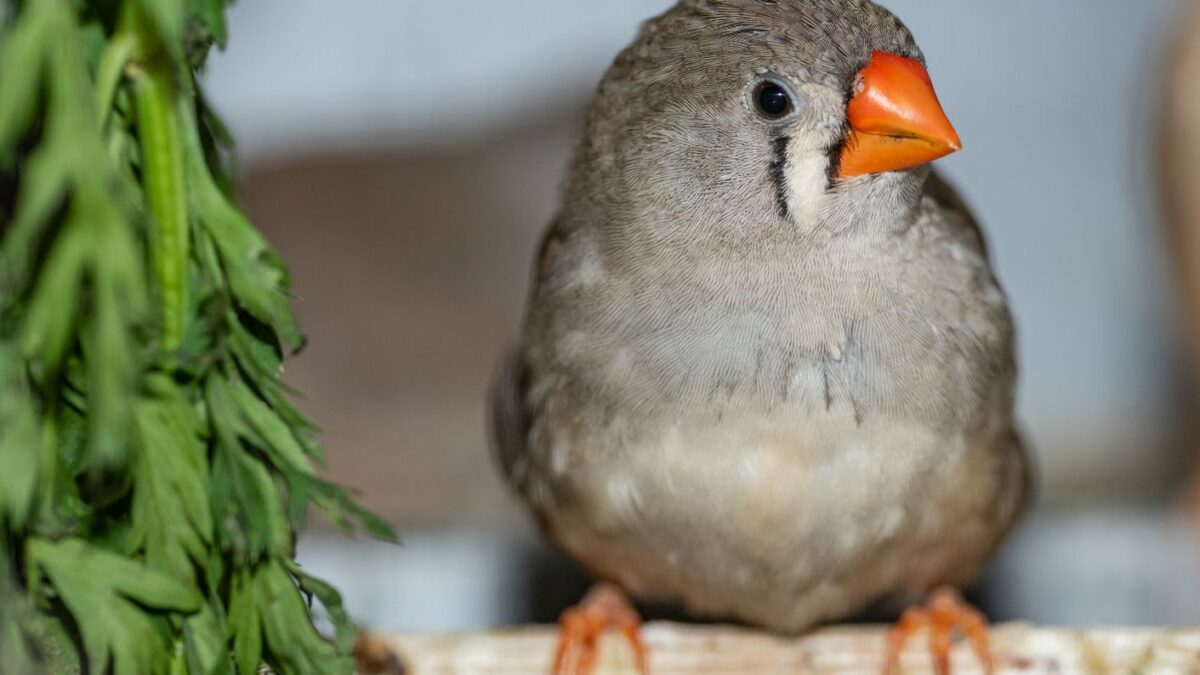
Zebra finches appear to treat their calls as words with meanings. Julie Elie, an ethologist (a researcher of animal behavior) at the University of California, Berkeley, told Live Science that when the birds made rare mistakes sorting recorded calls, the errors were better explained by similar meaning than by similar sound.
Elie won the 2026 Coller Dolittle Challenge for Two-Way Interspecies Communication for her work on zebra finch communication. She described the research in an interview with Live Science’s Kenna Hughes-Castleberry.
How she built a dictionary of finch calls
Elie spent more than a decade watching the social behavior of zebra finches, recording thousands of sounds and combining machine learning with behavioral experiments. By matching each sound to the social situation in which it occurred, she built what she calls the first acoustic dictionary of zebra finch calls. She compared the process to learning that a cat’s meow means hunger or a wish to go outside.
Her early observations also changed the picture of the birds’ social life. Zebra finches had been thought to form a dominance hierarchy. Elie found that a bird’s partner mattered most, and that males and females pair for life.
The experiment that tested the dictionary
A dictionary built by one observer needs a check, and Elie said the birds themselves supplied it. Her team designed an operant conditioning experiment (a test in which animals learn from rewards) in which a finch classifies recorded calls from other zebra finches.
Each bird sits in a cage with a button or an infrared sensor it can trigger with its beak. Every trigger plays a recording drawn at random from a library of call types. On a given day, only one call type earns seeds. The bird can cut off any recording and skip to the next, like skipping songs in a music app. Four out of five times, a trigger plays a call that earns nothing. Because the birds are slightly food deprived, they interrupt the unrewarded calls and listen to the rewarded one.
According to Elie, the birds usually worked out the rewarded call type quickly, then interrupted all the others. A different call type was tested each day. Had a bird been unable to do it, the call type she had identified would not exist in the finches’ vocabulary. The birds succeeded, which she took as confirmation that her categories were correct.
Mistakes that followed meaning
The birds also made rare, systematic errors. Elie’s team asked whether these came from acoustic similarity, like confusing "glove" with "love," or from semantic similarity, like confusing "love" with "heart." The errors fit meaning better than sound. In her view, that suggests the birds understand what their call types mean, and she called it a big discovery in animal communication.
What is still unknown
Elie said the work covers the zebra finch repertoire only. A dictionary for one species does not let a researcher talk to a crow, she noted. The words are also only part of the picture: her team still needs to learn how the birds string calls together and how they respond to one another in exchanges. The birds also use body postures and displays while calling, and full communication would need to account for them.
Her timeline is a personal estimate. Elie said talking with a bird is not coming tomorrow or likely next year, but that she expects it within about 10 years, helped by fast progress in AI and robotics. She said birds are a likely first species because they are so talkative. The account comes from an interview, and the sources do not give the details of a published study.
Why it matters
Elie said studies like hers show that humans are not the only intelligent species on the planet. Parrots and mockingbirds that copy sounds from other species are among the examples she gave of animals using vocalizations toward a goal. Her zebra finch results add a method for checking whether a human-identified call type is a unit of meaning to the animal itself.
Source: Live Science
Site editor: Nikita Sheikin