How to See the Northern Lights From the Lower 48 States
Most nights the aurora stays over Canada and Alaska. A strong geomagnetic storm, a dark field and a clear view north are what bring it into range of the lower 48.
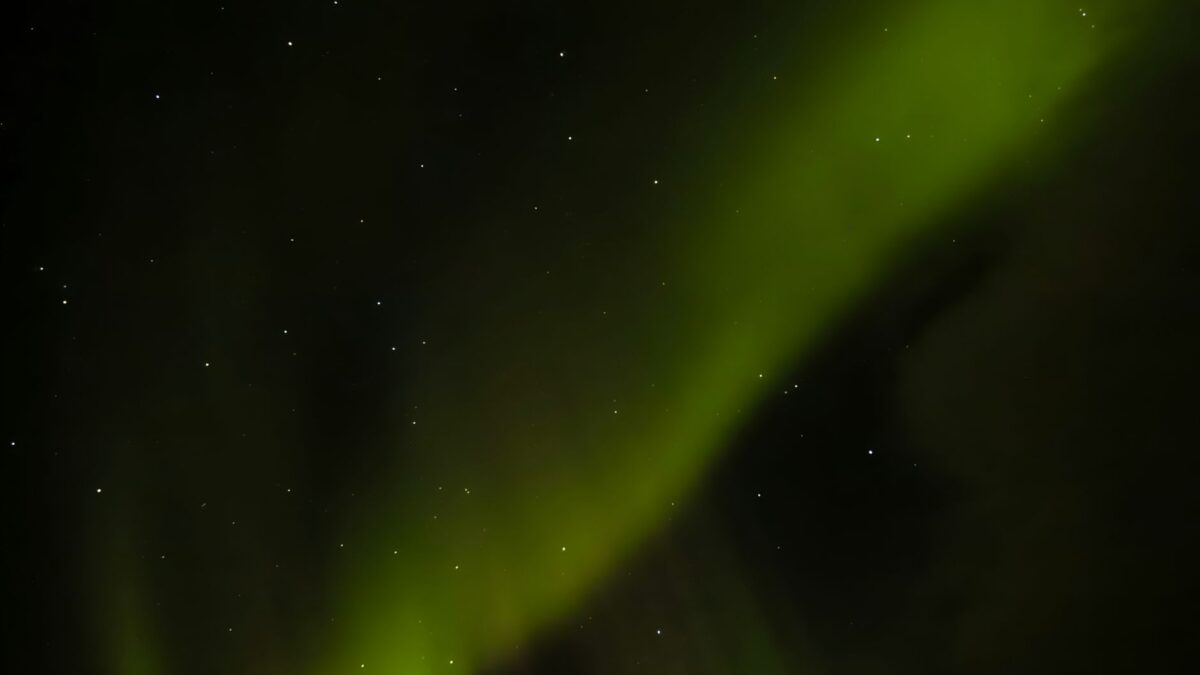
People in the lower 48 states see the northern lights mostly during geomagnetic storms, when the auroral oval spreads south from Canada. NOAA’s Space Weather Prediction Center (SWPC) says aurora may be visible from the northern edge of the US at Kp 6 to 7 and overhead in northern states at Kp 8 to 9. The best hours are roughly 10 p.m. to 2 a.m. local time, from a dark site with a clear view north.
No forecast can promise a sighting. Clouds, moonlight and city glow all decide what you actually see, and a storm can fade before your night begins.
Which US states can see the northern lights?
The northern-tier states have the best odds: Washington, Idaho, Montana, North Dakota, Minnesota, Wisconsin, Michigan and northern New England. The reason is geography of the magnetic field rather than the map. The aurora forms a ring around the north geomagnetic pole, which SWPC places in northeast Canada, so North America sits closer to the auroral zone than Europe or Asia at the same map latitude.
SWPC gives a rule of thumb in its tips for viewing the aurora. The equatorward edge of the oval sits near 66 degrees geomagnetic latitude at Kp 0 and moves about 2 degrees closer to the equator for each step up the scale, reaching about 48 degrees at Kp 9.
| Kp | Oval edge (geomagnetic latitude) | What SWPC says to expect |
|---|---|---|
| 0 to 2 | About 66 to 62 degrees | Aurora far north and dim |
| 3 to 5 | About 60 to 56 degrees | Brighter, moving away from the pole |
| 6 to 7 | About 54 to 52 degrees | May be visible from the northern edge of the US |
| 8 to 9 | About 50 to 48 degrees | May be seen overhead from northern states |
You do not need the aurora overhead to see it. SWPC notes that a bright aurora can be seen from hundreds of kilometers away, so viewers far to the south often see the top of the display as a glow low in the northern sky. SWPC also stresses that these values are averages that do not hold exactly on every night. During the extreme storm of May 2024, people reported aurora far into the southern states.
For a full walk-through of the Kp scale and storm levels, see our guide to reading the northern lights forecast and the Kp index.
What time of night is best?
The best window is usually within an hour or two of local midnight, roughly 10 p.m. to 2 a.m., according to SWPC. When a storm is strong, activity spreads earlier into the evening and later toward dawn, but the hours around midnight still tend to be the most active.
Season matters as well. SWPC says larger storms tend to occur near the spring and fall equinoxes, in March and September. Winter gives the longest nights, while short summer nights in the far north leave little true darkness.
Where should you go to watch?
Go somewhere dark with an open northern horizon. In the lower 48 the aurora is usually low in the north, so trees, hills or a town on that side of the sky can hide the whole show.
- Drive away from city lights. The darker the sky, the fainter the glow you can pick out.
- Pick a spot with a long view north: a lake shore, open farmland or a hilltop. SWPC notes that height helps you see farther toward the horizon.
- Check the Moon. SWPC says a full Moon reduces how bright the aurora looks, though not how bright it really is.
- Stay on public land or places you have permission to use, and keep off closed roads at night.
Light pollution maps from groups such as DarkSky International can help you find the darkest area within driving distance.
How do you use NOAA’s forecasts on the night?
Use the 3-day forecast to decide whether a night is worth planning around, then the 30-minute forecast to decide when to step outside. Both are free on the SWPC website.
- Check the 3-day forecast for predicted Kp of 6 or more, or a G2 or stronger storm watch. Times are in UTC; for example, 03 to 06 UTC is 10 p.m. to 1 a.m. Eastern Standard Time.
- Check your local cloud forecast. A strong storm behind thick cloud is invisible.
- After dark, open the Aurora 30-Minute Forecast. SWPC says it is based on the OVATION model and looks 30 to 90 minutes ahead, the time the solar wind takes to travel from the monitoring point at L1 to Earth.
- Look at how far south the green oval reaches and whether it turns red, which means a stronger aurora. If it reaches the band just north of you, go out.
- Give your eyes 20 minutes away from bright screens, then scan the northern horizon. Displays often come in surges separated by quiet spells.
Storm forecasts are less precise than weather forecasts. The arrival time of a solar eruption can shift by hours, so a storm watch means be ready, not that a display is certain.
Why does a phone camera see more than your eyes?
A phone camera collects light for one to several seconds per shot, while your eyes take in a fresh image many times a second. Human vision also picks up color poorly in dim light. A faint aurora can look like a gray or milky arc to the eye, then show up green or pink on a phone screen.
That gap explains many reports from the lower 48. People photograph the northern sky on a storm night and find color they did not notice while standing there. To try it, turn on night mode, rest the phone on something solid and point it north. Long exposures will also catch satellites as thin streaks; our guide on how to see Starlink satellites explains why so many cross the sky after dusk.
What does a lower-48 aurora look like?
From the northern states a typical display is a pale green or whitish band low in the north, sometimes with vertical rays that brighten and fade over minutes. During major storms the upper parts of the aurora can glow red, and those red tops are what viewers farther south tend to see. Overhead coronas, with rays meeting near the zenith, are rare this far south and usually need an extreme storm.
If the aurora does not appear, the same dark trip is still useful. Our meteor shower calendar lists the next peak nights.
Bottom line
To see the northern lights from the lower 48, wait for a forecast of Kp 6 or higher, go to a dark place with a clear view north, and look between about 10 p.m. and 2 a.m. Check the Aurora 30-Minute Forecast on the night and the cloud forecast before you drive. A phone in night mode may show color your eyes miss.
FAQ
Can you see the northern lights in the US without a storm?
In Alaska, yes, on many clear dark nights. In the lower 48 a quiet night rarely brings the aurora into view; SWPC links visibility at the northern edge of the US to Kp 6 or 7, which is storm level.
Which direction should I look?
Look north. From most of the lower 48 the aurora sits low over the northern horizon, so the view in that direction must be open and dark. Only during extreme storms does it climb high or spread overhead.
Is fall or winter better for the aurora?
Both work. SWPC says larger storms tend to come near the equinoxes in March and September, while winter offers more hours of darkness. Clear weather often matters more than the month.
Why did my photo show green when I saw almost nothing?
Cameras gather light over seconds and record color in dim light, which human eyes cannot do well. A faint glow that looks gray in person can come out green or pink in a photo.