What an FAA Launch License Means and Why the FAA Can Ground a Rocket
The FAA does not certify rockets the way it certifies airliners. It licenses launches to protect the public, and it can halt flights after a mishap until safety questions are answered.
An FAA launch license is the federal permission a U.S. company needs to launch or reenter a commercial rocket or spacecraft. The FAA’s Office of Commercial Space Transportation issues it after reviewing public safety, national security and foreign policy issues, insurance and environmental effects. If a licensed flight has a mishap, the FAA can keep that rocket type on the ground until it is satisfied the public is safe.
What does an FAA launch license cover?
A vehicle operator license covers a launch, a reentry or both, including pre-flight and post-flight operations, under the federal rule known as 14 CFR Part 450. The FAA says Part 450 applies to operations that go above 150 km in altitude, exceed a total impulse of 200,000 lb-sec, or carry a payload for hire. Older licensing rules (Parts 415, 417, 431 and 435) have been replaced by Part 450 for new applications.
The review has several parts:
- Safety review: the company’s safety organization, system safety process and flight safety analysis, checked against limits on the risk to people on the ground, at sea and in the air.
- Policy review: an interagency check, with the Department of Defense, the State Department and others, for national security and foreign policy concerns.
- Payload review: what the rocket carries, normally as part of the launch license.
- Financial responsibility: proof of insurance or funds to cover damage from a mishap.
- Environmental review: the effects of launches and new facilities on wildlife, water, noise and nearby communities.
The FAA lists the full set of authorizations on its licenses, permits and approvals page.
What does the FAA not do?
The FAA does not certify a rocket as safe the way it certifies an airliner. Its main job is protecting the public, meaning people and property not involved in the launch. For crew and passengers on commercial human spaceflights, federal law has relied mainly on informed consent and limited FAA rules on occupant safety.
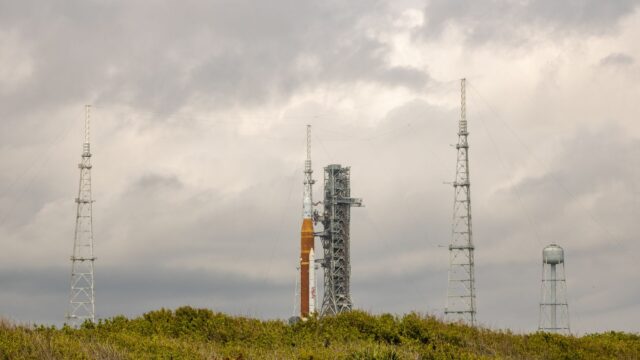
The FAA also does not license every launch from U.S. soil. Launches conducted by and for the federal government, such as NASA’s own SLS rocket, fall outside FAA licensing and follow NASA and military safety processes. Small amateur rockets are exempt if they stay suborbital, carry no people, stay under 150 km and remain under a set total impulse.
| Type of FAA authorization | What it allows |
|---|---|
| Vehicle operator license (Part 450) | Commercial launch, reentry or both |
| Experimental permit (Part 437) | Test flights of reusable suborbital rockets for development, crew training or showing compliance |
| Launch site operator license (Part 420) | Running a spaceport that hosts licensed launches |
| Reentry site operator license (Part 433) | Running a site where vehicles come back to Earth |
| Safety element approval | Approval of a component, system or service, such as a safety system, separate from a single license |
What counts as a mishap?
For Part 450 licenses, the FAA lists nine kinds of events that count as a mishap when they happen during a licensed activity. Any one of them, alone or combined, must be reported.
- A serious injury or death.
- Malfunction of a safety-critical system.
- Failure of the company’s safety organization, safety operations or safety procedures.
- High risk of serious or fatal injury to crew, a spaceflight participant, a government astronaut or a member of the public.
- Substantial damage to property not associated with the launch.
- Unplanned substantial damage to property associated with the launch.
- Unplanned permanent loss of the vehicle.
- Hazardous debris landing outside the defined hazard areas.
- Failure to complete a launch or reentry as planned.
The last item means a rocket can be in a mishap even if nobody is hurt and nothing on the ground is damaged. An upper stage that leaves its payload in the wrong orbit, or a test vehicle lost over the ocean, can both qualify.
How does a mishap investigation work?
A mishap investigation looks for the root cause of the event and the fixes needed to stop it happening again. After a mishap, the company must carry out its FAA-approved mishap plan, protect the public, preserve data and evidence, notify the FAA’s Washington Operations Center and file a preliminary written report within five days.
In most cases the company leads the investigation under FAA oversight. The FAA can also run it directly, and it coordinates with NASA, the National Transportation Safety Board and Space Force ranges when needed. The FAA says some investigations close in weeks and more complex ones can take several months. Details are on the FAA’s compliance, enforcement and mishap page.
Why can the FAA ground a rocket, and how does it return to flight?
The FAA can keep a rocket type on the ground after a mishap because it must decide that the cause does not threaten public safety before more flights go ahead. News reports often call this a grounding. There are two ways back:
- Closing the investigation: the company finishes its final report with corrective actions, the FAA accepts it, the fixes are made and any license changes are approved.
- Return to flight determination: the company asks to fly before the investigation is finished. It must show that preventive measures are in place and that the mishap did not put the public at risk, or that the risk has been dealt with. If the FAA agrees, flights resume while the investigation stays open.
The second route explains why some rockets fly again within weeks. In July 2024, for example, the FAA allowed Falcon 9 to resume flights about two weeks after an upper stage failure, while the investigation was still open. Bigger changes, such as a new flight path or hardware that affects public safety, may also need a license modification.
A mishap halt is different from a scrub. A scrub is a same-day decision to stop a countdown, usually for weather or a technical issue, and it involves no FAA action. Our explainer on why rocket launches get scrubbed covers those.
Bottom line
An FAA launch license means a company’s rocket passed a federal review of public safety, policy, insurance and environmental effects for a specific type of operation. It is a license to fly with limits, and it does not certify the rocket. After a mishap, the FAA decides when that rocket can fly again, either by accepting a final report or by approving an early return to flight based on public safety.
FAQ
Does NASA need an FAA license to launch?
Not for launches the government conducts itself, such as SLS. Commercial launches that carry NASA payloads or crews on company-owned rockets, such as Falcon 9, fly under FAA licenses.
How long does a mishap investigation take?
The FAA says some close within weeks and complex ones can take several months. A company can ask to return to flight before the investigation ends if it can show public safety is protected.
Can the FAA fine a launch company?
Yes. The FAA’s enforcement tools include civil penalties, emergency orders, and suspending or revoking a license.
Where can I see which companies hold FAA launch licenses?
The FAA publishes current active licenses, permits and approvals in its commercial space data on faa.gov. Our overview of the major rocket companies lists which rockets each company flies.