Archaeologists Dig a 3,800-Year-Old Possible Tavern Near Baghdad
Excavators at Tell Muhammad in Iraq found a barley-and-beer loan tablet beside a mudbrick counter in a 3,800-year-old building, and a long stretch of city wall.
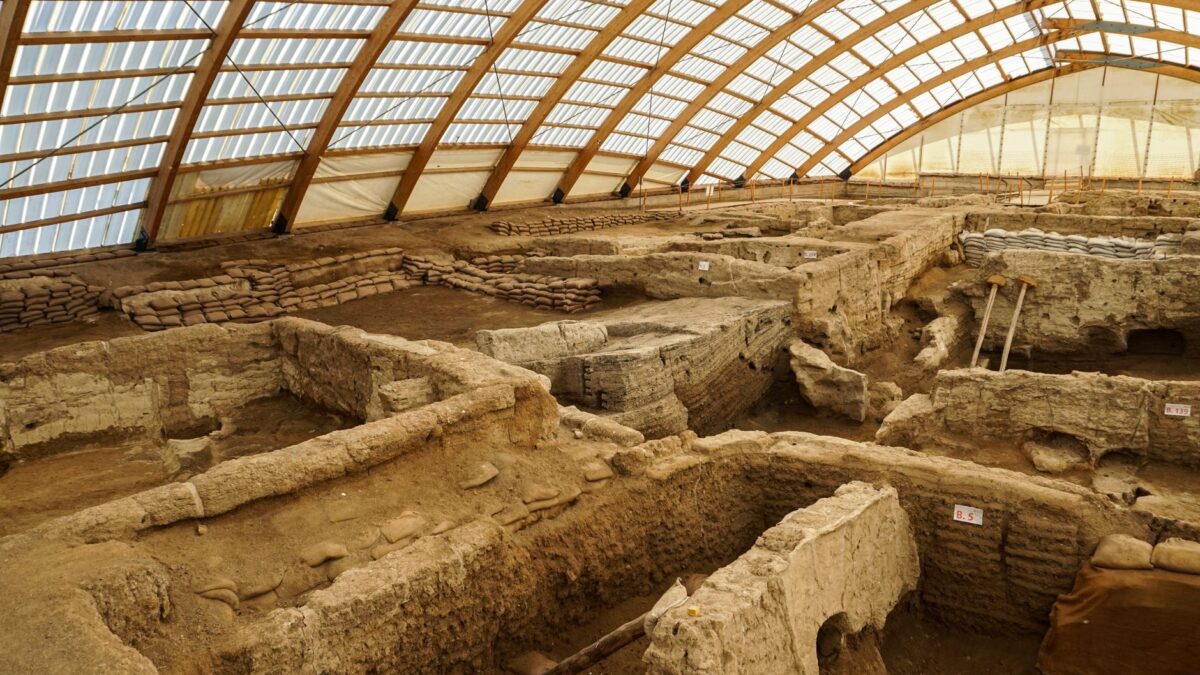
A 3,800-year-old building at Tell Muhammad, near the Tigris River in central Iraq, may have been a tavern. Archaeologists found a clay tablet in one of its rooms that records an agreement to borrow barley and beer, Archaeology Magazine reported, citing La Brújula Verde.
The team is led by Nicola Laneri of the University of Catania, and the excavation is still going. Tell Muhammad is a mound that sits close to the river, and the dig there has now turned up both an everyday business record and parts of the city’s defenses.
What the team found in the room
The tablet is written in cuneiform, the wedge-shaped script used in ancient Mesopotamia. It records a loan of barley and beer, and the contract was signed in front of two witnesses. Such a document shows that ordinary lending of food and drink was put in writing and backed by people who saw the deal made.
The room where it turned up has a semicircular mudbrick counter that faces the street. Next to it is a mudbrick basin that may have been used for brewing or for making bread. A street-facing counter, a loan of beer and a basin for grain products are the clues behind the tavern idea.
The city wall and its water supply
At the edge of the same room, the researchers uncovered a section of the city’s outer wall, which is 16 feet thick. Across the dig, more than 300 feet of that wall has been exposed, along with a small secondary gate.
The excavation also revealed piping made of reed mats and clay. It carried water into a large cistern built inside the protective wall. Together, the wall, the gate, the pipes and the cistern describe a city that protected its water inside its defenses.
How sure is this?
The tavern label is a possibility, not a conclusion. The reports describe the building as a “possible” tavern, and the basin only “may have been” used for brewing or baking. The tablet shows that a loan of barley and beer was written down in that room, but the reports do not say who borrowed or lent, or whether drink was sold there.
The coverage comes from news reports on the dig. It does not mention a published study or peer review, and the excavation is not finished, so the interpretation could change as more rooms are cleared. For now the counter, the basin and the tablet are the evidence, and the researchers are still working at the site.
Source: Archaeology Magazine
Site editor: Nikita Sheikin