Sutton Hoo Dig Finds 1,400-Year-Old ‘Sand Body’ Left by a Vanished Corpse
Archaeologists at Sutton Hoo found a human-shaped 'sand body' about 1,400 years old, plus a Byzantine bucket reused as a cremation vessel. Here is what they found.
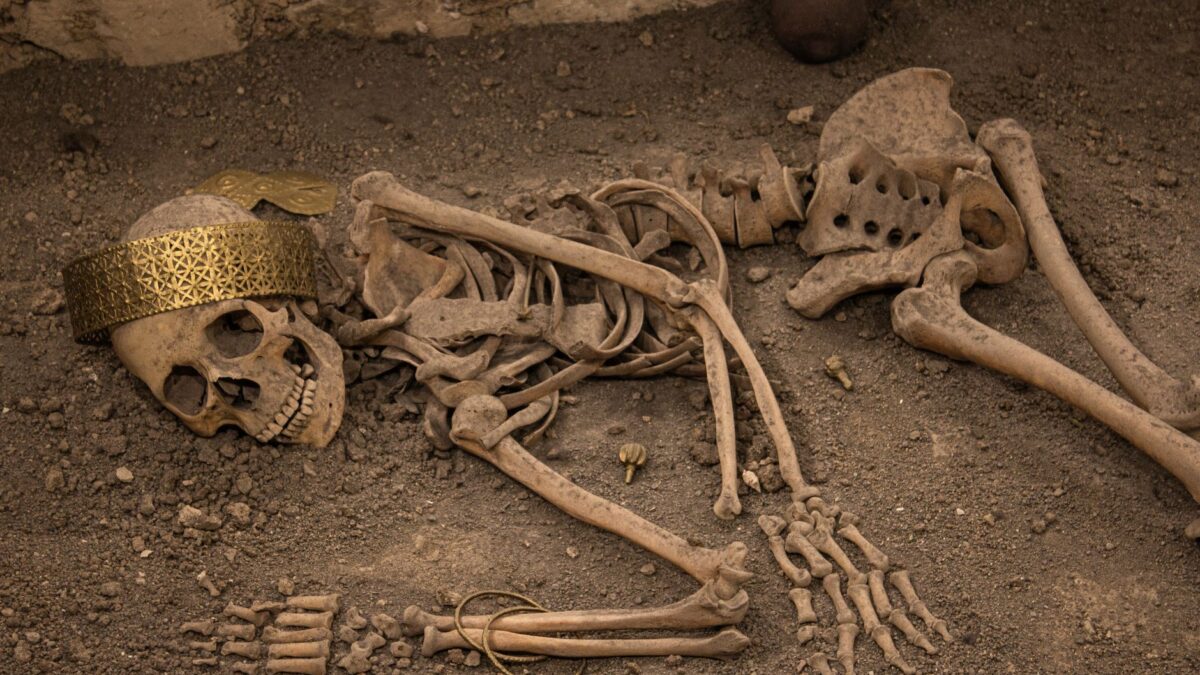
Archaeologists digging at Sutton Hoo in Suffolk, England, have uncovered a “sand body”: a human-shaped form of hardened sand left by a person buried about 1,400 years ago, according to the Daily Mail. The flesh and bones are gone. The outline remains.
The find came from new excavations at the Anglo-Saxon burial ground near Woodbridge, in the site’s Garden Field cemetery. Angus Wainwright, an archaeologist at the National Trust, called it a high point of the dig and said it was another body of this kind found in that cemetery.
How a body turns into sand
Sutton Hoo’s soil is highly acidic. Over the centuries, the acid dissolved the body and bones. According to the report, chemical reactions during decomposition hardened the surrounding sand, which kept the person’s shape. Wainwright compared the effect to some of the bodies at Pompeii.
The two processes differ. At Pompeii, victims of the AD79 eruption of Mount Vesuvius were covered in volcanic ash before they decayed, leaving hollow spaces. Excavators began injecting plaster into those voids in the 19th century to make casts. At Sutton Hoo the sand itself holds the form, and the report notes the burials lack the dramatic poses seen at Pompeii.
What was in the grave
Grave goods lay alongside the burial: beads, tweezers, a knife and a brooch. Directly beneath the sand body, the team found evidence that a second person may have been buried in the same grave. Researchers hope further analysis will show the age and status of the person and how the two individuals were related.
The excavation was filmed by Time Team, which returned to Sutton Hoo for a new project with the National Trust.
A bucket reused for cremation
The team also excavated the Byzantine Bromeswell Bucket, a copper-alloy vessel believed to date from the sixth century. It is decorated with a hunting scene showing North African warriors, and the report describes it as clear evidence that people buried at Sutton Hoo had access to luxury goods from far beyond Britain.
The bucket had been reused as a cremation vessel. It held human remains, including part of a talus (the ankle bone) and fragments of a skull vault (the upper part of the skull), along with the remains of an animal. Specialists have analyzed the remains to understand the cremation process and what was placed on the funeral pyre. Horses were often included on early Anglo-Saxon pyres as a sign of status, and the animal bones belong to a creature larger than a pig.
Beyond the royal mounds
Sutton Hoo is best known for the ship burial found in 1939, thought to have belonged to an elite ruler, possibly King Raedwald of East Anglia. Wainwright said archaeologists have so far focused on the royal mounds, and that this dig shifts attention to the everyday East Anglians who lived in the river valley’s villages and farms, and to their ancestors and descendants.
Dr Helen Geake, Time Team’s Anglo-Saxon specialist, said one of the biggest mysteries has been why and when people chose this place for burials. She said the team was thrilled to locate the burial in the bucket and set it in context, though many questions remain.
How sure is this?
The details come from the Daily Mail’s report and statements by the National Trust and Time Team archaeologists. No journal paper has been cited. The second burial beneath the sand body is described only as possible. The identity, age and status of the person are not yet known, and analysis of the grave is continuing.
Source: Daily Mail
Site editor: Nikita Sheikin