Potatoes Grow in Simulated Moon Soil With 30% Worm Compost
Oregon State researchers grew potatoes in lunar soil simulants mixed with 30% vermicompost, with yields like Earth soil. See how the test worked and its limits.
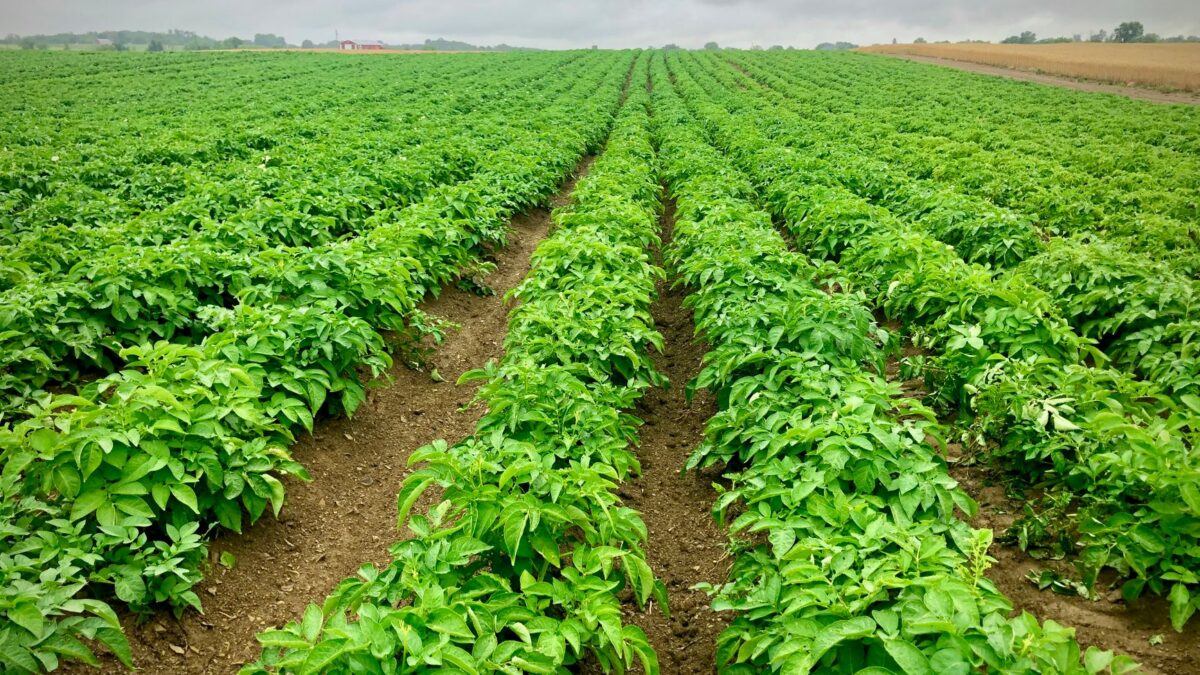
Potato plants grew as well in simulated lunar soil mixed with 30% vermicompost as they did in Earth soil, according to a study from Oregon State University (OSU) reported by Universe Today. Vermicompost is a nutrient-rich material produced when earthworms break down organic matter. The potatoes completed their whole life cycle in the simulants, and the team found no statistically significant increase in natural potato toxins.
The work was led by Aymeric Goyer, a professor in OSU’s Department of Botany and Plant Pathology. It appeared in the journal npj Microgravity in a paper titled “Growth and molecular responses of potato to lunar regolith simulants.”
How the team grew potatoes in fake Moon dirt
Real lunar regolith (the loose dust and rock covering the Moon’s surface) is scarce, so the researchers used simulants, which are Earth-made materials designed to mimic it. They tested five simulants representing two kinds of terrain: lunar mare, a fine-grained basaltic soil, and lunar highland, a feldspar-rich volcanic soil. For comparison they also grew potatoes in soil from Hermiston, Oregon, which the report describes as producing the world’s highest potato yield. NASA’s Johnson Space Center Simulant Development Lab supported the team.
The simulants were mixed with different amounts of vermicompost. Plants in simulants with 30% vermicompost grew as well as those in Earth soil, and the yields were comparable to those of Oregon farmers. Plants grown with 5% to 15% vermicompost showed only partial growth. Plants grown with none were severely stunted and had underdeveloped roots.
The team also checked glycoalkaloids, natural potato toxins often linked to green discoloration. Levels in the lunar-simulant potatoes did not rise significantly, and the potatoes kept their nutritional quality.
Why potatoes, and why compost
Goyer’s team chose potatoes because they produce more calories per square meter of soil than many other crops. The report cites one medium skin-on potato (148 g/5.3 oz) as providing roughly 110 calories, 26 g of carbohydrates, 3 g of protein and 2 g of fiber.
Real lunar dust is extremely fine-grained and contains elevated levels of heavy metals. David Handy, a postdoctoral researcher in Goyer’s lab, said the team believes compost “helps balance some of the toxicity” by reducing plant exposure to harmful compounds. The researchers think the organic matter binds heavy metals, keeping them from damaging roots or leaching into the tubers.
How sure is this?
The study is peer-reviewed, having been published in npj Microgravity. It used simulants, not actual lunar material, so it cannot show how potatoes would respond to real regolith, which has its own dust and metal challenges. It also does not test lower gravity, radiation or sealed-habitat conditions. The details of sample size were not given in the coverage. The compost-binding explanation for the reduced toxicity is the researchers’ belief, not a result shown directly in the reporting.
What comes next
A second paper is due, reporting experiments with 10 potato varieties to identify which grow best in lunar soil. Universe Today notes that future crews could bring compost, and possibly earthworms, to the Moon to make fertilizer, supplementing soil gathered on the surface. NASA’s Artemis program plans to return astronauts to the Moon to stay, and Universe Today says crews would land near the South Pole-Aitken Basin. Missions there would be at least three days from Earth, which is why agencies are looking at food grown locally.
Source: Universe Today
Site editor: Nikita Sheikin