How Fast Do Rockets Go? Orbital Speed, Escape Velocity and Records
From the speed needed to stay in orbit to the fastest object people have built, here are NASA's figures and why rockets spend most of their climb going sideways.
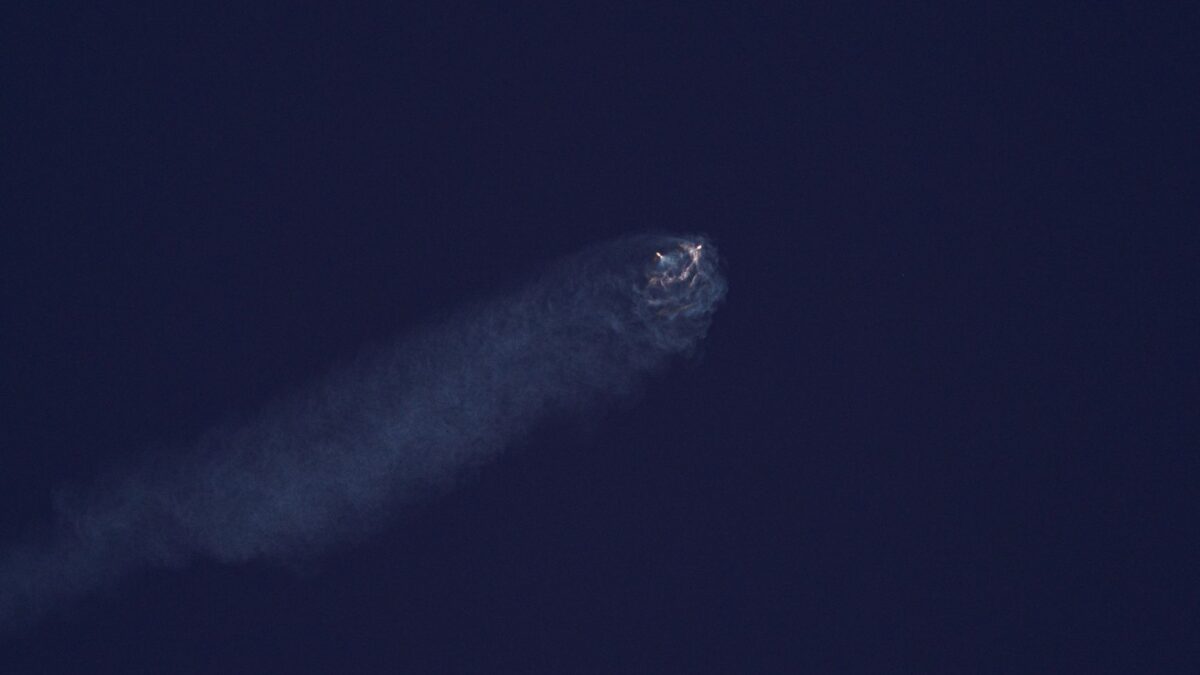
A rocket has to reach about 17,500 mph (about 7.8 km per second) to stay in low Earth orbit, the speed at which the International Space Station circles the planet. To leave Earth’s gravity entirely, a spacecraft needs escape velocity, about 25,000 mph (11.2 km per second). The fastest spacecraft so far, NASA’s Parker Solar Probe, reaches about 430,000 mph near the Sun.
Those numbers explain why rockets are so large. Most of their fuel goes into building up sideways speed, not height.
How fast does a rocket need to go to reach orbit?
A spacecraft in low Earth orbit travels at about 17,500 mph. At that speed, it falls toward Earth as fast as the curved surface drops away beneath it, so it keeps circling instead of coming down.
The space station flies at that speed about 250 miles up and completes one lap roughly every 90 minutes, about 16 laps a day. Higher orbits need less speed to stay up but more energy to reach. Our guide to LEO, MEO and GEO orbits compares heights and lap times.
| Speed | mph | km per second |
|---|---|---|
| Low Earth orbit (ISS) | About 17,500 | About 7.8 |
| Earth escape velocity | About 25,000 | 11.19 |
| Apollo 10 at reentry, fastest crewed flight (1969) | 24,791 | About 11.1 |
| Earth’s own speed around the Sun | About 66,600 | 29.78 |
| Parker Solar Probe at closest approach to the Sun | About 430,000 | About 190 |
How long does it take a rocket to reach orbit?
Most rockets reach low Earth orbit in about 8 to 10 minutes. A SpaceX Falcon 9 passes the point of maximum aerodynamic stress, called Max Q, a little over one minute after liftoff, separates its first stage around two and a half minutes in, and the upper stage finishes the job a few minutes later.
The rocket climbs straight up only briefly. Soon after clearing the tower, it starts to tip over and spends most of the flight accelerating horizontally. Height is the easy part; reaching 17,500 mph sideways is what takes the fuel. Our step-by-step Falcon 9 launch timeline shows each stage of the climb.
Reaching orbit is not the same as reaching a destination. Crew capsules usually spend several hours to about a day matching orbits with the space station before they dock.
What is escape velocity?
Escape velocity is the speed a spacecraft needs to coast away from Earth without falling back. NASA’s Earth fact sheet lists it as 11.186 km per second, or about 25,000 mph, measured from the surface.
In practice, no rocket flies straight out at that speed from the ground. A typical deep-space mission reaches orbit first, then fires an upper stage to add the extra speed needed to head for the Moon or another planet. That is also why missions to Mars leave during launch windows, when Earth and Mars are placed so the trip needs the least energy.
Escape velocity is different for every world. On the Moon it is far lower, which is why a small ascent stage could lift Apollo astronauts off the lunar surface.
How fast do spacecraft travel to the Moon?
A spacecraft heading for the Moon leaves Earth orbit at nearly escape velocity, close to 25,000 mph, then slows down as it climbs away from Earth. It speeds up again on the way home.
The fastest any people have ever traveled is 24,791 mph, reached by the Apollo 10 crew as their command module hit the atmosphere on May 26, 1969, according to NASA. Returning lunar capsules enter the atmosphere much faster than spacecraft coming back from the space station, which is why their heat shields face harsher conditions. For the current Moon program, see our guide to the Artemis missions.
What is the fastest spacecraft ever?
NASA’s Parker Solar Probe is the fastest object people have built. NASA says it reaches about 430,000 mph (700,000 km/h) at its closest approach to the Sun, about 3.9 million miles from the Sun’s surface.
That speed comes from the Sun’s gravity, not the rocket. The probe falls toward the Sun on a stretched orbit and picks up speed the way a ball does rolling downhill. Repeated flybys of Venus helped shrink its orbit over several years.
Other fast spacecraft include the Voyager probes, which are still heading out of the solar system, and New Horizons, which flew past Pluto in 2015. Their speeds are a small fraction of Parker’s because they are climbing away from the Sun, not falling toward it. NASA’s Parker Solar Probe mission page has its current status.
Why don’t rockets just go faster?
Every extra mile per hour costs a large amount of propellant, because the rocket has to carry the fuel it will burn later. Engineers describe this with the rocket equation: the final speed depends on how fast the engine throws out exhaust and on how much of the rocket’s starting weight is propellant.
- A typical orbital rocket is mostly propellant by weight at liftoff.
- Dropping empty stages along the way removes dead weight, which is why rockets have two or more stages.
- Engines with faster exhaust, such as those burning hydrogen, get more speed from each pound of fuel.
- Launching east from Florida adds Earth’s spin, about 900 mph at Cape Canaveral, for free. See why rockets launch from Florida.
Bottom line
Rockets reach about 17,500 mph to stay in low Earth orbit and need about 25,000 mph to escape Earth. Getting to orbit takes about 8 to 10 minutes, most of it spent accelerating sideways. The record for people is 24,791 mph on Apollo 10, and the record for any spacecraft belongs to Parker Solar Probe at about 430,000 mph.
FAQ
How fast is the space station moving?
The International Space Station moves at about 17,500 mph and circles Earth roughly every 90 minutes. Astronauts on board see about 16 sunrises and sunsets a day.
How fast is a rocket at liftoff?
A rocket starts from zero and accelerates gradually, so it is moving slowly as it clears the tower. It passes the speed of sound within the first minute or so and keeps accelerating until orbit.
Could a person survive Parker Solar Probe’s speed?
Speed itself does not hurt; only rapid changes in speed do. The problem near the Sun would be heat and radiation, which Parker survives behind a thick heat shield.
Do all rockets reach orbital speed?
No. Suborbital rockets, such as the ones used for short space tourism hops, climb above the atmosphere and fall back without reaching about 17,500 mph. Only orbital rockets build up enough sideways speed to keep circling Earth.