Why Do Evergreen Trees Stay Green All Winter? How Needles Survive
Evergreen trees stay green in winter because their waxy, narrow needles lose little water and resist freezing. Why they still shed needles and turn bronze.
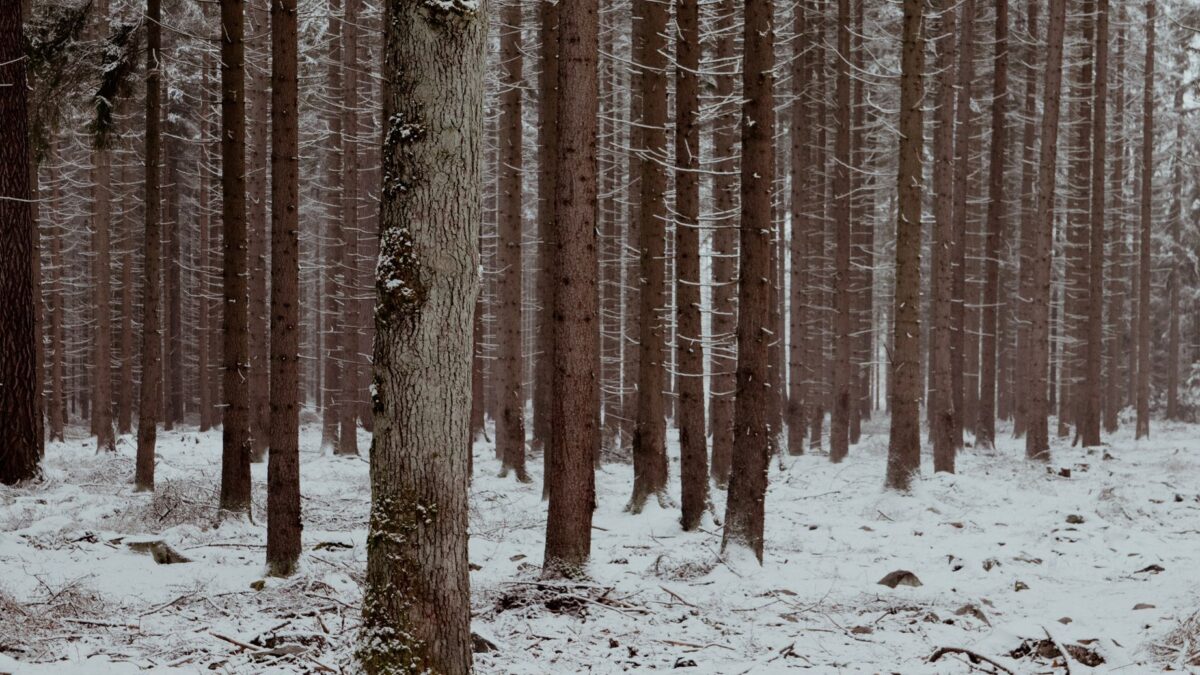
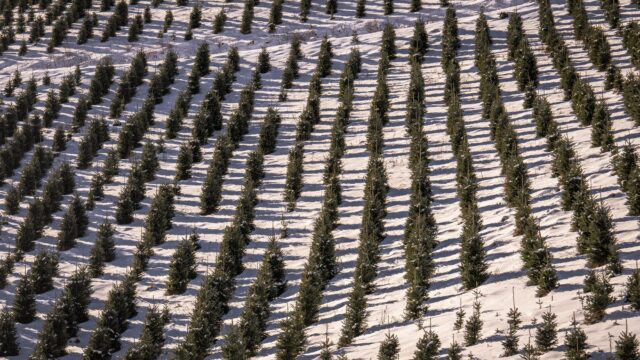
Evergreen trees stay green all winter because their leaves are built to survive cold and dry air, so the tree has no need to drop them in fall. Pine, spruce and fir needles are narrow, coated in wax and lose very little water, and their cells tolerate freezing. Because the green leaves stay on, the tree can photosynthesize on mild winter days and start growing as soon as spring arrives.
Why don’t evergreen needles freeze and die?
Evergreen needles survive freezing because their cells prepare for it in fall. As days shorten and temperatures drop, conifers go through a process called cold hardening. The cells build up sugars and other dissolved compounds that act like antifreeze, and water moves out of the cells into the spaces between them. Ice then forms outside the cells, where it does not tear cell membranes.
A fully hardened needle from a northern spruce or fir can survive temperatures far below what would kill a summer leaf. The same tree in July, before hardening, would be badly damaged by a hard frost.
How do needles keep from drying out in winter?
Winter is a dry season for trees. When the soil is frozen, roots cannot pull up water, yet sun and wind keep drawing moisture out of the leaves. Needles are shaped to limit that loss:
- A thin, rolled shape gives them far less surface area than a broad leaf.
- A thick waxy cuticle covers the outside and slows evaporation.
- The stomata (the pores that let gases in and out) sit in grooves or pits, often filled with wax, where wind cannot reach them as easily.
- The water-carrying cells in the wood are narrow, which makes them less likely to fill with air bubbles when sap freezes and thaws.
A broad leaf like a maple’s would dry out and freeze in the same conditions, so deciduous trees drop theirs in fall and grow new ones in spring.
Do evergreens photosynthesize in winter?
Evergreens can photosynthesize in winter, but only a little. On cold days the process nearly stops, and the needles protect themselves from excess sunlight with extra pigments that release the energy as heat. On sunny days when the air and needles warm above freezing, the tree can make some sugar. That head start matters most in spring: an evergreen can begin growing as soon as conditions allow, while a deciduous tree first has to spend energy building a full set of leaves.
Why don’t all trees stay green?
Each strategy pays off in different places. Keeping leaves is an advantage where the growing season is short or the soil is poor in nutrients, because the tree does not have to rebuild its whole canopy every year. That is one reason conifers dominate the boreal forest of Canada, Alaska, Scandinavia and Russia. Where summers are long and soils are richer, broad leaves that capture a lot of light in a few months, then fall, give deciduous trees the edge.
The rule has exceptions. Larches and tamaracks are conifers with needles, yet their needles turn gold and drop every fall. Bald cypress does the same. Meanwhile many broadleaf trees and shrubs, such as holly, rhododendron, Southern magnolia and live oak, keep their leaves through winter.
Do evergreens ever lose their needles?
Evergreens shed needles all the time, just not all at once. Each needle lasts several years, depending on the species, and the oldest needles on the inside of the branches turn yellow or brown and fall, usually in late summer or fall. White pines and some other pines can drop a lot at once, which often worries owners, but it is normal when the browning is inside the tree and the new growth at the branch tips stays green.
Some evergreens also change color in winter without dying. Arborvitae, junipers and some pines can turn bronze, purple or yellowish green in cold weather because of protective pigments, then green up again in spring.
What is winter burn on evergreens?
Winter burn is browning of needles or leaves caused by water loss in late winter, when sun and wind dry the foliage while the ground is still frozen. It shows up most on the south and west sides of a tree and on young or recently planted evergreens. Guidance from University of Minnesota Extension and other extension services recommends watering evergreens deeply in fall before the ground freezes and protecting exposed young plants from wind. The USDA Forest Service has more on how conifer forests are managed across the country.
Quick answers
Why are evergreens shaped like cones?
Many northern conifers have narrow, cone-shaped crowns and flexible, downward-sloping branches that help shed heavy snow before it breaks limbs. The shape also lets light reach lower branches when the sun is low in the sky.
How long does a cut Christmas tree stay green?
A cut tree stays green as long as it can take up water, which is why the stand needs to be kept full. The tree itself took years to reach that size, as the guide to how long Christmas trees take to grow explains by species.
Do animals depend on evergreens in winter?
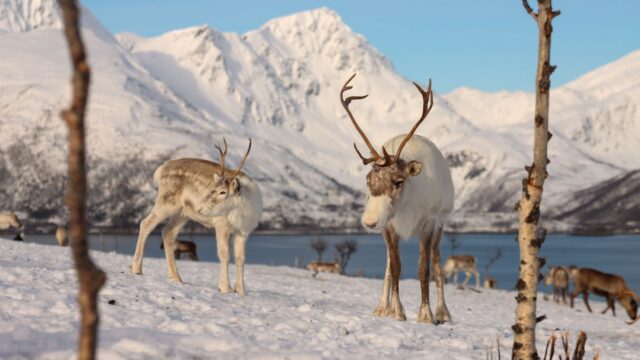
Many do. Dense conifers give birds, deer and small mammals shelter from wind and snow, and some animals eat the needles, buds or seeds. Animals of the far north have their own winter adaptations too, such as reindeer that see ultraviolet light in the Arctic winter.
Site editor: Nikita Sheikin