Satellites Track 15,000 Antarctic Ice Cliffs and Find Collapses Stall
A Science study of 15,000 Antarctic ice cliffs found some retreat faster than models predict, then stabilize instead of triggering runaway collapse.
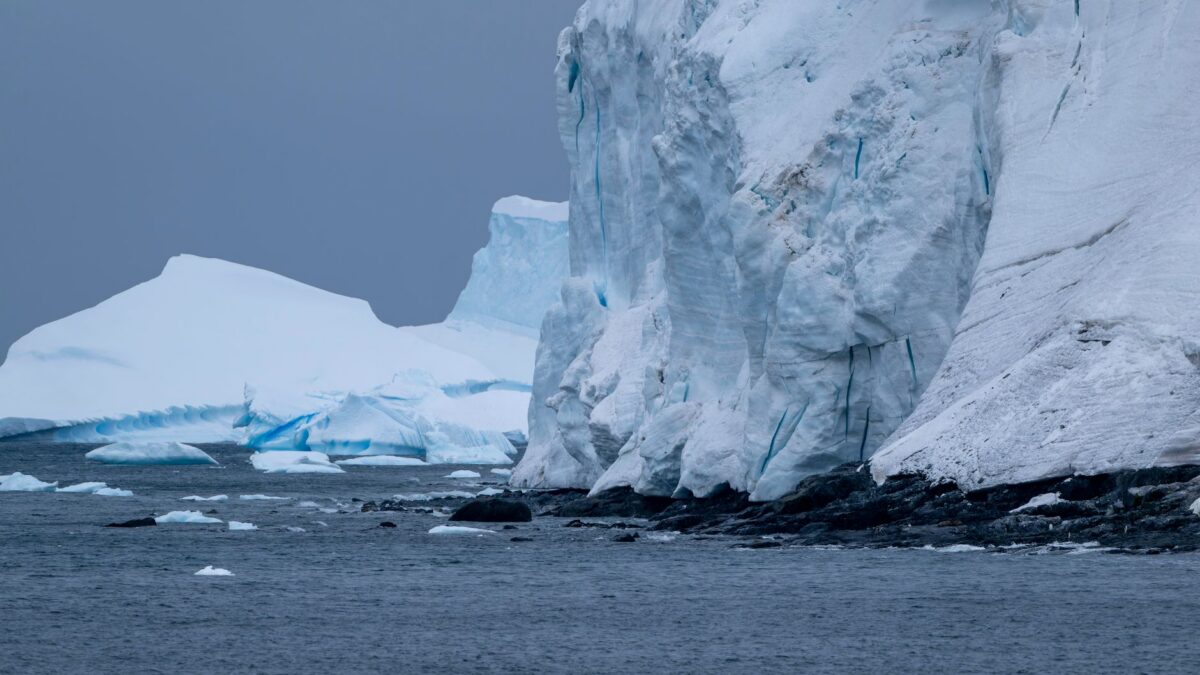
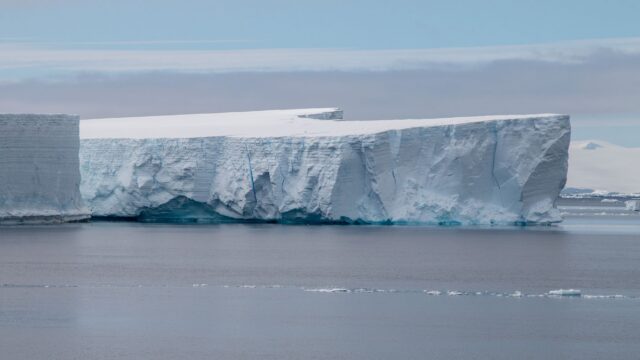
Antarctic ice cliffs that collapse can retreat faster than computer models predict, but the retreat is short-lived, according to a study of more than 15,000 cliffs published in the journal Science. The glaciers behind the tallest cliffs stabilized afterward and even advanced toward the ocean again, researchers from the Massachusetts Institute of Technology (MIT) and the Woods Hole Oceanographic Institution (WHOI) reported.
The result challenges a long-held idea that a cliff taller than about 100 meters will keep collapsing in a chain reaction and drive rapid loss of the ice sheet.
What the satellites measured
The theory in question is called marine ice cliff instability. It says that once an exposed wall of ice passes a critical height, usually 100 meters, its own weight makes it fail. The fall exposes an even taller wall farther inland, and the process repeats. Earlier work tested this mostly with computer models that treated cliff height as the only variable that matters, according to MIT.
The team instead used NASA’s Ice, Cloud, and Land Elevation Satellite-2 (ICESat-2), which measures elevation with a laser altimeter. They analyzed data from 2019 to 2023 and followed more than 15,000 cliffs at three-month intervals. Most were much shorter than the danger height. The average cliff stood about 30 meters tall.
The researchers then picked four locations with some of the tallest cliffs on the continent. Each was roughly 100 meters high, and the tallest reached 127 meters. Those cliffs did collapse, and the ice behind them retreated faster than existing models predicted.
Why the retreat stopped
“We don’t see this runaway effect,” said study author Caroline Needell, a graduate student in the MIT-WHOI Joint Program. The team looked for what interrupted the collapses and found several candidates.
- Broken ice in front of the cliff, called mélange, is a slushy mix of sea ice and iceberg fragments. Taller cliffs tended to have thicker mélange, and cliffs that held still tended to have thicker piles.
- Deeper surrounding water appeared to push back harder against the ice wall.
- Ridges in the ground beneath the ice made the ice above them thinner, so the exposed cliff was shorter. Cliffs often stopped retreating where the ground rose.
- Taller cliffs thinned out faster as they collapsed, shrinking into shorter walls that were better able to hold.
How sure is this?
The paper is peer-reviewed. Its authors are Needell, Catherine Walker of WHOI and Jeremy Bassis of the University of Michigan. It is titled “Empirical constraints on ice cliff calving” and appears in Science 394 (6821): 311, DOI 10.1126/science.aee0658. The work was partly supported by NASA, the U.S. National Science Foundation and the DOMINOS project, part of the International Thwaites Glacier Collaboration.
The evidence comes from satellite observations over four years, not from a model of the future. The retreat was temporary at the sites the team studied, and the authors say the findings do not mean the ice sheet is safe from further losses.
What changes for sea level projections
The floating ice shelves that hold back Antarctica’s ice sheet are melting and breaking apart at record rates, according to the MIT summary, and their loss exposes more cliffs. Whether those cliffs stand or fall could shape how much ice Antarctica loses and how fast sea level rises.
The authors say height alone cannot predict a cliff’s fate. Models also need the shape of the bed beneath the ice, the rate at which the ice thins, the depth of the water and the support from mélange. “Now we know what to look for,” Needell said. Adding those factors to ice sheet models may give more reliable estimates of Antarctica’s contribution to sea level rise.
Source: ScienceDaily
Site editor: Nikita Sheikin