Monash Study Proposes Putting Australopithecus Inside Genus Homo
Dr. Ian Towle of Monash University proposes folding Australopithecus and Paranthropus into Homo. The idea is a proposal, not an adopted change.
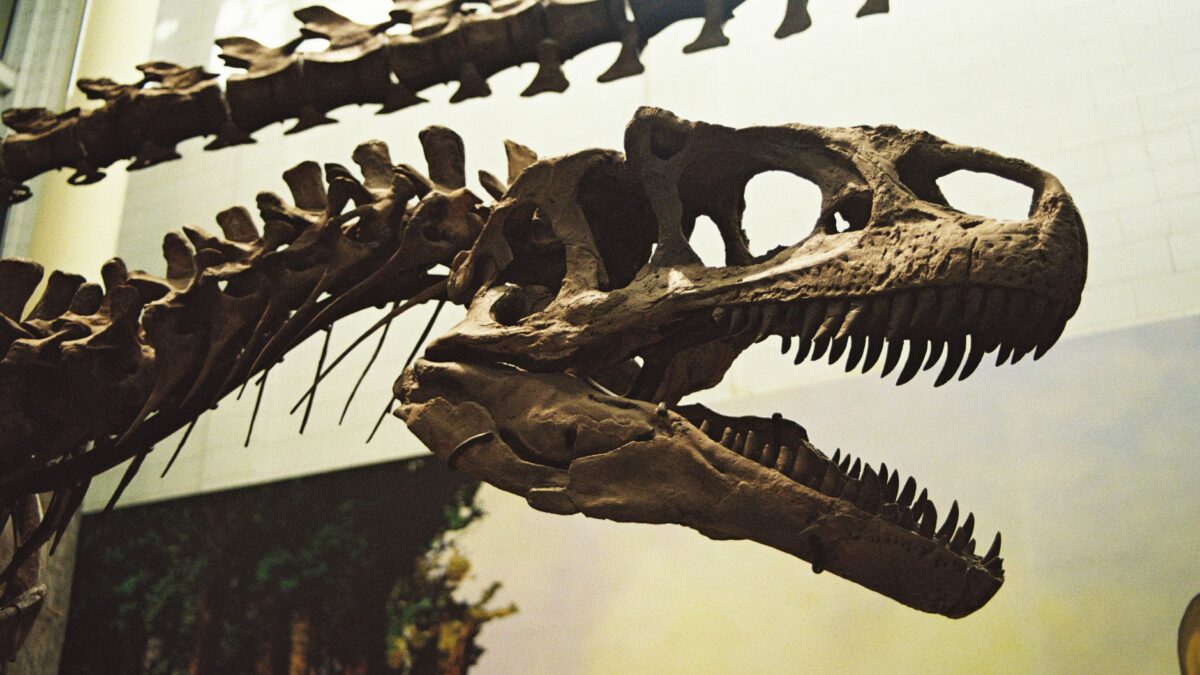
A researcher at Monash University in Australia proposes that Australopithecus and Paranthropus, two groups of fossil human relatives, be classified inside our own genus, Homo. The argument comes from Dr. Ian Towle, a Research Fellow at the Monash Biomedicine Discovery Institute, and was published in the American Journal of Biological Anthropology, according to Monash University via ScienceDaily.
The paper’s central claim is that all human species and their closely related fossil relatives from the past 4 to 5 million years should sit within Homo. It is a scientific argument and has not been officially adopted.
What a genus is and why the boundary is in doubt
Taxonomy is the system for naming species and sorting them into groups. A genus is a level above the species. Modern humans are Homo sapiens: Homo is the genus and sapiens is the species.
Traditionally, members of Homo were told apart from other ancient relatives by relatively large brains, sophisticated tool use and particular anatomical features. Monash says those distinctions have weakened over recent decades. Researchers have found members of Homo with surprisingly small brains, so a large brain was not a defining trait of every species in the genus. Evidence also suggests that species placed in Australopithecus and Paranthropus likely behaved in more complex ways than once assumed.
The clade argument
Over the past 50 years, classification has moved from relying mainly on physical similarity toward grouping species by evolutionary ancestry. The key unit is the clade, a common ancestor plus all of its descendants. Towle argues that the classification of our own relatives has been slower to apply this approach consistently.
He says these groups do not necessarily represent distinct clades, and that differences in behavior and ecology once used to separate them are increasingly hard to maintain. “I propose expanding Homo to include these other groups,” he said, framing it as a more accurate and stable way to show the relationships revealed by the fossil record.
What the change would and would not do
The proposal does not claim that these relatives were identical to modern humans or shared every trait of our species. A broader genus would recognize their evolutionary connections while still letting scientists distinguish individual species. Towle says it would also spare researchers from regularly reclassifying particular groups whenever new fossils turn up.
The study is titled “Clades, Grades, and the Genus Problem: A Case for Revising Hominin Taxonomy,” and appears in volume 190, issue 4 of the journal.
What this means for how we picture human evolution
Human evolution is often drawn as a tidy line from ape-like ancestors through Australopithecus and early Homo to Homo sapiens. The fossil record shows a branching family tree with overlapping species instead, and Towle says each new discovery can complicate it. In his words, the tree is “complex and non-linear.”
If the field adopted the change, the names used for millions of years of human evolution would shift, though the individual species would stay distinct. For now, the genus boundaries used in textbooks and museums remain as they are.
Source: ScienceDaily
Site editor: Nikita Sheikin