How Carbon Capture Works: Catching CO2 and Storing It Underground
Carbon capture pulls carbon dioxide from smokestacks or open air, then stores it underground or uses it. See the main methods, steps and limits.
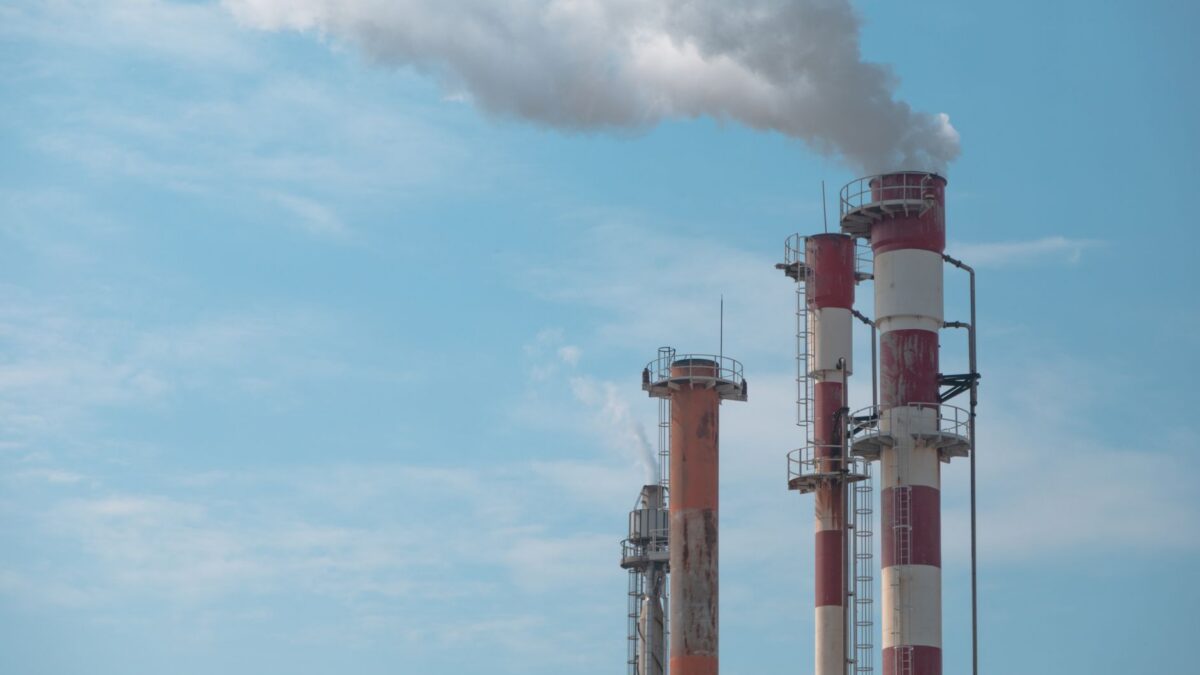
Carbon capture is a set of technologies that separate carbon dioxide (CO2) from the gases leaving a power plant or factory, or from ordinary air, and then compress it for storage deep underground or for use in products. The core step is chemical or physical: a material that grabs CO2 selectively is exposed to the gas, then heated or depressurized to release a concentrated stream of CO2.
What does carbon capture actually do?
Burning coal, gas or other carbon-containing fuels, and heating limestone to make cement, produce CO2 that would otherwise go up the stack. Capture equipment pulls most of that CO2 out before it reaches the atmosphere. The result is a nearly pure CO2 stream that can be compressed into a dense fluid, moved by pipeline, truck or ship, and injected into rock formations.
The technology works at two kinds of sources. At point sources such as power plants, steel mills, cement kilns and ethanol plants, the exhaust has a relatively high share of CO2. In direct air capture, machines process ambient air, where CO2 is far more dilute, so each ton captured takes more energy.
How is CO2 separated from other gases?
The most common approach is post-combustion capture with a liquid solvent. Exhaust gas passes through a tall column where it meets a solution, often made from compounds called amines. The solvent binds CO2 chemically, while nitrogen and most other gases pass through. The CO2-rich liquid is then sent to a second vessel and heated, which breaks the bond and releases CO2. The regenerated solvent returns to the first column and is used again.
Other methods work on the same principle of catch, then release:
- Solid sorbents are porous materials that hold CO2 on their surfaces and give it up when heated or when pressure drops.
- Membranes are thin barriers that let some gases pass faster than others.
- Pre-combustion capture first converts fuel into hydrogen and CO2, then removes the CO2 before the hydrogen is burned.
- Oxy-fuel combustion burns fuel in nearly pure oxygen, so the exhaust is mostly CO2 and water vapor, and the water is simply condensed out.
How does direct air capture differ?
Air contains only a small fraction of one percent CO2, so direct air capture machines move large volumes of air across a sorbent. Some use solid filters that are heated to release the gas. Others use liquid chemicals that react with CO2 and then go through further chemical steps to free it. Either way the process needs heat and electricity, and the climate benefit depends on how clean that energy is.
Where does the captured CO2 go?
There are two broad destinations. The first is geologic storage. CO2 is compressed until it behaves like a dense fluid and injected through a well into porous rock, such as a deep saline formation or a depleted oil and gas reservoir, that sits beneath a layer of tight, impermeable rock. The cap rock keeps the CO2 from rising. Over long periods, some of it dissolves in salty water in the pores and some can react with minerals and turn into solid rock. Operators monitor the site with sensors and seismic surveys.
The second is use. CO2 goes into carbonated drinks, greenhouse enrichment, some fuels and chemicals, and building materials such as concrete that absorb CO2 as they cure. Some captured CO2 is also injected into oil fields to push more oil out of the ground, which is controversial because the extra oil, when burned, produces more emissions. Uses that lock carbon into durable materials store it longer than uses that release it again quickly, such as fuels.
What are the limits and costs?
Capture takes energy, mainly the heat needed to regenerate solvents, so a plant fitted with capture equipment delivers less net electricity from the same fuel. Equipment adds construction and operating costs, and pipelines and storage wells need permits, monitoring and long-term liability rules. Capture rates vary by design, and no system removes every molecule of CO2. Direct air capture costs more per ton than capture at a smokestack because the CO2 is so dilute.
Carbon capture also does not remove the CO2 already in the atmosphere unless it is paired with direct air capture or with biological sources of CO2, and it does nothing about emissions from sources that are not captured. Many energy analysts treat it as one tool next to efficiency, cleaner electricity and other measures, mainly for sectors that are hard to decarbonize, such as cement and steel. Government agencies such as the U.S. Department of Energy and the U.S. Environmental Protection Agency publish overviews of the technology and of how underground injection wells are regulated.
Why is the chemistry similar to everyday processes?
Amine solvents were used for decades to remove CO2 and other acid gases from natural gas before anyone applied them to climate goals. The logic is the same as in many chemical processes: a reversible reaction that runs one way in the cold and the other way when heated. The same idea of materials that selectively grab one component of a mixture and release it on demand shows up in many separation technologies.
Common questions
Is carbon capture the same as carbon removal?
Not exactly. Capture at a smokestack stops CO2 from entering the air. Carbon removal takes CO2 out of air that already contains it, through direct air capture or through methods such as growing plants and storing the carbon. Both involve capturing CO2, but they affect the atmosphere differently.
Can stored CO2 leak?
Sites are chosen for sealed rock layers, and operators monitor wells and the surrounding area. Leakage risk is lower where the cap rock is sound and wells are sealed properly, and it is higher at poorly selected sites or old, leaky wells. Regulators set rules for site selection, testing and monitoring.
Why not just plant trees instead?
Trees and soils absorb CO2 too, and the two approaches can work side by side. Forests take years to grow, can burn or be cut down, and cannot easily handle the concentrated emissions of heavy industry. Mechanical capture is faster to measure and can be placed at the source, but it costs more and needs energy.
Site editor: Nikita Sheikin