Do Fish Feel Pain? What Trout Experiments Show
Fish have pain-sensing nerve cells and change behavior after injury, but scientists still debate whether they consciously suffer. Here is what the research shows.
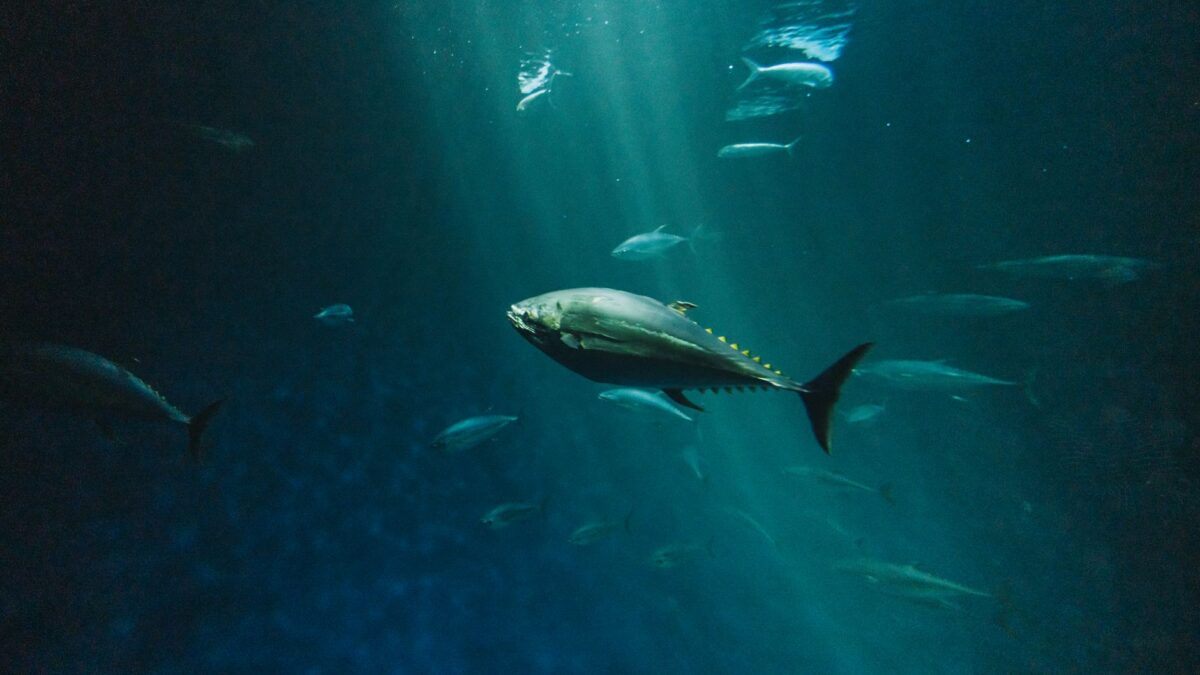
Fish have nerve endings that detect harmful stimuli, they react to injury in ways that go beyond a reflex, and painkillers change those reactions. What researchers still argue about is whether any of this comes with a conscious feeling of hurt. The evidence supports the first three points well. The fourth is open.
Pain versus nociception
Scientists separate two things that people often lump together. Nociception is the detection of damaging stimuli, such as heat, pressure or chemicals, by specialized nerve endings called nociceptors. It can happen without any awareness, which is why your hand can jerk away from a hot pan before you notice the heat. Pain is the unpleasant experience that can follow.
That distinction matters because pain in any animal, humans included, is known mainly through behavior and brain activity. In people we can also ask. Research on historical cases, such as CT scans of Jeremy Bentham’s teeth, shows how far physical evidence can go in reconstructing suffering when nobody can be asked. With fish, the question has to be answered from nerves, behavior and brain anatomy.
What the trout experiments found
The best-known work came from biologist Lynne Sneddon and colleagues, who in 2003 reported nociceptors on the face and head of rainbow trout. These nerve endings responded to heat, pressure and chemical irritants, much like nociceptors in mammals.
The team then injected small amounts of irritants, bee venom in one case and acetic acid in another, into the lips of trout. Injected fish behaved differently from fish given a harmless saline injection. They rocked from side to side, rubbed their lips against the gravel and tank walls, and took longer to resume feeding. When the researchers gave morphine along with the acid, much of that behavior lessened. A reflex alone would not be expected to respond to a painkiller in that way, and the result was taken as evidence of more than simple reflex.
Later studies in other species, including zebrafish, reported comparable changes: reduced activity after an irritant, and a return toward normal when a pain-relieving drug was added to the water.
The case that fish do not feel pain
Critics do not dispute that fish detect harm. Their argument is about the brain. In mammals, conscious pain is generally linked to the neocortex, a layered outer region of the brain. Fish have no neocortex. Neurobiologist Brian Key set out this position in a 2016 paper titled “Why fish do not feel pain,” arguing that fish brains lack the structures needed for awareness of pain and that the reactions seen in experiments can be explained without conscious suffering.
The nerves also differ. Mammals have two main kinds of pain fibers, fast A-delta fibers and slow C fibers. Fish have both, but studies in teleost fish, the large group that includes trout and most familiar species, have found far fewer C fibers than in mammals. Some researchers read this as evidence that fish experience a different kind of pain, or none at all.
The reply from researchers who say they do
Scientists on the other side point out that a structure being different does not mean it does nothing. Birds also lack a layered neocortex, yet they are widely accepted to have complex minds. Fish have a brain region called the pallium that some neuroscientists regard as comparable in function to parts of the mammalian cortex. These researchers also note that many fish learn to avoid places where they were hurt, will give up a food reward to escape a harmful stimulus, and show lasting changes in behavior after injury. Those responses are hard to explain with reflex alone.
Neither side has a test that proves or rules out conscious experience, in fish or in any non-human animal. The disagreement is partly about evidence and partly about what counts as sufficient evidence.
Why it matters
The answer affects how billions of fish are treated, in fishing, aquaculture and research. Many countries already include fish in animal welfare law for laboratory use, and veterinary guidelines in several places now call for pain relief and humane slaughter methods for farmed fish. The reasoning behind such rules is often cautious: if there is a reasonable chance that fish suffer, it makes sense to reduce harm where it is practical.
It also connects to broader questions about how nervous systems produce experience. Work on what brains do during rest, such as research on why animals need sleep, has shown that behaviors once thought exclusive to mammals turn up in fish too, including sleep-like states in zebrafish. Each such finding shifts the burden of proof a little.
What is still unknown
Several points remain unsettled. Researchers do not know whether fish pain, if it exists, feels anything like human pain. Species differ widely, from sharks to tiny zebrafish, and results in one species do not automatically carry over to another. Most experiments have been done on a handful of laboratory-friendly fish. The question is likely to stay open until scientists agree on how to measure awareness in animals that cannot report what they feel.
Site editor: Nikita Sheikin