Earliest Sunset Before the Winter Solstice: Why It Comes Early
The earliest sunset at 40°N falls around December 7 or 8, two weeks before the solstice. See why solar noon drifts later and when sunrises turn around.
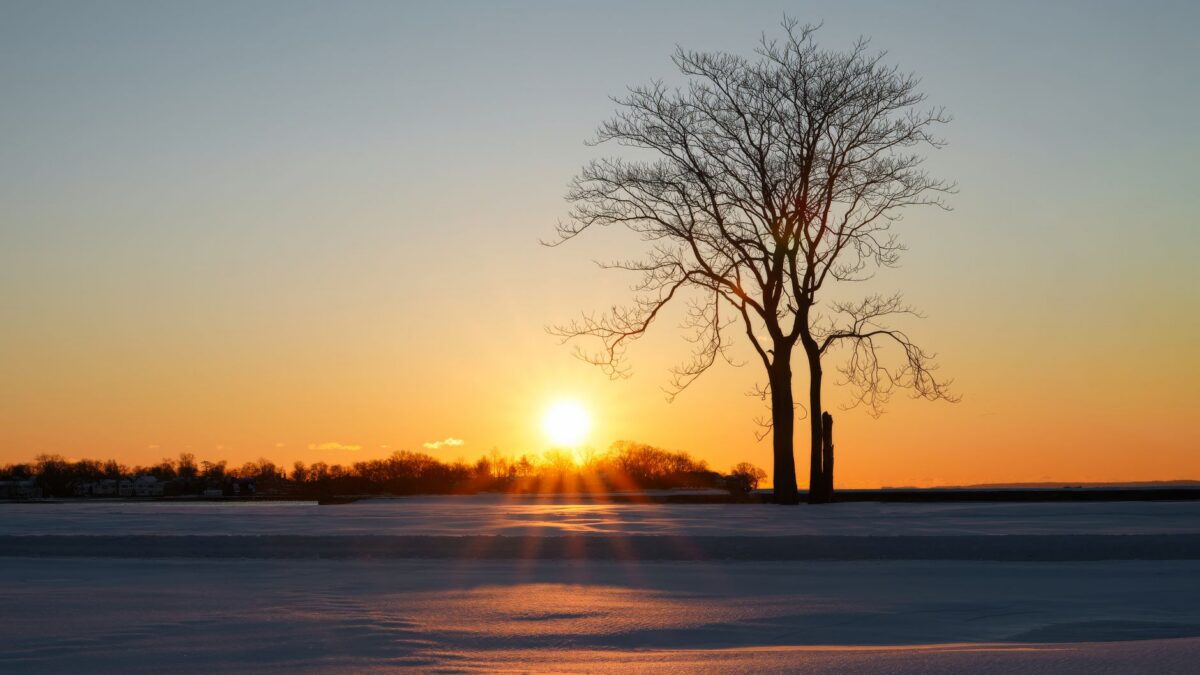
The earliest sunset of the year in most of the United States comes around December 7 or 8 at mid-northern latitudes near 40°N, about two weeks before the winter solstice on December 21. The latest sunrise comes after the solstice, in the first week of January. The shortest day is still the solstice, but solar noon keeps sliding later through December, so sunset and sunrise both move later even while the total amount of daylight barely changes.
Why doesn’t the earliest sunset happen on the shortest day?
Sunrise and sunset depend on two things at once: how long the day is and when the middle of that day, solar noon, falls on the clock. Around the solstice the length of daylight changes by only a few seconds per day. Solar noon, meanwhile, shifts later by roughly 30 seconds per day in December.
In early December the days are still shrinking, yet the later solar noon already pushes sunset back. Once that later drift outweighs the shrinking daylight, evenings start to lengthen. Mornings keep getting darker for the same reason: the later solar noon drags sunrise later until early January, when lengthening daylight finally wins.
The solstice sits in the middle. Daylight there is at its minimum, which our explainer on why December 21 is the shortest day covers in detail, but the clock times of sunrise and sunset are off center.
Why does solar noon drift later in December?
Clocks assume every day is exactly 24 hours long. A solar day, measured from one solar noon to the next, varies through the year. Near the December solstice a solar day runs about 30 seconds longer than 24 hours, so the sun reaches its highest point a little later on the clock each day.
Two features of Earth’s motion add up to produce those longer days:
- Earth’s orbit is slightly elliptical, and Earth reaches perihelion, its closest point to the sun, in early January. Near perihelion Earth moves fastest along its orbit, so it has to turn a little farther each day to bring the sun back overhead.
- Earth’s axis is tilted about 23.4 degrees. Near both solstices the sun’s apparent path across the sky runs parallel to the celestial equator, so its daily eastward shift against the stars counts in full toward the length of the solar day.
In December both effects stretch the solar day at the same time. The running total of these differences between sundial time and clock time is called the equation of time, and over a year it swings by roughly 16 minutes in either direction.
When is the earliest sunset where you live?
The date depends mostly on latitude. Farther from the equator, daylight changes faster in early December, which keeps sunset getting earlier for longer and moves the earliest sunset closer to the solstice. Closer to the equator, the drifting solar noon takes over sooner.
- Around 40°N (Philadelphia, Denver, Columbus): earliest sunset about December 7 or 8, latest sunrise about January 4 or 5.
- Around 47°N (Seattle): earliest sunset near December 10.
- Around 51°N (London): earliest sunset near December 12 or 13.
- Around 26°N (Miami): earliest sunset in the last days of November or the first days of December.
For exact times at your location, the NOAA Solar Calculator and the U.S. Naval Observatory both publish sunrise and sunset tables you can check day by day. Local times can differ by a minute or so from published tables because hills, buildings and air temperature change when you actually see the sun touch the horizon.
Does the same thing happen in June?
A smaller version happens at the June solstice. At 40°N the earliest sunrise falls in mid-June, around June 14, and the latest sunset comes later in the month, around June 27. The gap is narrower than in winter because in June Earth is near aphelion, its farthest point from the sun, and moving slowest. The orbit effect then works against the tilt effect instead of adding to it, so the June solar day is only about 13 seconds longer than 24 hours.
What about the Southern Hemisphere?
South of the equator the pattern flips with the seasons. December is midsummer there, so the earliest sunrise comes before the December solstice and the latest sunset comes after it, in early January. In June, during the southern winter, the earliest sunset arrives before the solstice and the latest sunrise after it, the same lopsided timing northern readers see in December.
Why does it matter for planning evenings and mornings?
For anyone who walks, runs or commutes in daylight, the practical effect is that afternoon light starts returning in mid-December, while mornings stay dark into January. By the solstice, sunset at 40°N is already a couple of minutes later than its earliest point. Morning commuters see the opposite: sunrise keeps creeping later for about two weeks after the solstice.
Low winter sun also brings its own sky effects. On cold days with thin, icy clouds, bright patches can appear on both sides of the sun, explained in our piece on why sundogs form beside the winter sun. Ancient builders tracked the same seasonal sun closely, as the 5,000-year-old Newgrange tomb shows with its solstice sunrise alignment.
Quick answers
Is the winter solstice the darkest day of the year?
Yes, in total daylight. The solstice has the least time between sunrise and sunset in the Northern Hemisphere, even though it has neither the earliest sunset nor the latest sunrise.
When do evenings start getting lighter?
At around 40°N, sunsets begin getting later after about December 7 or 8. The change is slow at first, a few seconds per day, and speeds up in January.
Does daylight saving time cause the early sunset?
No. The early December sunset comes from Earth’s orbit and axial tilt. Clock changes shift every sunrise and sunset by one hour but do not move the date of the earliest sunset.
Would the earliest sunset fall on the solstice if Earth’s orbit were a perfect circle?
It would still come before the solstice, because the axial tilt alone lengthens solar days near the solstice. The gap would be smaller, since the orbit effect in December adds to the tilt effect.
Site editor: Nikita Sheikin