How to Find the Orion Constellation: 3 Stars, 1 Nebula
Find Orion by looking for the three stars of its belt, then use them to locate Betelgeuse, Rigel and the Orion Nebula. Steps, tips and what to see.
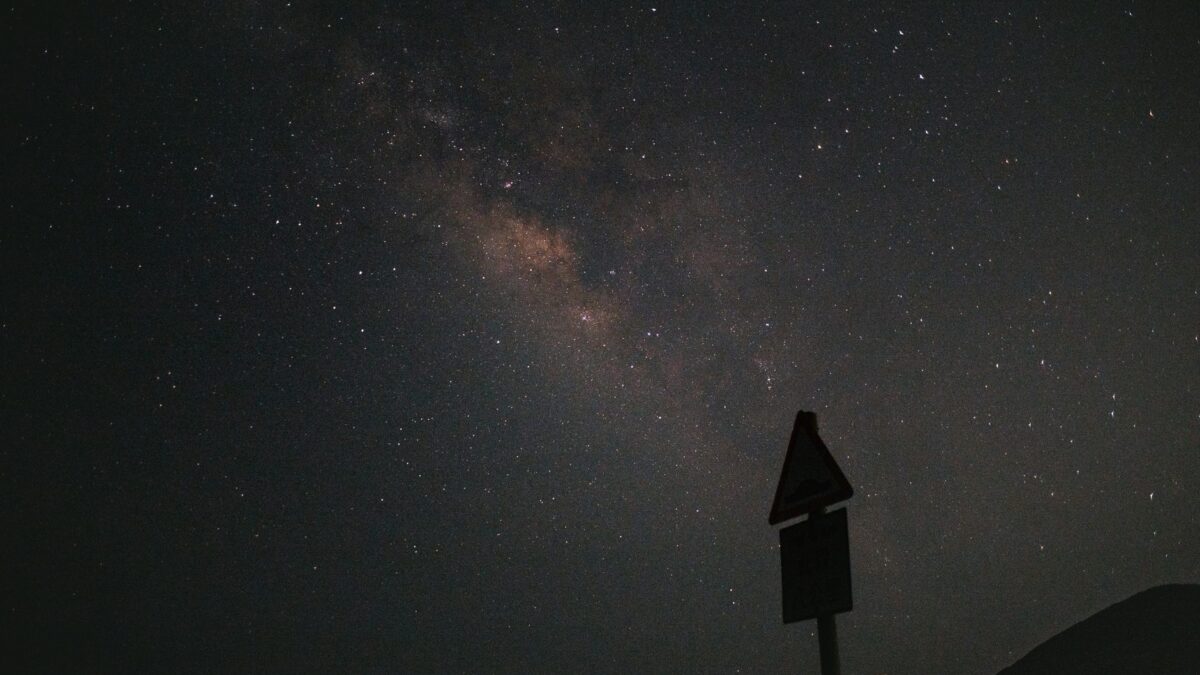
To find Orion, look for three bright stars in a short, straight row, which make up the constellation’s belt. Orion is one of the easiest constellations to recognize, and it is visible from nearly everywhere on Earth. From the Northern Hemisphere it climbs into the evening sky in late autumn and dominates the southern sky through winter. Once you have the belt, two bright stars above it and two below mark the hunter’s shoulders and knees.
How do I spot Orion in the sky?
Start by facing south on a clear, dark evening in winter, or look toward the east in late evening as autumn turns to winter. Find a line of three stars of similar brightness, evenly spaced. That line is Orion’s belt, and it stands out because nothing else in the sky looks quite like it.
Then look for the larger shape around it:
- Above the belt, to one side, a bright orange-red star marks one shoulder.
- Above the belt on the other side, a fainter star marks the other shoulder.
- Below the belt, a brilliant blue-white star marks one knee or foot.
- Below the belt on the opposite side, a dimmer star marks the other knee.
Together these four stars form a large rectangle, or hourglass shape, with the belt across the middle. People see this as a hunter with a raised arm and a sword hanging from his belt.
Which stars should I know?
Betelgeuse is the reddish star at one shoulder. It is a red supergiant, a very large star near the end of its life, and its color is noticeable even without a telescope. Rigel, at the opposite corner, is a blue-white supergiant and one of the brightest stars in the night sky. Comparing the two is an easy way to see that stars have different colors, which reflect different surface temperatures: reddish stars are cooler, blue-white stars are hotter.
The three belt stars are named Alnitak, Alnilam and Mintaka. They look similar in brightness, but they are all very distant, luminous stars. Bellatrix marks the other shoulder, and Saiph marks the second knee.
Where is the Orion Nebula?
Hanging below the belt is a short, fainter line of stars known as the sword. The middle “star” of the sword looks slightly fuzzy. That fuzzy patch is the Orion Nebula (also called M42), a huge cloud of gas and dust where new stars are forming. It is one of the few nebulae you can see without a telescope.
Binoculars show it much better. Even a small pair reveals a glowing haze around a cluster of young stars. A telescope shows more detail in the cloud, but you do not need one to enjoy it.
When is the best time to see Orion?
For observers in the Northern Hemisphere, Orion is best in the evening from roughly December through February, when it stands highest in the south. It rises earlier each week as the season moves on, and by spring it sets soon after dark. In the Southern Hemisphere the constellation appears during summer and looks upside down compared with the northern view, so the belt sits on a different side of the shoulders and knees.
Visibility depends on your location and the weather. Clouds, city lights and a bright Moon all make faint objects like the nebula harder to see.
How can I use Orion to find other stars?
Orion is a handy signpost. Extend the line of the belt in one direction and it points toward Sirius, the brightest star in the night sky, in the constellation Canis Major. Extend it the opposite way and it leads toward the orange star Aldebaran in Taurus, and from there toward the Pleiades star cluster. Learning these links makes it easier to find the rest of the winter sky.
Tips for a better view
- Get away from bright lights and let your eyes adjust for 15 to 20 minutes.
- Use a red flashlight if you need to read a star chart, because white light spoils night vision.
- Try a free star-chart app or a printed sky map to confirm what you are seeing.
- Bring binoculars for the nebula and the dense star fields near the belt.
NASA publishes sky guides and skywatching resources at NASA, which can help you plan observing nights.
Common questions
Can I see Orion from the Southern Hemisphere?
Yes. Orion straddles the celestial equator, so it is visible from both hemispheres. Southern observers see it in summer evenings, and it appears upside down compared with the northern view.
Why does Betelgeuse look red?
Betelgeuse is a cooler star than most you see in the sky, and cooler stars glow orange or red. Hotter stars such as Rigel glow blue-white.
Do I need a telescope to see the Orion Nebula?
No. The nebula appears as a small fuzzy patch to the naked eye in a dark sky, and binoculars make it much clearer. A telescope is useful only if you want finer detail.
Site editor: Nikita Sheikin